hotelvak.eu
EN

Platform on hotelmanagement, interiordesign and design in the Netherlands
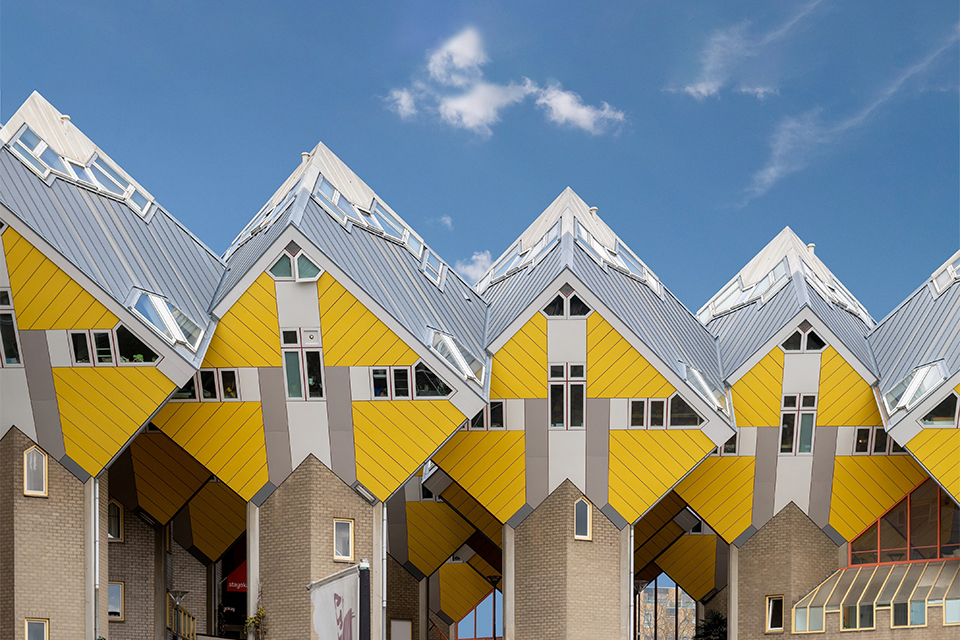
Anyone walking across Blaak in Rotterdam will immediately notice them: the world-famous cube houses designed by architect Piet Blom. Stayokay runs a hostel in part of this complex, which is currently undergoing extensive renovation by Pleijsier Hotelrenovatie. “The cubes are unique in shape and character — and that requires a partner who understands that standard solutions don't work here,” says director Joris van Nistelrooij of Stichting NJHC beheer, the owner of the property.
The collaboration between hostel chain Stayokay and Pleijsier Hotelrenovatie began in Eindhoven, where Stayokay wanted to introduce pods, compact sleeping cabins offering more privacy. “Pleijsier had experience with this, so we asked them to contribute their ideas. That test case went very well and we hit it off immediately,” says Van Nistelrooij. “So when we were faced with a more complex renovation in Rotterdam, the choice was quickly made.”
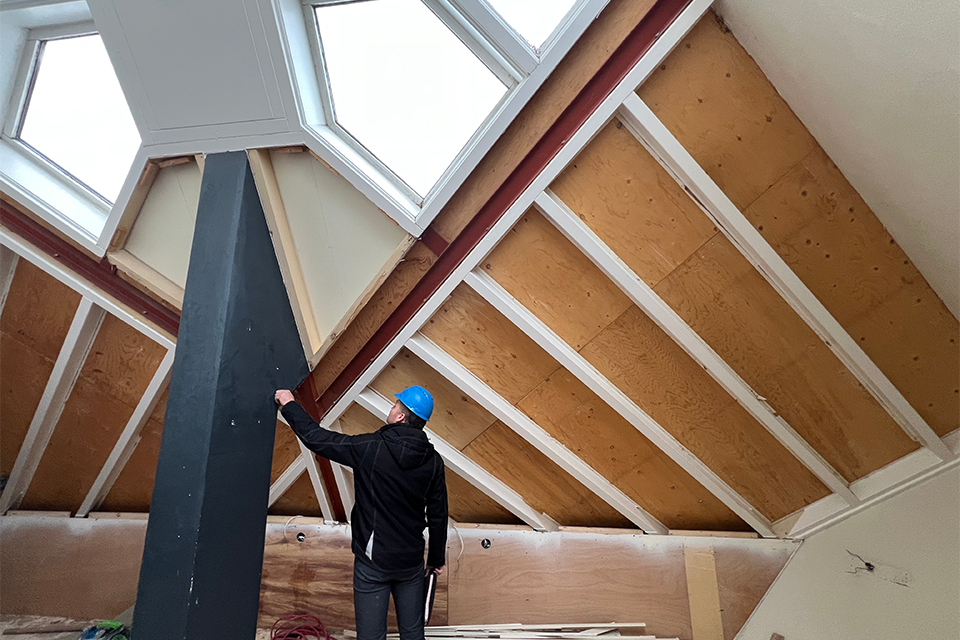
The renovation of the hostel, which covers more than two thousand square metres, is certainly not a standard job: “No wall is straight, every cube is on its tip with sloping floors and staggered spaces. That requires extreme precision and spatial insight,” says Van Nistelrooij, who, together with Stayokay director Marijke Schreiner, awarded the contract to Pleijsier Hotelrenovatie.
The technical challenges are also considerable, Van Nistelrooij continues. “The energy performance of the 1980s building needs to be improved, the installation concept needs to be completely renewed and the indoor climate needs to be more comfortable for guests. And all this within the existing contours of this municipal monument, whose appearance and character must of course remain unchanged. In short, quite a puzzle.”
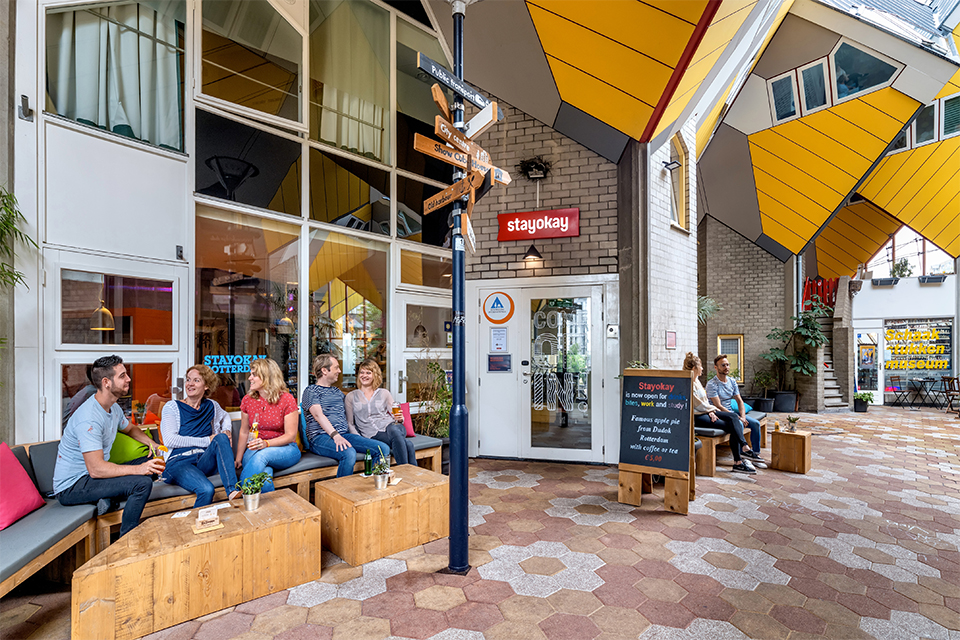
The location is also causing headaches. “In the heart of the city centre, we are literally above Rotterdam's busiest thoroughfare. The ground floor is about five metres above ground level, so all the building materials have to be transported upwards from a construction site the size of a postage stamp,” says Van Nistelrooij.
Harm Jan Kanis, manager at Pleijsier, adds: “That's right, and then the horizontal transport really begins. Everything we have hoisted up also has to be moved between the cube houses to the right place. This is done while the walkway between the cubes remains open to tourists and visitors. We have therefore set up a completely shielded and secured walkway to ensure that everything runs safely.”
In order to manage the project effectively, the parties opted for a construction team collaboration at an early stage. “This allows us to weigh up technical choices, costs and impact on construction time together,” says Van Nistelrooij. “Planning is crucial for Stayokay; the sooner the Stayokay hostel can reopen, the better. In addition, the financial challenge involved in such a complex building is also considerable. A joint development with an executing party ensures that the impact of decisions is immediately visible.”
Kanis is also enthusiastic about this approach: “It ensures transparency, faster decision-making and better quality. We can immediately indicate what is feasible and where the risks lie. That prevents surprises and speeds up the process.”
Sustainability plays a central role in the approach. “We are working hard to make our existing buildings more sustainable wherever possible,” says Van Nistelrooij. “In Rotterdam, this is a challenge due to the monumental status of the buildings, but we expect to go from energy label D to A. We are installing specially coated insulating glass, insulating the facades from the inside, applying heat recovery in the ventilation system and connecting to the Rotterdam heat network for our heat supply.”
Kanis explains: “When it comes to making historic buildings more sustainable, the challenge lies mainly in the existing structure. The cube houses were built between 1982 and 1984, at a time when installation spaces were much more limited. So we have to find solutions within the current shell and structure to integrate today's installations. That requires a lot of customisation and creativity.”
Stayokay's sustainability ambitions are also reflected in its choice of materials. Van Nistelrooij: “Existing materials are reused as much as possible, and where that is not possible, circular materials are used. This minimises the use of new raw materials. Pleijsier also pays a lot of attention to this and is well aligned with this in its corporate social responsibility policy.”
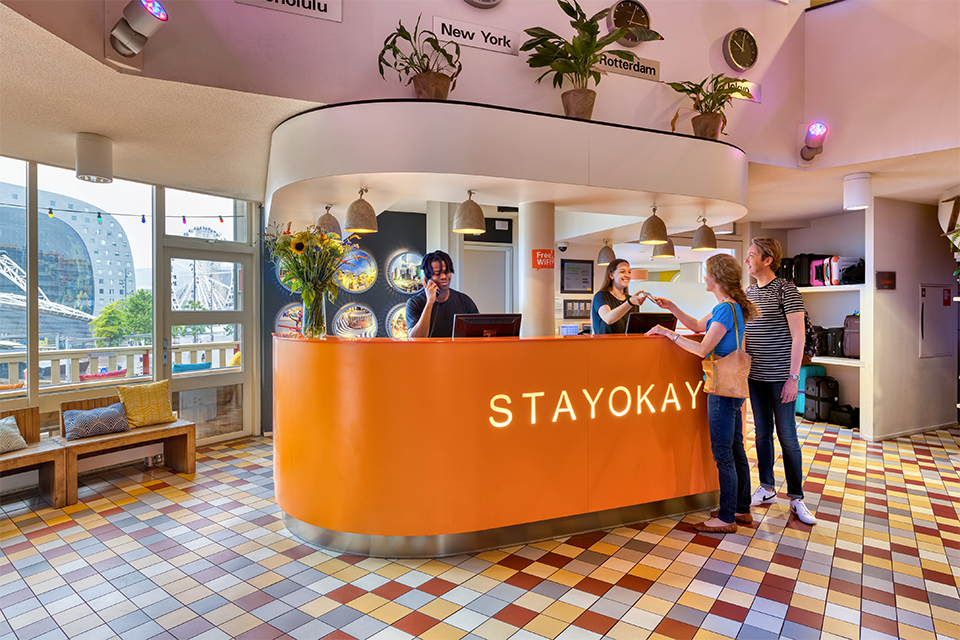
In addition to sustainability, the renovation also responds to the way in which the hostel is developing into a modern, hybrid form between a hostel and a hotel. “We are creating a place where the liveliness and social atmosphere of a hostel come together with the comfort and privacy of a hotel,” says Van Nistelrooij. “This allows us to better cater to today's travellers and keep the experience in line with our promise: an affordable, priceless memory – in an icon that is once again equipped with all modern conveniences.”
Stayokay aims to expand from 22 to approximately 30 hostels in the Netherlands in the coming years. “We work with a permanent core team of construction and installation partners,” says Van Nistelrooij. “It's like a travelling circus that moves from location to location. We hope that Pleijsier will become a permanent part of this. Because we're not looking for ‘hit and run’ project partners, but want sustainable collaborations based on trust.”
Kanis agrees: “As a family business, we don't want to be a flash in the pan. We strive for long-term relationships with clients. That foundation has been laid here.”
Neem dan rechtstreeks contact op met Pleijsier Hotel Renovation.
 Contact opnemen
Pleijsier Hotelrenovation focuses on renovating and converting existing hotel buildings and completing new hotel buildings of national hotel chains. The guiding principles in these projects are modernisation, sustainability and future-proofing. To this end, Pleijsier Hotelrenovatie combines two of its strengths: the qualities and knowledge of product and process thinking and years of [...]
View Company profile Nederlands Nederlands
  English (UK)