hotelvak.eu
EN

Platform on hotelmanagement, interiordesign and design in the Netherlands
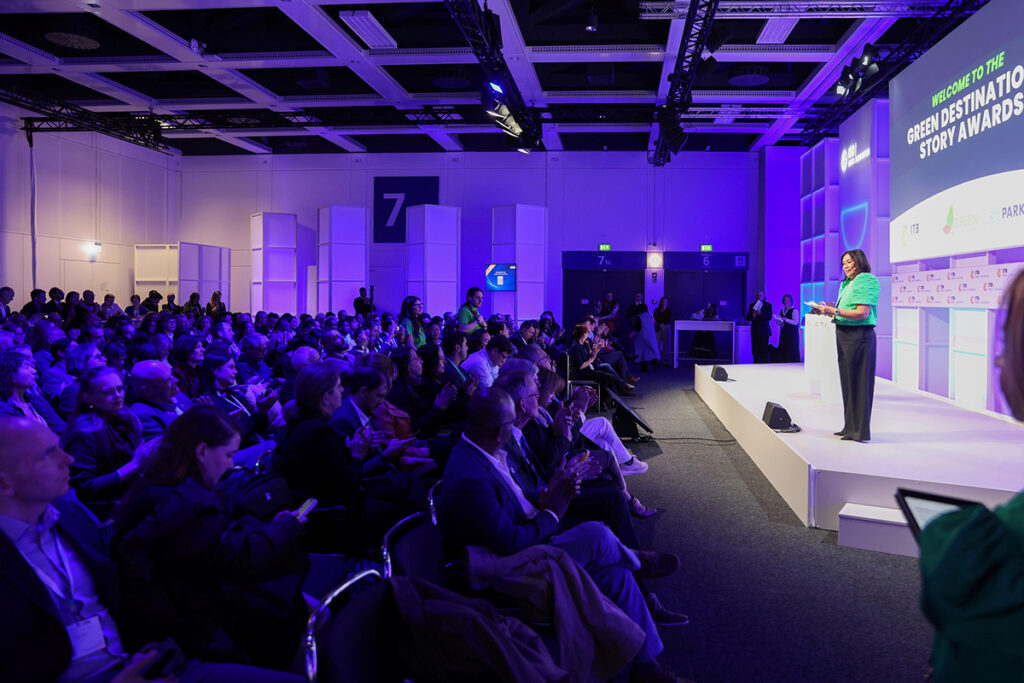
The first two days of ITB Berlin 2026 make it immediately clear that the international travel industry is back to full strength, but also that the sector is thinking more seriously about direction and borders. In its 60th anniversary year, the fair presents itself as a completely sold-out global meeting place, with almost 6,000 exhibitors from more than 160 countries and a strong focus on market opportunities, innovation and strategic cooperation.
The kick-off on 2 March was mainly about scale, symbolism and positioning. ITB emphasised its historical role as an international B2B marketplace for tourism and underscored that, especially in a time of geopolitical tension, there is a need for places where trade, networks and strategic alliances come together. That image was reinforced by the opening press conference and gala evening, which firmly established the anniversary edition not only ceremoniously, but also in terms of content.
On the first official day of the fair, that positioning became immediately concrete. The organisers reported a fully booked edition, with major country presentations from Thailand, Egypt, Turkey and Italy, among others. On the buyer side, the fair also looks strong. The ITB Buyers Circle brings together top buyers from 63 countries, 43 per cent of whom are participating for the first time. This is more than a detail. It is an important signal that the fair not only wants to maintain its status but also create new business dynamics.
Also notable is Angola's prominent role as host country. Under the motto Visit Angola The Rhythm of Life, the country profiles itself as a new African destination with cultural strength, nature experience and economic ambition. This will give Africa visibility at this edition that goes beyond mere promotion. Angola is emphatically presented as a growth story and an example of how tourism can contribute to economic broadening and sustainable development.
In terms of content, the fair has revolved around two broad lines from the very beginning: growth and transformation. Market figures in official communications differ slightly by source and measurement method, but point in the same direction. Both Phocuswright and IPK International signal further growth of the travel market in 2025, with especially strong momentum from Latin America, India and South America. At the same time, this growth is no longer embraced without criticism. Themes such as overtourism, sustainability, geopolitical shifts and economic resilience run as a common thread through the first few days.
In addition, it is clear that technology is no longer a separate component, but is at the heart of today's tourism business model. Travel Technology again covers more than six halls, with artificial intelligence, data, automation, new payment solutions and digital hospitality tools recurring throughout. The ITB congress is also in line with this, with more than 400 experts, over 200 sessions and 17 thematic tracks around artificial intelligence, resilient destinations, climate pressure and new business models, among others. The message of the first two days is thus clear: the sector is growing, but only those who take digitalisation, sustainability and market shifts seriously will remain relevant.
Editorially, that is perhaps the real conclusion of this opening phase. ITB Berlin 2026 celebrates its past, but above all tries to keep a grip on a tourism future that has become more complex, technological and political. The atmosphere is optimistic, business interest high, but beneath the anniversary glow lies a more serious agenda. The travel industry wants to move forward, just not more blindly.
 Nederlands Nederlands
  English (UK)