hotelvak.eu
EN

Platform on hotelmanagement, interiordesign and design in the Netherlands
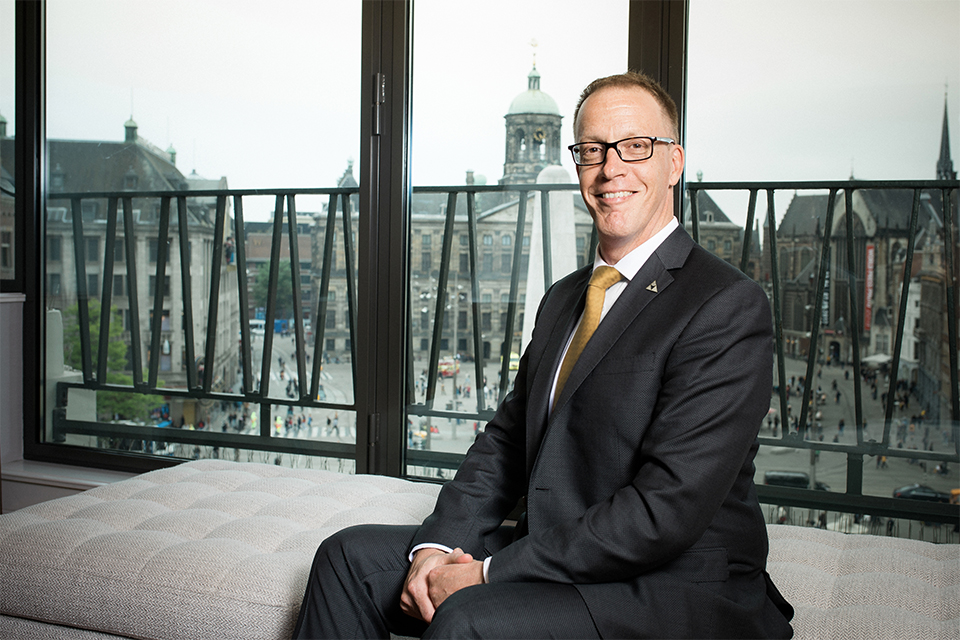
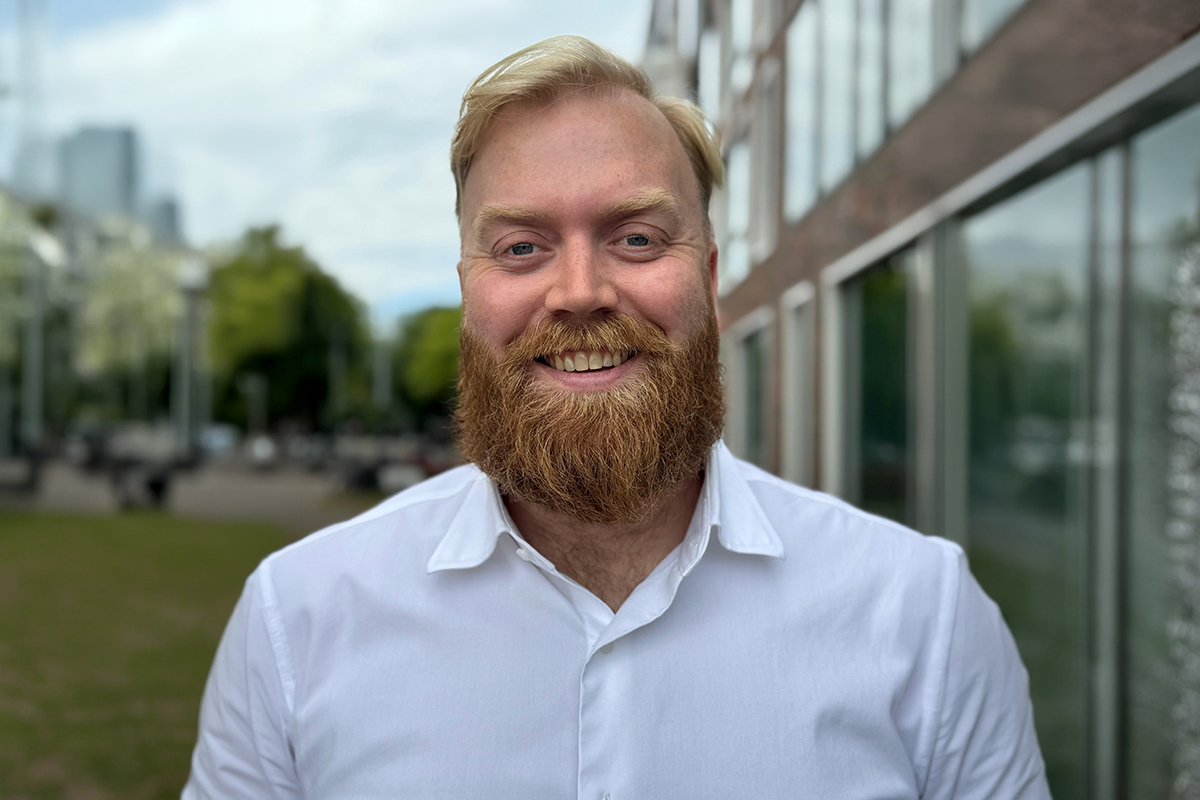
Anyone speaking to Heuwekemeijer will not hear a man making the hotel industry look prettier than it is. He talks just as easily about long working weeks, 120 e-mails a day and the pressure of a big hotel as he does about holidays, Christmas and the satisfaction of a successful stay. It is precisely this combination that defines him: for him, hospitality is not an abstract concept, but a profession in which everything revolves around attention at moments that matter.
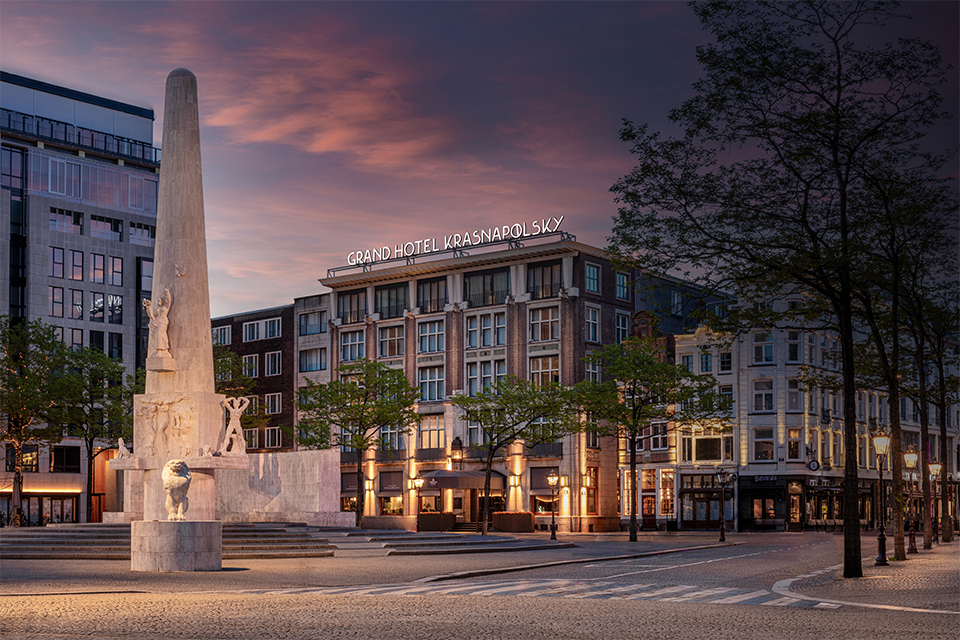
As the son of a banker, Heuwekemeijer knew early on what he did not want. A part-time job at Albert Heijn added to this: stock-keeping was not for him. Via a temp agency, he ended up in Amsterdam hotels, where, as a breakfast waiter, he realised for the first time how much he enjoyed giving guests a good start to the day. He actually already knew that feeling from home. At parties in a large family, he was invariably the one with the drinks and snacks, although he said they were more like liverwurst pieces than White Room-level dishes. So the move into the hotel business did not come out of the blue, although the route to it did not quite follow the established path. After seven years of havo, he was advised to attend secondary hotel school. Heuwekemeijer decided otherwise. He wanted, in his own words, “to achieve a bit more”, and chose the Hogere Hotelschool Leeuwarden, which he completed in four years.
What particularly attracted him during those years was not just the dynamics of the business, but the kind of moments when a hotel can make a difference. A holiday that people looked forward to all year. Christmas. New Year's Eve. Especially then, he says, everything has to be right. When he was still working in service and F&B, he immediately felt what good service can do to a guest. “I beam and smile when people are having a good time,” he says of himself. That is perhaps the simplest yet sharpest description of his career choice.

After several years in the Netherlands, the big twist came at Okura Amsterdam. There, his then director, Mr Van Aelst, asked if he wanted to go abroad. Heuwekemeijer had that plan himself for some time. But he was thinking of Spain, Italy or France rather than China. Yet it was the latter. In 2001, he left with 23 kilos of luggage and the firm conviction that he would see his parents again in the Netherlands in two years' time.
The switch was bigger than just the destination. In Amsterdam, he worked in Food & Beverage; in China, he started doing international sales. That too was outside his comfort zone. On top of that, he ended up in a Japanese hotel with Japanese and Chinese management, as the only foreigner, without speaking the language. That it worked anyway, he himself attributes to two things: adapting and being open to a different way of thinking.
He cites the example of a business card, which in the Netherlands is often handed over with one hand and in China with two, with eye contact and attention. It seems like a detail, but for Heuwekemeijer it is exactly where respect begins. He learned the same thing earlier in Amsterdam, in a conversation with Japanese chef Oshima. Knowing that it could be rude to refuse an offered cup of coffee, as a young employee he drank a coffee he didn't actually like. Later, he confessed this. The chef appreciated the intention. For Heuwekemeijer, it became an early lesson in international hospitality: if you make an effort to adapt, you get a lot in return.
There was hardly any talk of homesickness. In Shanghai, where everything was in motion around 2001 and 2002, he rather felt he was running out of time. During the day he worked in the hotel, in the evenings there were events and on weekends he played football with a group of Dutchmen. More importantly, he saw how fast the hotel industry was growing in Asia. Where he saw a familiar environment in the Netherlands, he saw opportunities there. He had set himself the goal of becoming managing director of a five-star hotel before he was 40 and realised that route was more quickly open in Asia.
This did not stop at a few isolated jobs. At one point, Heuwekemeijer worked on 28 different hotel projects. In Liuzhou, a so-called fourth-tier city that still has a population of six million, he was even asked to help think about the development of the airport. Not because he was an aviation expert, but because he was one of the few foreigners with experience of flying. It typifies the scale at which he worked, but also how quickly you gain responsibility in such an environment if you adapt, deliver and build relationships.
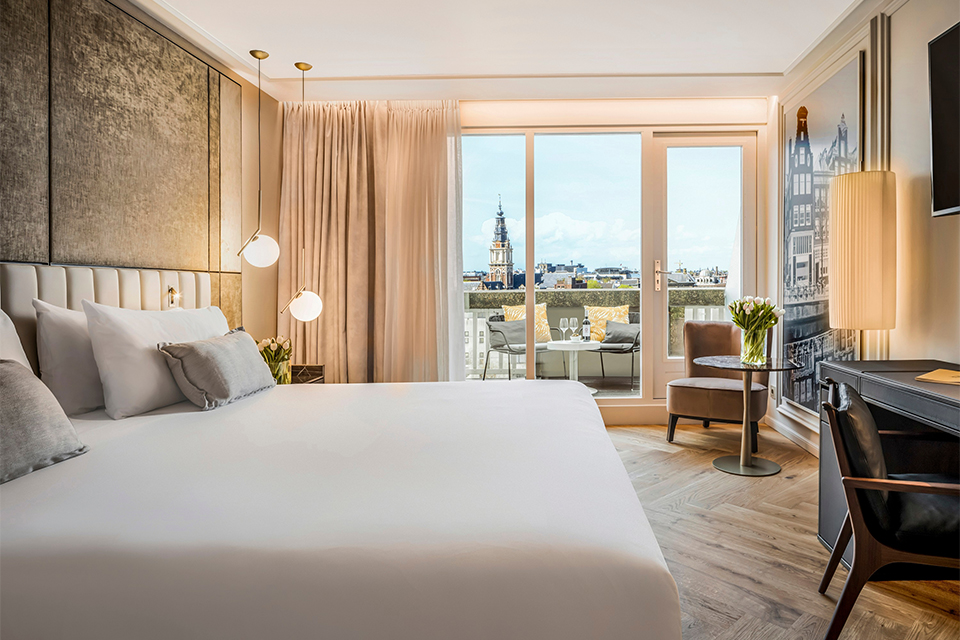
In China, Heuwekemeijer also met his wife. They first knew each other as friends; later that grew into a relationship. They have now been together for 19 years and have an 18-year-old son.
International life brought a lot, but also required sacrifices. When he later went to Singapore for a head office position, it meant about 260 travel days a year. For him, it was a valuable move as he got to know the chain side of the business. At the same time, he also honestly mentions the price: his wife gave up her business in Shanghai and he saw his family mostly on weekends during those years.
From Singapore, Heuwekemeijer opened hotels in the Philippines, India and Thailand. In each country, he had to relearn how people work, react and receive guidance. In China, he says, people turned right when he told them to turn right. In the Philippines, people also said “yes”, but he had to check more carefully whether it then actually happened. In India, all sorts of things happened before he had even spoken. These are not anecdotes to remotely describe cultural differences, but lessons that have permanently shaped his leadership style.
This includes adapting is never the same as accepting everything. In Thailand, he once stopped the opening of a hotel because fire safety was not up to scratch. An owner said that “this is how we do things in Thailand”. Heuwekemeijer insisted: his signature did not go. That is the other side of his flexibility. Move along, yes. Letting go of your standards, no. What he learned in such situations is that honesty only works if you also offer an alternative. Not just saying something cannot be done, but explaining how it can be done. That very openness, he says, later earned him lasting relationships with owners in Asia.
That Heuwekemeijer returned to the Netherlands after all these years had little to do with waning enthusiasm for Asia and everything to do with his family. His son grew up in hotels and led a rather comfortable childhood life, according to his father. When he wanted to move on in tennis, his parents wanted to look at opportunities in Europe. Heuwekemeijer started looking for work closer to home and heard through the grapevine that jobs were available in
Amsterdam a general manager was sought.
That application was not exactly a formality. He conducted seven interviews with various stakeholders. What worked in his favour was that the hotel was on its way to rebranding to Anantara, a Southeast Asian brand. Heuwekemeijer knew that world, had experience with third-party ownership, had worked at the luxury level and was also an Amsterdammer. He himself says he could tick many boxes. Only his network in Amsterdam was still seen as a question mark. He thought that was precisely the only tick that didn't necessarily have to be there already.
The question was not so much what hospitality meant to him, but how he would improve the hotel. His answer was clear: he wanted to bring the higher standards he had worked with in Asia to Amsterdam. And not from behind a desk. Heuwekemeijer emphatically calls himself a hands-on manager. Shortly after starting, he spoke to the Doorman, who told him he was one of the few directors who really engaged with him. Heuwekemeijer found that remarkable, because to him, the doorman is “face number one” to the guest. Therein lies his leadership view in a nutshell: service is not improved from a distance, but by being close to your people and making visible what you expect.
A hands-on general manager on Dam Square More than six years after his start, Heuwekemeijer is clear about what has been achieved in that period. He cites a strong financial result, says Krasnapolsky is back “where it should be in the Amsterdam market, in the top segment” and also sees the renovation and rebranding to Anantara as a major achievement. Yet his greatest pride lies elsewhere. Three of his former vice directors are now directors of other hotels within the group. He explicitly does not attribute the fact that they were able to grow on to himself alone, but he is visibly proud that the environment was there in which that became possible.
Meanwhile, he by no means sees his own role as being remote from the guest. Precisely at Krasnapolsky, he can still walk into the lobby, sit down to breakfast in the Winter Garden or speak to guests who book directly with him via travel agents. He missed that direct contact earlier in Singapore at the head office. Here, it is still part of the day. Only now he chooses his moments differently than before.
At the same time, the scale of the hotel is constantly felt. Heuwekemeijer says without equivocation that running such a well-known Amsterdam hotel brings concerns. Responsibility towards owner, towards group, towards team and especially towards guests. On average, he says, some five hundred guests stay at the hotel every day. If something goes wrong, he feels it personally. He says safety is also the issue he can get really angry about when things are not in order. That is not the romantic side of hotel management, but he says it is an essential part of the profession.
Anyone who thinks that the most difficult questions for a general manager are mainly operational in nature will get a different answer from Heuwekemeijer. For him, the biggest challenges currently lie in the policies of the city of Amsterdam and the government. He mentions the 12.5 per cent tourist tax, the move from 9 to 21 per cent VAT and the expectation that hotels will continue to turn at least the same results despite these pressures. For a hotel of this size, he says, the tax burden is in the millions.
His reasoning is businesslike and simple. If he manages to save a euro per room somewhere, at around 120,000 room nights a year, that immediately makes serious money. But when the tax burden rises so sharply, the amounts run just as fast in the other direction. There again, the son of a banker might speak to that. In such discussions, Heuwekemeijer calls himself someone who goes “straight ahead” rather than a diplomat. He does not tolerate unfairness well. At the same time, he also knows that others are sometimes better at lobbying than he is, and that as a general manager, you especially need to know who has what power.
At least as big for him is the staff demand. When he addresses hotel school students and asks who really wants to enter the hotel industry, he says sometimes only four or five hands go up in a group of 20. He finds that worrying. That is precisely why he tries to show young people that the profession has changed and still has a lot to offer: great stories, special encounters and an industry in which no week is the same.
To advice for colleagues, he has not attached a complicated management model. The first is almost harsh in its simplicity: enjoy what you do, and if you don't, stop. The second sounds softer, but is just as matter-of-fact in his eyes: be kind to each other. Not as an empty slogan, but as genuine consideration for people. Ask how someone's son or daughter is doing. Remember that someone is struggling with something. In a labour market where employees can go anywhere, he says that is not an afterthought, but leadership.
Perhaps that is also why his story as a portrait ultimately suits the man better than a listing of titles and countries. From breakfast waiter in Amsterdam to general manager at Dam Square, there is a surprisingly consistent line running through his career: adjust where you have to, be clear where you have to and always keep looking for how to make things better for guests and employees. So will he really quit at 60? He himself doesn't think so. There are still too many great moments in the hotel industry for that.
 Nederlands Nederlands
  English (UK)