hotelvak.eu
EN

Platform on hotelmanagement, interiordesign and design in the Netherlands

The hotel industry knows the story by now. Digital keys or Wallet Keys are on the rise, energy conservation is high on the agenda and the smart hotel room has been a topic of conversation for years. Yet the market is now shifting a stage further. No one likes to read a story explaining again that digital access exists. The real question is now much more businesslike: which technology in practice delivers less friction, more operational peace and demonstrably more grip on energy in the hotel?
It is exactly at this point that Vingcard's story becomes interesting. Not because Wallet Keys and EMS (Energy Management System) or GRMS (Guest Room Management System) are new as separate concepts, but because the application is maturing. Whereas before hotel technology often stuck to functionality, now it's all about adoption, simplicity and consistency. That makes the difference between a smart solution on paper and one that actually makes hotel operations stronger.
“Technology should not be separate from the operation,” says Jeroen Coesmans, Managing Director at Vingcard / ASSA ABLOY Global Solutions Benelux. “The value only arises when it makes the hotel team work more efficiently and the guest experiences a smoother stay.”
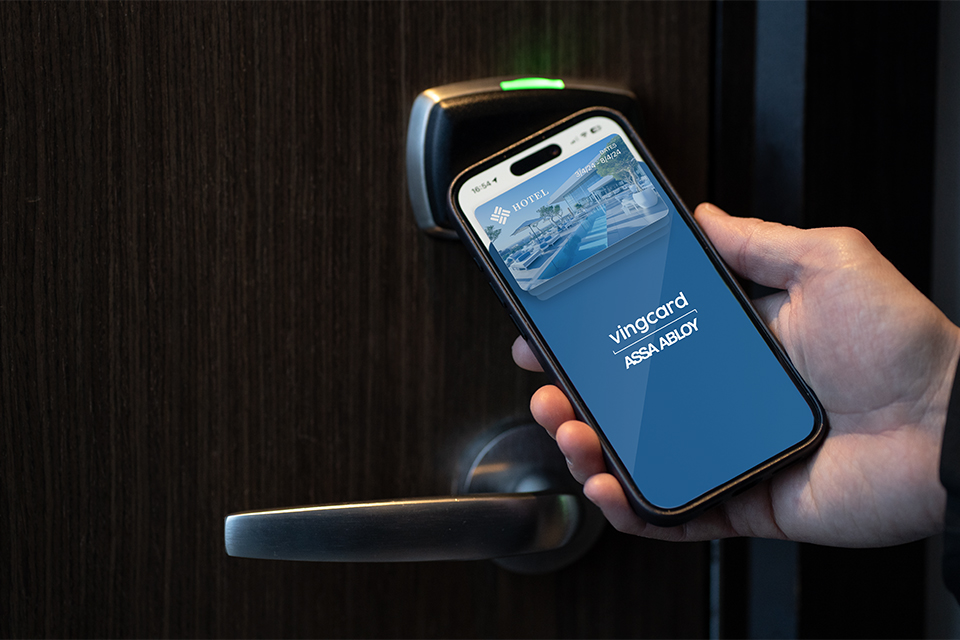
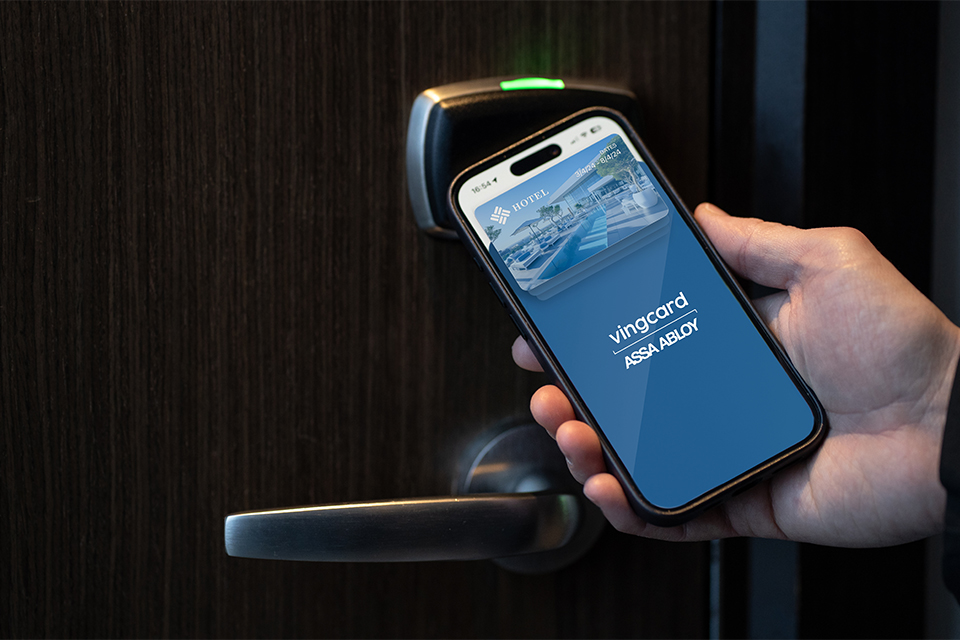
This may sound paradoxical, but good access control should be unobtrusive. The less attention a guest has to pay to it, the better the system works. Therein lies the strength of Wallet Keys. These are not hidden in a separate hotel app that the guest has to click through first, but enter an environment that is already familiar: the digital wallet on the smartphone. Then, just holding the phone near the lock is enough, this does not even require unlocking the phone.
That seems like a small detail, but operationally it is anything but. Many hoteliers have already seen that digital keys can work fine technically, but that usage lags once the route is too cumbersome. Every extra step lowers the chances of adoption. This is exactly why the shift to the digital wallet is relevant. Not because the concept of mobile access is new, but because it lowers the threshold for actual use.
For the guest, it means less hassle on arrival. For the hotel, it means less dependence on physical keycards, less pressure on reception and less disruption in daily operations. Also, one can easily update a digital key for late check-out, for example. Access technology thus becomes not a gadget, but a logical part of a more efficient work process.
“Ease of use is decisive,” says Coesmans. “If the technology works intuitively, acceptance increases and you also see effects in operations faster.”

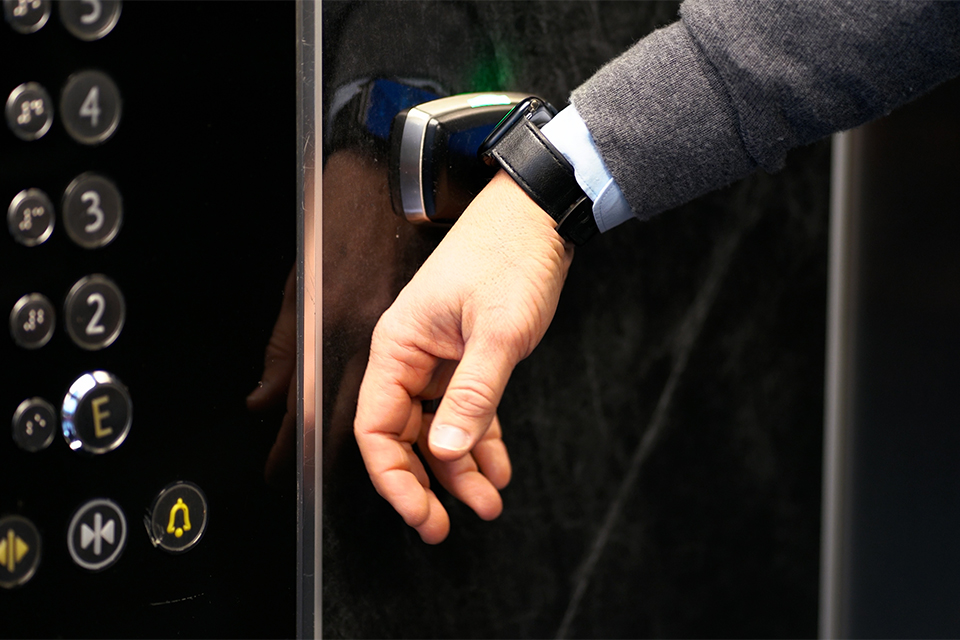
This immediately touches on a broader development. Many hotels want to digitise, but find that separate tools do not automatically produce a better operation. A digital key, a smart thermostat and a few sensors do not yet form a coherent system. Only when technology communicates with each other does real management information emerge.
Therefore, the combination of access technology with EMS and GRMS is gaining weight. Those who only look at the lock are looking too small. The real gain is in the link between access, occupancy, comfort and energy consumption. Once systems interact, this creates a hotel room that not only feels smarter for the guest, but also works smarter for the operation.
That makes the move to hotel digitisation more business-friendly. Not because a hotel necessarily wants to appear as innovative as possible, but because technology finally contributes directly to better processes, savings and more predictability in operations.
Especially in the energy field, this shift is badly needed. Many hoteliers seek sustainable hotel operations, but come up against a familiar problem: saving is easy as a slogan, much harder in execution. After all, a room does not consume on paper, but in real-time. And real-time requires systems that can constantly switch based on presence, usage and status.
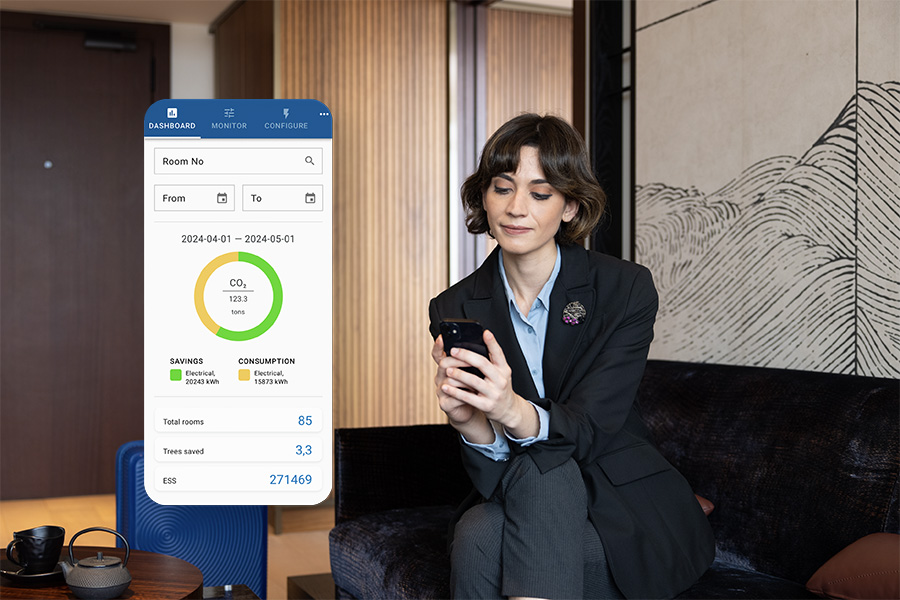
That's where EMS and GRMS come in. Energy management systems (EMS) help you monitor and minimise energy consumption with smart control devices for power, climate and lighting. Guest Room Management Systems (GRMS) allow you to effortlessly tailor settings to guests' preferences with fully customisable room controls and control panels. This reduces energy waste, lowers operational costs and supports sustainability goals, without compromising comfort or requiring complex system interventions.
For hoteliers, this is a substantial difference. After all, sustainable hotel operations are not about cutting costs at the expense of the guest experience. It's about steering more precisely. An empty room does not have to remain fully active. On the contrary, an occupied room should feel comfortable, without unnecessary consumption. This does not require an isolated measure, but a system approach.
“The biggest step forward is in consistency,” says Coesmans. “Only when access, room control and operational data reinforce each other do you really get a return on investment as a hotel.”
This also shifts the conversation from technology to operations. That is ultimately what most hoteliers are catching on to. Less friction at the front desk. Less manual handling. Better insight into room status. Sharper energy management. More peace of mind for teams. These are not abstract innovations, but tangible benefits in a market under pressure from cost increases, staff shortages and higher guest expectations.
This is precisely why this topic deserves renewed attention. Not because the sector does not yet know the terms, but because their practical meaning is changing. What first sounded mostly interesting is now starting to deliver real value at the operational level.
Neem dan rechtstreeks contact op met Vingcard ASSA ABLOY.
 Contact opnemen
For four decades, the Vingcard name has been synonymous with the highest standards in access and security solutions. From hotels to student housing and apartment complexes, our global team serves the needs of diverse businesses in more than 160 countries. Vingcard is much more than a leading manufacturer of electronic door locks; today, we are an end-to-end security provider with solutions [...]
View Company profile Nederlands Nederlands
  English (UK)