[00:00]Lightspeed Restaurant, the leading platform for the world’s top hospitality entrepreneurs.
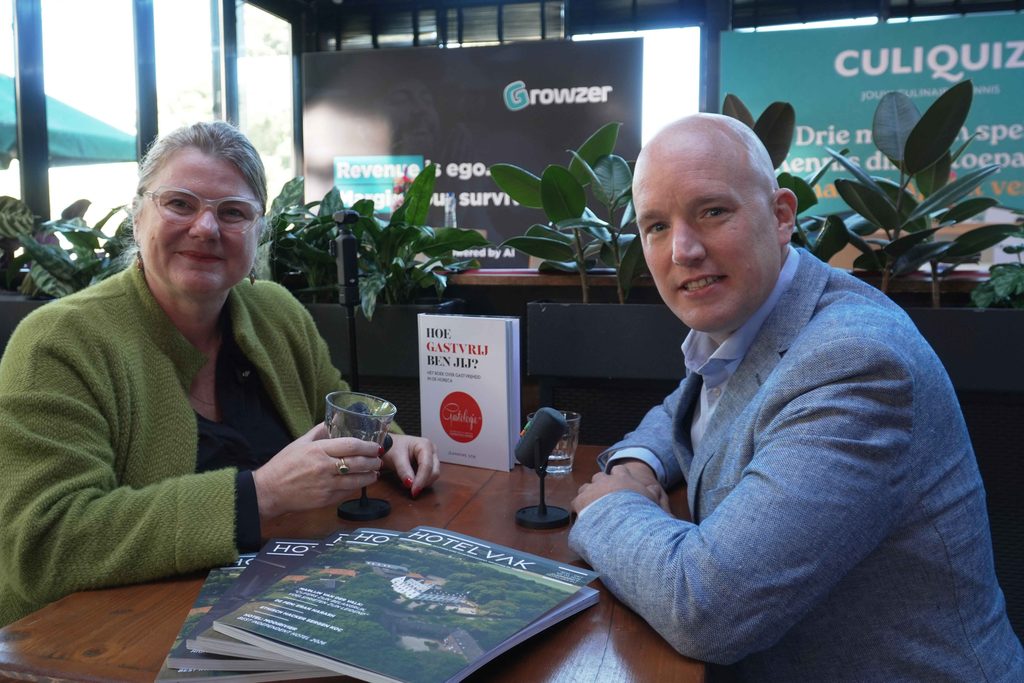
[00:11]Dear listeners, my name is Jeannine Sok, the Netherlands’ first ‘guestologist’. Welcome to the bar – where the best conversations take place. [00:23]At the bar: what would you like to drink?
[00:26]Let’s start with a glass of water.
[00:28]A glass of water, well, that’s just fine. It’s lovely that you’ve finally come to the bar for a change.
[00:35]Thank you very much. It’s an honour to be sitting at your bar. I haven’t actually sat at a bar very often. It’s nice that we’re having this conversation here.
[00:41]Yes, absolutely. What do you do? For the listeners’ sake: who are you, actually?
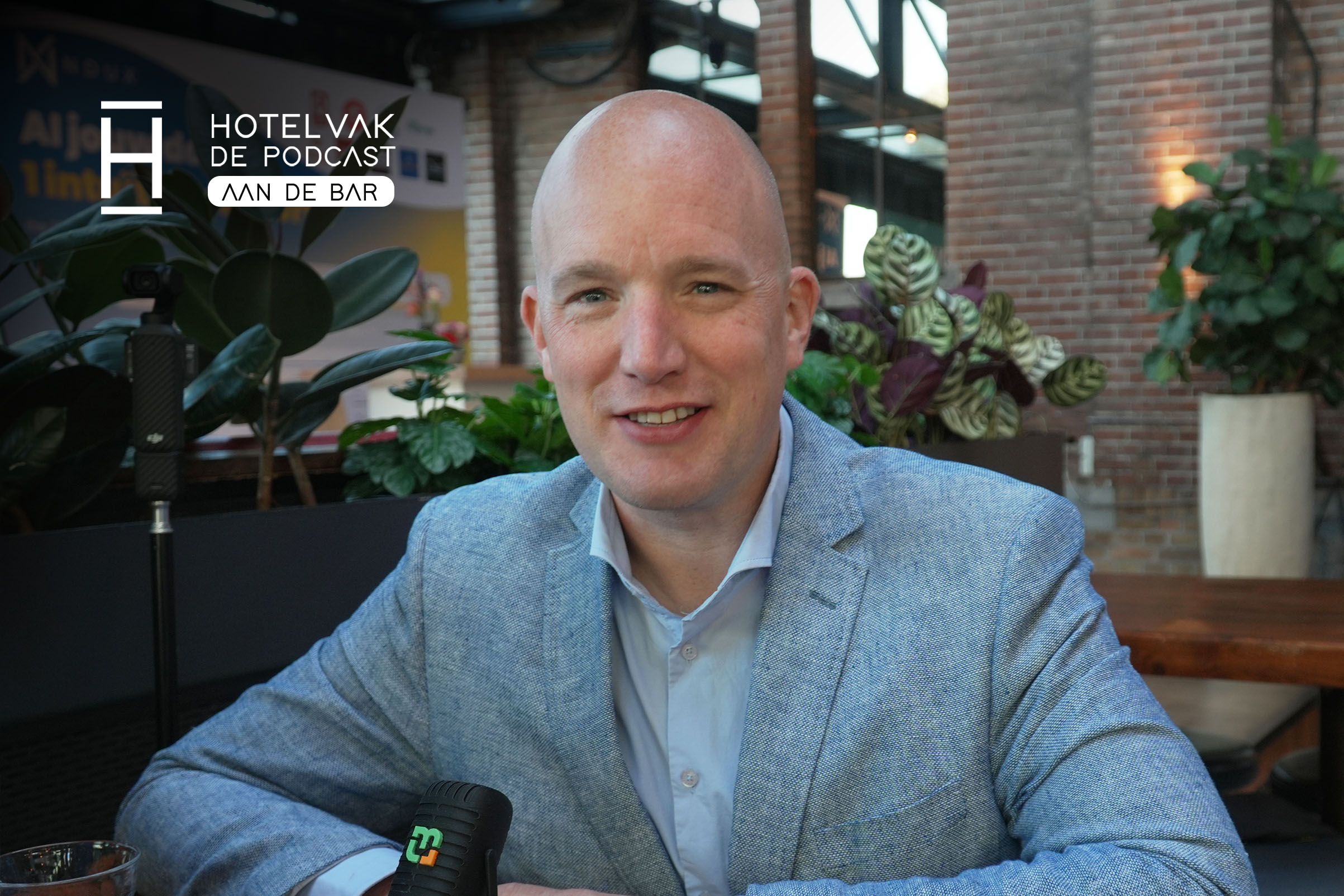
[00:47]I’m Tjitze van der Dam, a former head chef. I’ve always been fortunate enough to work at the very top of Dutch gastronomy. And I started my own business in 2019, so that was seven years ago.
[00:59]And now, fast forward to today, I’m the Chief Operating Officer of Gault&Millau Netherlands. I’m also the founder and creator of CuliQuiz. It started as a little quiz on my Instagram and has grown into a whole platform,
[01:14]Through this, we train hospitality teams and young professionals in their knowledge. We focus not on skills, but genuinely on knowledge.
[01:22]Yes, and you say it started as a little post? A little quiz on Instagram.
[01:26]Yes, five questions a day about food and drink during the coronavirus pandemic. I set up my own business in November 2019. Four months later, the coronavirus hit. I got off to a flying start with my consultancy work, helping young chefs settle into their roles as head chefs in hotels.
[01:43]And that actually went quite well. 15 March – I remember it as if it were yesterday. That’s when Mark Rutte said… that’s when I heard that the Netherlands was going into lockdown. The next day, there were no more jobs for me.
[01:55]No.
[01:55]And I was working as a freelancer, so I was on my own. And then I thought: I need to stay visible, even for later on, when business picks up again. So after a few days, I started running a little quiz on my Instagram.
[02:07]Five questions about food and drink, just for fun. They ranged from: where does baba ganoush come from, or what is baba ganoush made of, to: where is Bordeaux? They then had to tick the correct spot on the map.
[02:20]And that was a massive success. In no time at all, a thousand people from our wonderful profession had taken that little quiz. I carried on doing that for quite a while. Then business picked up again, so I stopped.
[02:31]Because it did take me quite a long time, after all.
[02:34]Five questions a day. And no repeats.
[02:38]No, exactly. I kept a neat record of it in a little Excel spreadsheet and made sure there was plenty of variety. But finding the visuals to go with it, putting the post together: on average, I was still spending about an hour and a half on it every day.
[02:51]And that was great fun. But when my business picked up again, I had to start making money once more. So this is the first thing you have to let go of. In its heyday, 1,000 to 1,500 people a day took part in this little quiz via my personal Instagram.
[03:03]But when I stopped – you know how it goes – people started sending messages: ‘What a shame’, ‘That’s lovely’, ‘You should carry on with it’. Well, that’s nice. I enjoy it too, but you’ve got to earn a living. But it did plant a seed, so to speak. I thought: right, we need to do more with this. [03:16]After a few months, once the business was up and running again, I thought: I really must do something with this. That quiz just kept popping into my head. And then I started thinking about how I could take that bit
[03:29]I was able to turn gamification – which everyone seems to really enjoy – into something very practical, which actually benefits people in real life. So I set about writing a year-long programme for vocational students, in order to
[03:41]to encourage those students to compete with one another in terms of subject knowledge. I did that for two reasons: because it was great fun, and because I thought it would help to get those lads and lasses excited about it. [03:53]Of course, we face quite a challenge when it comes to staffing in the hospitality sector. And I believe that anything you nurture will flourish. If we look at the breakdown of students, we see that the largest group are the management students – that is, hotel management students. But in reality, nothing is organised for them in terms of competitions.
[04:16]For chefs, there are cooking competitions, there are service competitions, there are wine-tasting competitions. For those who truly practise the craft, there are quite a few options. But even that isn’t for everyone, because not everyone wants to be on a stage like that and train all day long.
[04:30]Some people really enjoy that sort of match.
[04:32]I used to really enjoy it. But you can see that, for the majority of students, there isn’t really anything organised. And I think to myself: that’s quite strange. We complain that there aren’t enough staff, but nothing’s being done about it either. So perhaps this drop-out rate is just a natural trend.
[04:44]To cut a long story short: I ended up working with those students and put together a year-long programme for them. In the first year, more than 3,500 students from 25 ROCs took part.
[04:56]That’s absolutely mad. At that point I thought: OK, wow, this works and they’re enjoying it. Ultimately, that led to one big final in an esports arena. A completely different environment to what we’re used to in the hospitality industry.
[05:07]Normally, you’d go to a hospitality trade fair, but no, we went to an e-sports arena. That’s where the schools and the ten best students turned up – they’d qualified via our online app, which was a really simple little tool.
[05:21]They went head-to-head there. And it was brilliant. Their partners were there too, and they carried out a few practical tasks on site. Quickly setting a table, a tasting session, blind tasting.
[05:34]That’s brilliant. Then I thought: oh wow, this is something – we’ve got something they like, and we need to build on that. So that was step 1. And then I kept thinking about how we could innovate CuliQuiz into something
[05:49]which isn’t just a one-off event, but something that genuinely benefits the sector on a regular basis. Well, if you look at where we are now: following Duolingo’s example, we’ve built an entire platform centred around gamification.
[06:03]Through gamification, we want young professionals to spend three minutes each day on their phones answering a few questions and playing some simple games, to improve their knowledge on the shop floor. Because if knowledge on the shop floor is better, we ultimately serve the business owner better too. [06:18]Craftsmanship sells. That translates into higher turnover and, hopefully, higher profit margins. Well-trained teams simply generate higher profit margins. And we get people excited about our wonderful profession, because we’re in the best industry in the world.
[06:30]I completely agree, of course. But how do you ensure that those students are motivated and actually get on with it? Are there lecturers or entrepreneurs involved? Or how do you go about it?
[06:41]Well, of course there are entrepreneurs and teachers who encourage this within their teams. But the key – and this is how I think it will work – is that you need to get the people on the ground excited about your tool. [06:54]To do that, we travel around the country a great deal. We visit a lot of ROCs and schools, and we run lots of engagement activities to connect with young professionals. Then either I or someone from my team turns up and we do quizzes and play games. [07:06]This can be in a classroom setting or on an individual basis. We pull out all the stops when it comes to games, depending on the situation. Last week, for example, we were at an internship fair with 800 students at the ROC in Amsterdam.
[07:18]They all came along and were able to take a little quiz individually on screen. At other times, we do it as a class. Then there are 500 people in the hall and we do a quiz together. So that’s possible too.
[07:30]So we now have all sorts of gamified elements in our repertoire to engage those young professionals. And once we’ve got them excited about it, you’ll see that the move towards the app happens almost automatically.
[07:44]Yes, that’s great, because then they’ve realised: ‘Oh, this is really cool.’ And then you can just do it at home every day.
[07:51]It’s fairly anonymous, so you aren’t immediately held to account for your mistakes. You can just get on with playing. Ultimately, this ensures that the staff on the shop floor are better informed, and that they feel more confident whilst on the shop floor.
[08:04]As a result, they feel more confident at the table, the guests have a better experience, and they can challenge their colleagues. You can see that this element of gamification really works. Yes, absolutely.
[08:15]I do it the old-fashioned way, of course, with my board game.
[08:17]That’s fine too.
[08:18]Gastrology – you’re familiar with that, of course. I still play it almost every week and it’s still great fun. So I’ve noticed the same thing: learning through play really does work. [08:30]And it’s no coincidence that you’ve got ‘2 voor 12’ and quizzes like that. Or ‘Triviant’ – that’s back in fashion too.
[08:36] Hitster is now a real hit, thanks to its music.
[08:38]There’s a reason for that, isn’t there? Yes.
[08:40]People love games.
[08:41]You’ve obviously got a number of partners. How did you get them on board to invest in this? So that you’re not travelling all over the country for nothing.
[08:51]Well, I’m always very enthusiastic, of course, so I think that helps a great deal. But I also think that the companies that are currently partners – and therefore contribute to the platform – see it as a two-way street.
[09:09]I think they also recognise the need amongst business owners. I think every catering supplier – I wouldn’t call it an obligation, but they do have a role to play in ensuring that those businesses
[09:23]to be supported in dealing with the problems they face.
[09:28]Yes, exactly.
[09:28]There are various ways to do this. You see, there are companies that provide co-funding when businesses are starting up. That’s brilliant if you have the capacity to do so. But I think a catering supplier always has a role to play.
[09:42]And that can be big or small. I think those suppliers also feel that they need to contribute to the future of the industry. Because, after all, without customers, I won’t have a business either. [09:54]And this is a fairly accessible way to get involved. Why is that? On the one hand, the catering supplier wants their product to feature on the menu. They do this through the Horecava or Gastvrij Rotterdam. They have a stand there and, together with business owners, ensure [10:08]that their product features on the menu. But they also want the staff on the floor to sell their product. So if we can add a bit of brand experience and brand translation for the end user, the story gets told at the table.
[10:21]Yes, and then it’s all about storytelling.
[10:22]Yes. And the content they provide for our platform is always subject-specific. It will never be a blatant advert saying: ‘This product from this supplier is better than the rest.’ [10:34]No, it’s subject-specific: we link certain topics to a supplier. Take Coca-Cola, for example, one of our partners. They’re very keen to focus on training courses on hospitality, upselling and cross-selling.
[10:48][unintelligible]
[10:49]They’re really focusing on that. That makes sense; they’re investing heavily in it. So it’s not about the Coca-Cola product at all, because everyone’s familiar with that. But if we use their brand to improve hospitality, upselling and cross-selling on the shop floor, [11:03]then their name is automatically associated with that, because they’re the ones championing that approach. Whether it’s you or me. And then young professionals will also see you as an expert in the field.
[11:13]Yes, exactly.
[11:14]And that’s the indirect benefit for your brand. We ensure that quality improves, that more is sold and that guests have a better experience.
[11:21]So, for example, you don’t put just one ice cube in your Coca-Cola, because that’s pointless: it’ll just water it down straight away. But three cubes. At least three cubes. That sort of thing. [11:33]And if you highlight that often enough, the staff will say: ‘Oh, I didn’t know that.’.
[11:40] It’s the simplest things.
[11:42]Yes, sharing knowledge means multiplying it.
[11:44]One plus one equals three – that’s how it is. And that’s what we need in our industry too. We mustn’t feel that we’re the only ones changing the market. [11:55]We really need to do this together. And that starts with the business owner. It’s linked to education, to the brands that supply us, and to the venues. Everyone needs to play their part. And I hope we’re doing just that. [12:07]Also through the CuliQuiz Top 100.
[12:10]Yes, I think that’s such a brilliant initiative of yours. You launched it last year, the CuliQuiz Top 100.
[12:17]So you were in on it, weren’t you?
[12:18]Yes, I was featured in it. How did you come up with that idea? Because I think it’s a really lovely initiative, to put the spotlight on both well-known and lesser-known people in the industry. I think that’s brilliant.
[12:30]Well, thank you very much. That’s a lovely compliment. What I find important in this regard is that, with CuliQuiz, we’re of course saying that we’re fostering the craftsmanship of tomorrow.
[12:37]Yes.
[12:39]And I hope we’re doing a good job of it. We’re doing our best, but we’re certainly not the only ones doing so. Every day, there are people on the floor, both in front of and behind the scenes, working on [12:50]hospitality – in the kitchen, baristas, cocktail mixers – who are genuinely investing in the future. That could be a lecturer who, outside of their teaching hours, is still working with a few students to train them for a competition, give them an extra lesson or take them [13:07]to an external venue. Or you, who really promotes the hospitality profession to the outside world. These are actually a great many different things. Well, in your case, it’s quite obvious. [13:20]I think that deserves recognition. But perhaps even more so for the people working behind the scenes. Because they invest in it because they enjoy it and because it feels right. And those people often don’t get the spotlight, because they don’t seek it out either.
[13:34]Exactly, that’s right. You see that very often in the front-of-house staff too. Chefs are often given a platform, and they’re very good at it. But do take a look at the front-of-house staff. It quickly stops at Thérèse Boer, and then there’s a long silence. [13:49]And that’s a real shame for the profession. And through that Top 100, which you initiated, you’re actually putting those teachers in the spotlight too – the ones who are so important. There are some real gems among them, who are truly passionate and want to bring out the best in their pupils.
[14:03] Tom Overmeer has now won the Education Award. There are a hundred people on the list; it’s not ranked. It’s simply a list of a hundred people. And those people are nominated by their students, by people on the floor, [14:14] by colleagues. I don’t nominate anyone. The market – the people on the ground – nominate one another. And that’s how it should be, because, to be perfectly honest, there are half the people on the list whom I simply don’t know yet.
[14:27]No, but isn’t that lovely?
[14:28]These are people who work behind the scenes. Take Tom Overmeer, for example, a cookery teacher at the ROC in Amsterdam. I’ve seen Tom walking past a few times, but he’s a very modest man. [14:40]And he received the most nominations last year, but he had no idea.
[14:44]No, brilliant.
[14:46]By students, by his colleagues. He’s really seen as a driving force for the young lads. And so he doesn’t take centre stage, because he’s modest in that respect too – perhaps too modest. [14:58]But ultimately, it’s all about the students, and that’s what he’s focused on. The fact that everyone around him has rewarded that with such a position: that’s incredible.
[15:06]Yes, it’s brilliant, isn’t it?
[15:07]And then we make sure that those people are seen and heard. We give them a platform, and in doing so, I hope we also encourage them to carry on.
[15:16]Yes, exactly.
[15:16]For it would…
[15:17]Well, is it having any effect yet? You’ve been doing it for two years now.
[15:21]Have you noticed that yet? In the first year, people aren’t quite sure what it’s all about. So I try to really promote it via LinkedIn and social media. And people start being nominated right away. But you realise: it’s still new. [15:34]Year 1 did generate a lot of buzz, because social media really went wild after that awards ceremony. Everyone was saying: ‘Oh wow, I’m in the top 100 drivers in the Netherlands.’ And then you realise that in year 2, it has a massive impact. [15:45]In Year 1, we had around 250 nominees. This year, we’re set to exceed 500.
[15:51] Isn’t that brilliant? Things are going well.
[15:53]Yes, that’s very good.
[15:54]So how do you make that choice?
[15:56]How is that list put together? Well, people can be nominated with a reason given. For example: “Jeannine Sok, because I think she really does improve hospitality. I’ve had a guest lecture from her and I’m so enthusiastic.” That’s a nomination. [16:12]It’s then sent to a panel of experts comprising people from the press, the media and the industry. Together, they first decide: these twenty must definitely be included. [16:23]And so the list gradually gets shorter, until a hundred names remain. These make it into the CuliQuiz Top 100. And next year there’ll be another round – another chance. And reading those reasons is sometimes… [16:35]It’s almost moving what students sometimes write about a teacher or a mentor. Last year we had Levi Bunt, head chef at [unintelligible], who won the Motivation Award. [16:46]And when you read the nomination from the student who’d put him forward: it was almost moving. “It’s thanks to him that I got my qualification.”
[16:56]Isn’t that brilliant? I’m also convinced that you learn the trade on the job.
[17:01]Certainly.
[17:01]I’m absolutely convinced of that. And a good mentor is crucial in that respect. We’ve been talking about CuliQuiz, of course, because that’s what I’m involved in as well. But you also have a role at Gault&Millau. [17:15]How do you juggle that? How do you manage it?
[17:17]Luckily, I’m surrounded by really good people, Jeannine. We’ve got a fantastic team. And that’s a lovely story in itself. I started Twenty Four Chefs back in 2013, together with Frank, a good friend of mine. [17:30]We wanted to do something for a good cause. So, in our first year, we launched a charity event, bringing together top chefs from all over the Netherlands to support a good cause. But not just any charity – it always had to be a bit over the top. [17:43]So, 24 hours of cooking for a good cause, day and night. Well, that’s how we started. Far too ambitious, but in the end it turned out brilliantly. We’ve now held six editions. And through that initiative, I got to know Godfried van der Lugt. [17:55]He was still an editor at Entree Magazine at the time, and together we produced an entire magazine dedicated to Twenty Four Chefs for the second edition. That’s how I met Godfried; we’ve always been on good terms.
[18:05]He’s certainly very enthusiastic.
[18:07]And truly a figurehead, in that respect, for gastronomy and the hospitality industry. In 2022, I think, I wanted to organise a new edition. [18:19]The first Gault&Millau launch took place in 2021, and the second in 2022. I was there as a guest; he’d invited me. He told me he wanted to organise a major event in the Netherlands with a hundred chefs. [18:31]He had plans for this in September. But my team and I were also looking into whether we could organise Twenty Four Chefs again in September. So I rang Godfried: [18:43]when are you planning to do 100 Chefs? Because I’m doing Twenty Four Chefs, and we don’t want to be on the same weekend. He said: ‘Good that you’ve mentioned it.’ We then started discussing it. In the end, he said: ‘Right after the pandemic [18:54], I don’t really feel confident about it, because the venue needs substantial funding. It’s simply too risky a move at this stage.’ He said: ‘Would you be open to organising Twenty Four Chefs together with me? Because I’d really like to do something.’ [19:07]And so a Twenty Four Chefs event came about. He was in talks with Utrecht, as the statue unveiling had taken place there for the first time, and he’d spoken to Sharon Dijksma. He wanted to try and bring another culinary event to Utrecht. [19:19]And so we organised the first Twenty Four Chefs event together in Utrecht, in 2022, at Kabel 5. A week later, Godfried said to two of our chefs… no, to me: ‘Let’s pop out for a bite to eat, just for lunch.’ [19:33]And I thought: we’re going to review how it went. And Godfried said: ‘Yes, I’m doing Gault&Millau on my own, but…’ And he actually asked: ‘Shall we do Gault&Millau together?’
[19:40] Yes, isn’t it brilliant? Was that a surprise? Am I allowed to say that?
[19:45]Absolutely. As a chef, you’ve always cooked for Gault&Millau, and then Gault&Millau asked if you’d like to work with them. That was a dream come true. Since then – so for four years now – we’ve been working closely together. We started on a smaller scale, with the events, which we really did together. [19:59] My team and I took charge of the events. We now run the whole operation together. As of this year, I’ve been the operations director at Gault&Millau. And together with Godfried, we’re building for the future. Last weekend – yesterday and the day before – we hosted 100 Chefs, the fourth edition.
[20:13]Yes, yes, yes.
[20:14]So my legs are still a bit heavy.
[20:16]Yes, I understand.
[20:17]But it was a huge success, absolutely incredible. Very successful. We’re also very focused on hospitality in that area. Because every day, we introduce a thousand consumers to [20:30]the chefs across the Netherlands. There are chefs from Groningen to Maastricht and everywhere in between, who don’t always necessarily get or find that platform. [20:45]We introduce them to a large group of diners, who will hopefully go on to eat at their restaurants. It’s a real introduction for the guest. I believe that, in this respect too, we at Gault&Millau have a role to play: to support those restaurants. [20:56]Because whilst we can certainly rate them, we must also ensure that they…
[20:59]…having guests, exactly. Exactly. And what is it… Satisfied guests always leave a tip, so what’s your top tip for the tip jar?
[21:09]I believe that professional expertise on the floor and personal attention at the table result in significantly higher tips. Because, as I always say: eating out should be entertainment. [21:21]Guests often don’t mind paying 200 euros for a ticket to see Adele, but sometimes think spending 50 euros in a restaurant is too much. And I’m convinced that has to do with the experience. Draw that guest into the experience – tell a funny joke, share an interesting fact. [21:35]And if they’ve ordered a tarte tatin, just mention that it was invented by the Tatin sisters, and that it fell upside down.
[21:42] It had fallen to the ground.
[21:43]Exactly. Those are great takeaways for that customer. They’ll stick in his mind and make for a better experience. That customer will come back afterwards and will also ensure you get a bigger tip in your tip jar.
[21:54]Yes, well, that’s brilliant. We could carry on chatting about this wonderful profession for ages. But I can see my next appointment has arrived. Right, thank you very much.
[22:04]Thank you very much, Jeannine. And have a lovely day.
[22:06]Right, bye. Thanks. See you soon.
hotelvak.eu
EN

Platform on hotelmanagement, interiordesign and design in the Netherlands


 Nederlands
 English (UK)