hotelvak.eu
EN

Platform on hotelmanagement, interiordesign and design in the Netherlands
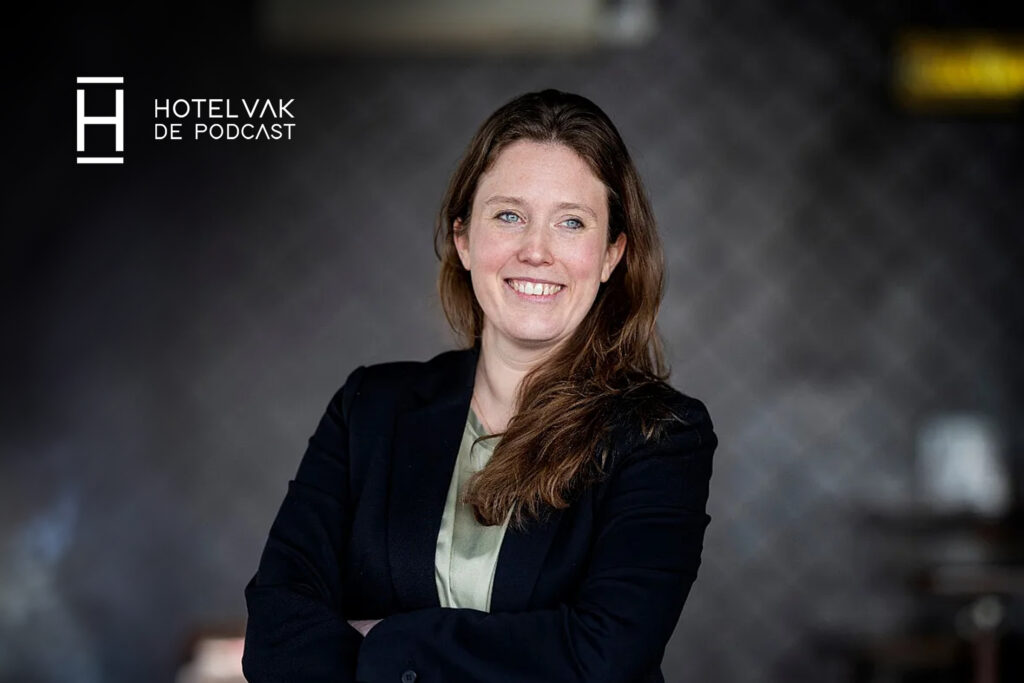
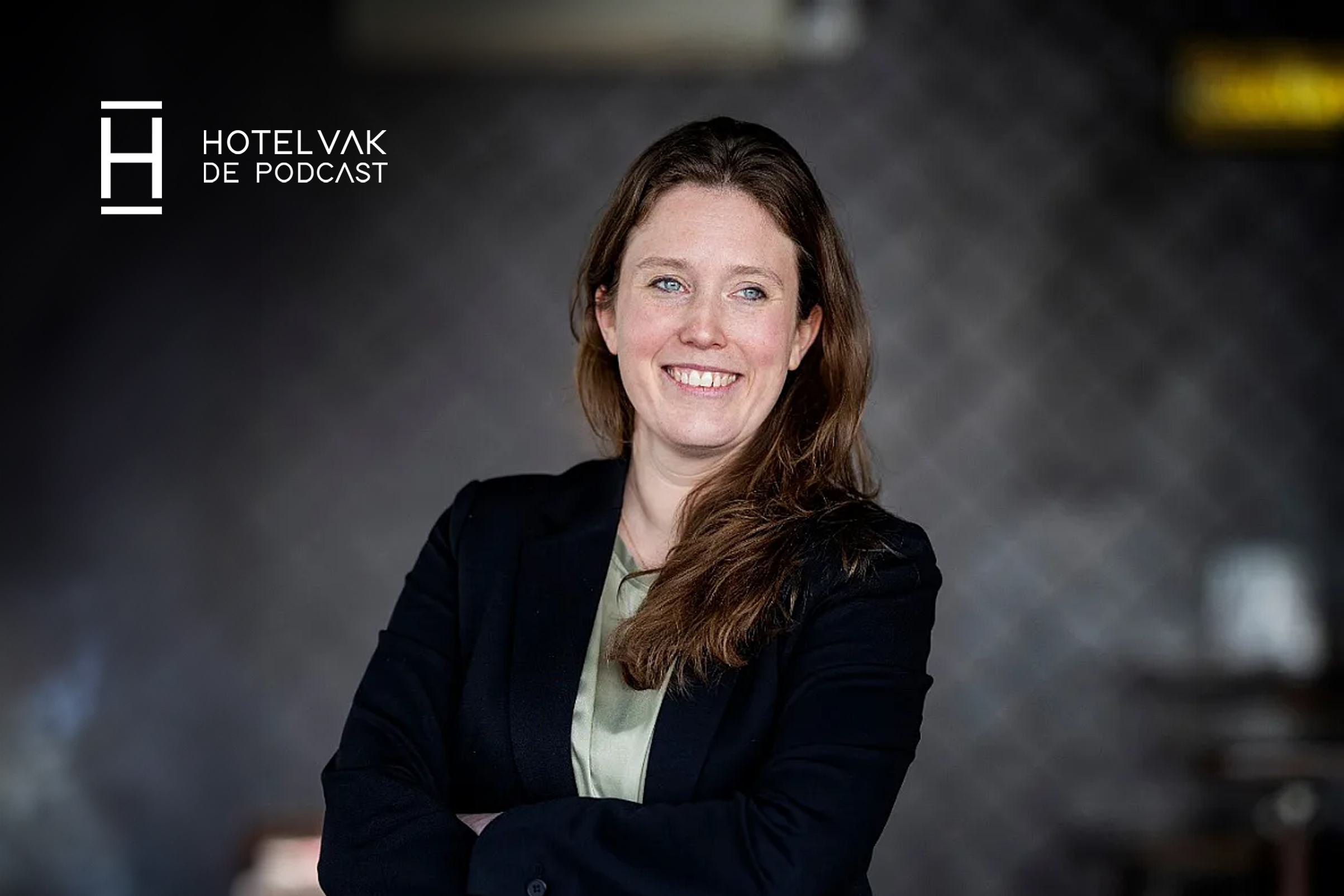
A delightfully critical and abrasive interview with Marijke Vuik - national president of Koninklijke Horeca Nederland.
On Monday 23 February 2026, the new cabinet led by Prime Minister Jetten took office. On that very day, we spoke with Marijke Vuik, national chairman of Koninklijke Horeca Nederland (Royal Dutch Hotel and Catering Association), and the question of the moment naturally arises: what can the hotel and catering industry in the Netherlands expect from that new cabinet? And, how will Marijke Vuik shape that lobby because... the hospitality industry in our country faces unprecedented challenges.
For instance, an awful lot of hospitality entrepreneurs are weighed down by corona debts. Can they ever pay them off and what impact does that have on business operations and, above all, do many hospitality businesses still have a future? In addition, there is a huge scarcity in the labour market. Although after the corona period, many hospitality businesses did manage to recruit new staff, it remains a quest. Not to mention the developments in Artificial Intelligence. Is the hospitality industry ready to embrace AI AND work more efficiently?.
In any case, Marijke Vuik is a chairman with vision. This is not illogical: she has been working and undertaking since she was 22e in the hospitality industry - she owns several pubs and restaurants - and that is precisely why she knows better than anyone else what the hospitality industry needs to survive and certainly also what it does not need: strict laws and regulations.
Presenter Jerry Helmers questions her about this in a 55-minute fascinating episode from the series Hotelvak - De Podcast. Marijke is also presented with solid statements, such as, for example, the question whether it is okay that, as a guest in many Dutch cafés and restaurants these days, you are only addressed in English? Is this the welcome we want?
Jerry also wants to know what hospitality-loving Netherlands may ‘judge’ this chairman on once she hands over the chairman's baton to a successor. You get to listen to a delightful conversation in which the presenter asks the inspired Marijke Vuik decidedly sharp questions, which sometimes chafe nicely, but at the same time she was happy to answer. Presenter and chairman did not always agree with each other, which is nice.
Incidentally... they did make a deal. So around the World Cup in the summer of 2026, the two might meet again. Marijke Vuik therefore makes an urgent appeal to all municipalities in the Netherlands to.... Well, listen for yourself to this episode from the series Hotelvak - The Podcast.
So this episode is not a portrait interview with managers, CEOs and directors/owners from the hotel industry, but a conversation about vision, policy, laws and regulations, the lobby in The Hague - with the recently started Jetten cabinet - and the challenges that every hospitality entrepreneur - and certainly also the hotel entrepreneur - is facing.
Have fun listening.
HOTEL BOX - EPISODE 8
Interview with Marijke Vuik - President Koninklijke Horeca Nederland
Host: Jerry Helmers
[00:00] Lightspeed – introductory message
Lightspeed Restaurant, the leading platform for the best hospitality entrepreneurs worldwide.
Welcome to Hotelvak, the podcast. Podcast about entrepreneurship in the hospitality sector. My name is Jerry Helmers and in this episode we have none other than Marijke Vuik as our guest.
She is president of Koninklijke Horeca Nederland. And we do this in a special place, because I travelled to Woerden with the mobile podcast studio. Yes, and everyone who works in the hospitality industry knows it.
Woerden is the headquarters. Marijke, nice to be here. Or should I say welcome to this podcast? Or should I say: nice to have you in Woerden? Yes, thank you very much. Yes, nice to have you here in our new office. Because we've only been here for a month.
Yes, exactly. And we sit by a huge banner that says: Come Further. And that's kind of become your new credo from Royal Catering Netherlands. I think we're going to come back to that today as well. But are you kind of looking forward to this podcast? Yes, incredibly. Because
it's a special day left or right. Rob Jetten has started as prime minister. That is the day we are recording. So no doubt we are also going to revisit the cabinet plans. But before we do that, we have a few things we want to discuss
in this podcast. And, of course, we want to introduce you in a bit more detail. Do I want to present you with some dilemmas to which you can then only answer “agree” or “disagree”? Do you dare?
I dare you to. Good, then I'm going to put on my reading glasses and say the first proposition. I am curious. The government is currently a bigger threat to the hospitality industry than the market itself.
Disagree. Then we say proposition 2. The hospitality industry should stop complaining and, above all, learn to do better business. And there is some thought here. Yes, that's because there are two points in it. But assuming I can explain it later: disagree.
Disagree, okay. Without foreign labour, the Dutch hospitality industry will collapse within two years. Disagree. For many hospitality entrepreneurs, sustainability is mainly a cost and not an opportunity. Disagree. 5. Politicians fundamentally do not understand how the hospitality industry works in practice.
Are we in the word “fundamental”? Yes, we are indeed in that. Then I would say now: there are still improvements to be made. So then: agree. Still agree, indeed. Six. Thesis six. Hospitality entrepreneurs have too many rules, but also sometimes make it unnecessarily complicated for themselves.
Disagree. Well, shall we do another one? Go ahead. Yes, I have as chairman of Royal Catering Association... sometimes you have to hit the table harder in The Hague. Disagree. And one, and I think we'll come back to that too... the last proposition for now.
The hospitality industry is still not a full-fledged career choice... in the eyes of many Dutch. Disagree. A very clear disagree, all right. No doubt we'll come back to it... to some of the statements we just discussed, where you at least “agree”
or “disagree” to. What else are we going to do in this podcast? We are going to discuss the current challenge in the hospitality industry. It's obviously changing in the job market. We want to talk about image and hospitality. How is the Dutch hospitality industry doing? I'd like to know how
Royal Catering Association sees the relationship with hoteliers. As a fourth point, I would still like to touch on the World Cup with you. I hope you are also looking forward to it, like many other Dutch people. The policy plan you have, I also
still as a fifth theme. But is it also a strong possibility that that's going to be reflected in the four previous themes we're going to discuss? And who knows, you might have a closing call for all listeners, but we'll see. But first: Marijke, before we get all deep into the content: who are you, where
are you from and what prompted you to take up this advocacy work alongside your own entrepreneurship? You have your time on your hands. Yes, well anyway: this job requires you to be an entrepreneur as well.
So every president of KHN is also an entrepreneur. But it's true, it's sometimes difficult to combine it. And that just has to do with the fact that it's a function that takes a lot of time. So that you have less time for your own businesses.
But luckily, that's actually going quite well. I am incredibly proud of the team that is there in my companies. So it manages to combine in a good way at the moment. Anyway, so you've already been able to organise this, because you have several catering establishments.
Yes, right. Can you briefly tell us something about them? Yes, they are cafés in the centre of Delft. And it is indeed true that I knew I was going to do this for a while before I started in 2023. So that did give me time to hire extra people
and to redesign certain processes you need to do that. And in that respect, yes, I am now three years away from the companies a bit more. But there are still plenty of people working there who I also know very well from before. And I still try to be present in the company at all crucial moments.
Yes, exactly. For you, what is the core of running a hospitality business? Well, the bottom line is that for every entrepreneur it's basically the same: you want to establish a certain experience.
Hospitality, of course, is a term that always comes back. But so is experience. But it is all about people. It's about providing a place where people come together. And that is also what really binds the hospitality industry together.
Sometimes you hear: the hospitality industry is hugely diverse and what binds us together? Well, that's really what binds us: that we bring people together and that added value we have as a hospitality industry for society as a whole.
Very simple: a city where there is no hospitality industry, you don't want to live there either. No exactly, are there those cities then? No, there definitely aren't. No, but just as an image. Indeed, everyone can imagine that, because the hospitality industry just offers an awful lot.
And it's mainly about: the place where people come together, that connection. Yes, exactly. Why did you ever start in the hospitality industry yourself? Well, first as a part-time job, like many, of course. Then I also worked a lot in the hospitality industry alongside my studies.
And I noticed at one point during my studies that I actually became much happier. I got much more energy from working in the hospitality industry than from my studies. And then you slowly grow towards it. I didn't do hotel school, I did a totally different education: industrial
designs in Delft. Yes, that's right. And suddenly you're president of Koninklijke Horeca Nederland. There are 20 years in between, so to that extent we did some other things in the meantime. I started my first café when I was 22. Then I got a chance that
I was able to take over a venue. At the time, that was a vegetarian restaurant, in the early 2000s, when there were not very many vegetarians. That hadn't made it. So I was able to change the entire concept: basically take out the whole interior
and completely able to put down my own concept. That was very cool to be able to do at such a young age. Yes, is it luck or is that already the basis of good entrepreneurship? I think it's always a combination. You always have a good dose of luck as an entrepreneur.
It always helps. For me, it was so that I was very interested in what subsequently turned out to be gigantic boom: speciality beer. Because I started in 2005 and in the years that followed
it was really booming. I think it's a combination of the right concept at the right time, which just made it a huge success. But anyway, you have to sense that which concept you end up putting down, right? So you do have to have a view of society.
Or am I making it too big now? I think you are making it too big. I think the most important thing is to have passion as an entrepreneur. Because look, everything starts with passion and a dream of someone when someone starts. And surely that's easier if it's really a passion of yours than you know
That, marketing-wise, it just fits well in the market at that moment. So I think, if it's that intrinsic motivation, you can actually make something very successful yourself. That does provide a foundation. But then again, was it ever a dream for you to be chairman
To become a member of Royal Catering Association? You also have a family. This work for you as chairman also takes an incredible amount of time. I don't know if you have to be in The Hague at any time, but I said it just now at the beginning of this podcast: it's
today the day the new cabinet takes office. So I can so imagine that you have to go to The Hague regularly from Delft. Is fortunately not so far away, but you will have to drink many cups of coffee. Yes, I am indeed there regularly. Yes, but how beautiful is it? And what is this just really?
It's great. How wonderful it is that you get to get involved, that you get to be the face of the hospitality industry that you have so much passion for yourself and that you can really get involved in making it better for entrepreneurs as well.
So I just find that incredibly rewarding to be able to do. But then are you already socially engaged, socially passionate by nature? Yes, well, but that is slightly different. Before this, I was also a councillor in Delft.
What I do really like is being able to commit to something, to indeed help others. You dedicate yourself to a sector and then it's very nice to be able to do the same.
results for. In this case, for entrepreneurs and for something you yourself are so passionate about: to be able to really make a difference there. But then this is also because entrepreneurs individually could never manage that, yes. Because as a trade association, we have 17,000 members affiliated to us. That of course makes your voice
carries more weight, that you get to sit at the table somewhere in The Hague. And you can't save that as an individual entrepreneur, you can't. No, exactly. And in that sense, that's also where your passion lies in being able to say something for the collective. Meaning.
A couple of topics I want to discuss with you, because then we do make that bridge to advocacy.
What do you think are the biggest challenges in the Dutch hospitality industry at the moment? The biggest challenge in the hospitality industry has to do with the fact that margins are under enormous pressure and that doing business is really a lot harder at the moment. And then people often refer to corona. And sure, corona has been a very difficult time. Indeed, for entrepreneurs it is often still the reality of the day now, because they are still paying off
are of debt. Combined with the period after that: right after that, of course, the energy crisis, gigantic inflation. On the cost side, everything went up so fast. And that's not quite under control.
And so we see that very much reflected now. We did a big survey among our members, which indicated that 1 in 5 is currently not in the black: breaking even or making a loss. And that is very worrying indeed.
CBS also shows these figures. The hospitality industry is doing just a little bit less well, actually quite a lot less well than some other sectors. But that also has to do with the fact that it is actually a kind of perfect storm: first a gigantic crisis, because the corona crisis, we were hit so hard by that. Then it is not strange that it takes five or 10 years to recover from that. And then add all the other challenges on top of that. And you can never pass everything on in prices. Why not? Because studies show that
price increases are never passed on one-to-one in the selling price. And what we also have to deal with, of course, is that consumers know very well what they pay in the catering industry. So price increases they are also aware of. That sometimes makes entrepreneurs cautious about it
in are. But you also have price elasticity: if the price goes up, then of course you can sell less. So you have to find a certain balance. But that's really up to each entrepreneur individually. But then, for example, is there a cap on the price for a cup of coffee you could charge?
No, indeed I get this question quite often. But everything also has to do with the time you live in. Because if you go shopping now, you will also notice that you spend a lot more money on groceries. Still, you get used to that in a few years. And a
price is always determined by the individual entrepreneur. That has to do with so many factors: we can't say “this is a good guide price” - nor should we, for that matter. But that is also not something you can say, because it depends on the area you are in: in the Randstad region, the
different from out there, but also what kind of square you're in, what your rent is. So it's down to so many different factors what the final selling price of a cup of coffee is. The only thing is that due to high inflation, the
whole life has become much more expensive and that people are getting used to it. Yes, can we do something with that inflation, or against inflation? And there is also a lot of talk about sustainability in the industry. You can think what you like about it, but there are also very
many people in the Netherlands who say, “Sustainability, it will all be fine. It costs me too much money. We might just have to put the sustainability ambitions aside a bit.” Well, I don't think so. Certainly not. Indeed, you also have sustainability and innovation. Those are actually the two big issues for the hospitality industry.
In fact, it is not even how we deal with it. It is necessary to be future-proof. So what exactly is needed? Well, if you look at innovation first, for example: we have a tight labour market. And that is structural and that is permanent.
Because we are facing an ageing population and a de-greening population. De-greening: so there are fewer young people. So in short: there are fewer people available for the same amount of work in the future.
Then labour productivity needs to go up. And how can you achieve that? And then you sometimes hear in the hospitality industry: you can't innovate in the hospitality industry, because it's people work. And that's true.
But we see so many good examples. But then give some examples. Perhaps also as inspiration for that listener. That entrepreneur thinking, “Yes, she can call it innovation. But how?” Give some concrete examples.
There are three major pillars that fall under innovation. And first: we are indeed talking about robotisation. Yes, because questions are often asked about that too. What it's about is that any company can map processes. And then there are processes that you don't want to automate, and that mainly has to do with your contact with your guests, because you want to give a certain experience. But all the processes behind the scenes - and that could be faster routing, that could be different equipment, that could be something very simple in a hotel, which of course you see a lot of, like cleaning robots.
These really do not ensure that a room can be cleaned independently, but they do ensure that the work is lighter, can be done faster and therefore with fewer people. The same applies in kitchens. And so there are an awful lot of processes. Then entrepreneurs say, “OK, that's right, robotisation, but we don't have the margins to invest in this.”
No, and that's exactly a challenge too, because some investments don't cost money either. For example, when it comes to deploying AI...
Artificial intelligence. Yes, artificial intelligence. For the few hospitality entrepreneurs in the Netherlands who have never heard of AI: I don't think there are any at the moment. But in that too: smart data is the future.
That's because then you have predictive values. Then you can schedule rosters better. Then you have fewer idle hours for staff, if you already know what's coming. But you can also use AI for social media.
So there are an awful lot of small steps. And sometimes it's bigger. You saw it very clearly at the Horecava: reservation systems based on AI.
Of course, that can bring an awful lot. And then the question is always: what type of business is it? Do you want that part still interacting with people yourself? Or can you have the front-line questions already answered by AI? There are a lot of opportunities. But the only reason really is: we have to do this too, because there are fewer people in the future for the same amount of work. So we have to work in a different way. But does the ordinary hospitality man or woman realise this? Yes, and often you get the answer of no, but if you then ask further, you see that there are
even at smaller companies, the first steps are already being taken. And sometimes it is: you don't have to have all these robots driving around, because that's really not what the future of the hospitality industry is going to look like. But investments have been made in smarter kitchen equipment, for example.
Or a certain way of rostering has been well thought out, allowing for savings. Sometimes also because of conviction when it comes to sustainability, such as food waste.
That is sometimes an intrinsic motivation, but sometimes also because margins are under pressure: that you can also just save with that. You have a policy plan, indeed we do. And in that policy plan you also mention very specifically what we are just talking about,
the staff shortage as a structural problem. This still makes me wonder: is the hospitality industry in general still attractive enough as a sector? Or should we perhaps also start thinking about functional repositioning? Well, if you look: more
than 500,000 people in the hospitality industry. And then I'll mention it again: in the corona period, we halved in the number of people. And that's not because people didn't like working in the hospitality industry anymore - we were closed. That means: there was much less work.
A lot of people went into care and a lot of different sectors. That makes sense, because we didn't have the work either. So then it makes sense to halve. And what is very clever about the industry is that within two years that
fully recovered. We managed to double the number of people after corona, when we were fully open again. And also meet the regular replacement demand. That is incredibly handsome. But logical that during that period there was a huge tightness experienced
became. Now we are back to the level of six or seven years ago. The tightness is permanent, structural, but not as bad as a few years ago. But is hospitality still
attractive enough to work in, though? Yes, definitely. As an example, managing to attract so many people to us. And so that more than 500
thousand people working in the hospitality industry shows that it is a very nice industry to work in. But are employers in the hospitality industry attuned to - let me call it - the wishes of the younger generation? Because they often no longer want to work full-time or they have a lot of wishes on
the field of education and welfare, where the boomer generation may be thinking, “Come on guys, if you work in the hospitality industry, you have to get on with it too.” And I suspect you know that as an entrepreneur with several businesses as well: your
end time of work is not always planned, because that's the way things are in the hospitality industry. Surely you see another generation arriving that has a very different view of work. Well, every generation
has challenges, but also has very positive sides. And I really enjoy working with this generation. Because on the one hand: yes, they work fewer hours. They have different priorities.
On average, that's certainly not everywhere, of course. But when you talk about Gen Z. On the other hand, it is also the generation that grew up with a lot of speed around them. In terms of social media, they are constantly on.
They are also very willing to think along, especially on the bigger issues, such as sustainability. There is an awful lot of enthusiasm in the new generation. So I actually see it more positively than it is sometimes framed. But isn't there fierce competition on the
labour market? I say: we as a hospitality industry have to compete with another industry, because chances are that young people would also like to go there. Always, yes. And “compete” is then framed a little too negatively.
But sure, you always want to make sure... And that's also why we all have image campaigns. You want to show how great working in the hospitality industry is. Do a short one-minute pitch to convince any prospective young, ambitious hospitality employee.
You have to work in the hospitality industry. What's great about the hospitality industry is the contact with people. And what you can put down as a team. That's really what it's all about: the contact with people. You can find that in a lot of other places as well. Definitely.
But also in the hospitality industry. And then I do think that the hospitality industry is a place where you can make a lot of steps in terms of your career. The hospitality industry is very broad. And there are many great stories of people who have made good progress in the industry. So on the one hand, it is a lot of fun to work in.
But it is also a really serious industry in which there is a great career to be made. What is your solution to those corona debts? I want to go back to that, because you also said that: within this framework of the current challenges in the Dutch hospitality industry, an awful lot of hospitality businesses - from hotels to restaurants, cafés, you name it - are
who still have some paying off to do. Today, the Jetten cabinet took office. Are you positive, negative that something will be done with that? Or what will the hospitality industry look like in two years?
With corona debts: that is indeed something that started quite a few years ago. Now everyone is in the term that can still be paid off. That, of course, is five or seven years. That runs. Above all, I think what is needed, because you have gone through such a big crisis, is time.
You need time to recover. That is the most important thing. And that is not something a next cabinet can really do anything about. Maybe you will throw in your charms to cancel corona debts.
Let me throw something into the group. No, but there at the moment... no. Because you do need to know what is going on in The Hague and whether there is actually a chance of parties going along with this.
And the honest story is that it is not now. Because, of course, for a lot of people, corona also sounds long behind us. That doesn't mean we don't pay attention to it. It does not mean that we are not very keen to support entrepreneurs in other areas.
Only when it comes to cancellation of deferred taxes, which you then often talk about: too much has been asked. That is not something that is going on now. No, it would be a mission impossible in the lobby. It makes no sense. Another thingy in this topic - I'll just call it a thingy, there will also be different
be thought about - the higher VAT since 1 January 2026. Yes, I see frowned eyebrows now. Yes, this is... I have been very much involved in this, really for many years. This is
actually something that first surfaced in 2022. And that then had to do with research that came out. It was a Ministry of Finance assignment on the effectiveness of reduced VAT rates. And back then it said: the reduced VAT rate for lodging
is neither efficient nor effective. And in the period since, Omtzigt in particular has regularly introduced this as alternative coverage for motions and amendments.
So we were very much into it at the time. Only at the time there was a majority that didn't have an ear for it. But we did know: the moment Omtzigt became so big with the new party NRC at the elections, there was a really big risk that this would be included.
We have been working on it for the past few years. Unfortunately, it has been implemented. So does this feel like a failure from Royal Dutch Hotel and Catering Association? That you think: bloody hell, we failed - what did we do wrong in that lobby? Well, it is
a question you always have to ask: should we have done it another way? This is something broader, though. First, it is now in a new coalition agreement. I wondered, “Is this the beginning?” Because the next one to go from 9 per cent to 21 per cent, yes, I know... Of course, the bigger question is: how do you deal with reduced VAT rates, and how many exceptions do you want? Do we ultimately want
Towards some kind of flat branch system? That is also something being looked at. Would I have wanted a different outcome? Yes, definitely. The tricky thing is: you have to deal with the Hague
Reality. It says in the revenues 1.2 billion. But if prices go up because of this, if that cup of coffee is actually going to get more expensive, and we talked about price elasticity there a little bit later,
then, of course, there is also the chance that people will spend less in the hospitality industry. And then it remains to be seen whether revenues for the government will go up. And that is exactly what we have also brought out in recent years. There have been several impact analyses showing this. Plus: you shouldn't underestimate that the economic chain reaction is much bigger
than purely for hotels. And hotels are the first to be hit hard by this.
Yes, I can imagine that, but explain what you mean by chain reaction. The moment there are, imagine, 20% fewer tourists: those tourists spend money on hotel accommodation, but they also spend money in the local shop.
They also go on public transport, they also go to a museum and they also go out to eat. So basically you miss out on everything tourists spend. And what you get with this, with this VAT increase, which we are actually already seeing the first signs of
see, is that people who want to holiday at home are more likely not to go or go abroad. Because countries around us are getting much cheaper comparatively. And tourists from other countries will think again whether to come to the Netherlands or go to another area after all.
That is true. I think that is a logical economic law. But if you look at a city like Amsterdam, for example: in my experience, it is betting on everything that there should be fewer tourists. Yes, that's a different issue.
Look, it's only about Amsterdam and I think there's plenty of discussion about that too. The feeling of over-tourism may also have to do with day-trippers. So to what extent is that really due to overnight stays? But
to that, I do think: a fiscal measure should or should never be used - not even a tourist tax - to actually bring fewer people there. Clear. Let me move on to the second topic I would like to discuss with you, which is the image and hospitality of the sector. I myself was once
one time on BNR Nieuwsradio and then there was also a hospitality thingy and I was in a kind of opinion panel there and then I said - and you guys exploded at Koninklijke Horeca Nederland, but it was still from before the corona crisis you know. It wasn't me. It was you. But I said then:
The first best roadside restaurant in Germany along the motorway does better in terms of service than a five-star restaurant in the Netherlands. Oeh. Ugh, well BNR News Radio exploded at that point.
I found it funny in itself. I think: yes, this is what I think. And I got quite a lot of support for that on the then Twitter. But the point I'm making is that I sometimes wonder: do we in the Netherlands understand what hospitality is?
Because if you ask the average Dutch person, they will say: yes, we can still improve on that in the Netherlands. In some other countries that is actually better. How do you view that yourself? I'm very curious as to why you think that. Because to me: if you look, walk on a
beautiful summer day into a city and the cosiness that comes from all the terraces there, that really is something unique to the Netherlands. Yes, but is it because those people themselves are cosy
or because the service is so incredibly cosy? I think that, as a company, you always create something that people want to come to. And then the best compliment is that people are enjoying themselves
and have a very positive image. But that, of course, is up to you. Because are you going to sit somewhere that is not cosy? No, you don't. So I do think that's really down to the way we do business in the Netherlands, in the hospitality industry.
And what we all put down. And that does really represent a hospitality that I think is unique. So I'm particularly curious where your opinion comes from. What you hear a lot, of course, is that people, especially in the big cities, are annoyed that you are only addressed in English.
When I, suppose: I come to Amsterdam, you can hardly get by with the Dutch language already, even on ordinary terraces. Then I would actually like to challenge: isn't it much more important that people have good
are in their jobs and what they are capable of? And then I am just incredibly proud of how much diversity we have in our industry and how many nationalities work in the hospitality industry, and what kind of place we provide for these people to just have a nice job.
Sure, but being good at your job in the hospitality industry also means you might want to address guests in their own language, in Dutch, right? Not always. But that really has to do with the concept and what target group you are aiming at as a business.
I can say from my own experience: I have two catering establishments in Delft and they really differ enormously in terms of audience. But at one company: most of the people working there do not speak Dutch.
And they don't have to, because most of the people who come there are quite an international crowd. So they never get asked about that. But not a tiny bit of Dutch either? Yes, they can count to a hundred. And they can say hello, but that's about it. And at the other company, I make sure someone is always present, because sometimes there are older people there as well.
people come. And they sometimes find it less pleasant to have to order in English. So then they can communicate among themselves: “Well, if you take that table then, I'll take the rest.” But so it really depends on your concept and which target group you have.
And I don't agree that people react negatively to it by default. For me, at least, it is very important. Well, negative by default: it is something that is occasionally a discussion in society. Sure. But then I would really like to frame it positively.
Look, diversity in the hospitality industry is really something we should be proud of. But by diversity, you mean having so many people from other countries working in the hospitality industry. Sure. And all those languages, speaking different languages. Yes, and it also brings a lot within a team. Also that. Yes, what then? That's the same as
the different generations in the workplace, but also different cultures and also a good male-female ratio. All these aspects are important in a team. Our partner
Lightspeed does market research on all kinds of hospitality-related topics and every episode we cover one of the topics and are curious to hear your views on it. Recent research from entrepreneurial platform Lightspeed
shows that 88% of hospitality operators experience monthly no-shows and 92% feel that guests are not sufficiently aware of the impact. Koninklijke Horeca Nederland
is increasingly receiving signals from entrepreneurs. How big is the no-show problem currently in the Netherlands and where do you, Marijke, think the main solution lies? Better technology, such as reservation systems,
stricter conditions, such as down payments or no-show fees, or above all behavioural change among guests? Marijke. Yes, this is indeed a problem and I think the cause is mainly in
That actually everything has become more anonymous with all the technology. You often book online and then the distance to the catering establishment seems greater because, of course, you haven't spoken to anyone. There are a few things that help: on the one hand, some businesses choose to ask for a deposit. But that is not appreciated everywhere; it really still depends a bit on the region to what extent that is generally accepted.
But it is an incentive that makes people do come. We see the number of no-shows going down drastically as a result. So maybe that is something for the future that we need to push further. What also very much helps, and we see that a lot of companies are doing that
do, on the day of the reservation is an automatically generated message: “Very nice that you have made a reservation. If you can't make it, please let us know in time.” Or that people call back. And that seems to have the best effect, because then you still have personal contact, which makes people less likely to not show up. If you compare the Dutch hospitality industry with the hospitality industry in the United States, for example...
You've been to the United States before, several times. When you're in a restaurant there, it goes in a very different way. Like: “Hi, my name is Jerry, I'm your waiter for tonight. Please ask me the question and call me.”
You kind of understand what I mean. I think anyone who has been to the United States, dear listeners, knows what I mean. Can we learn something from that in the Netherlands? Or is it too big a cultural difference, how the Americans do it compared to how we do it in the Netherlands?
Sometimes it is also the same. Only: we have to realise that we interact differently. We greet each other differently. That's the same there, of course: even if you know each other, but also if you don't know each other yet, you greet each other differently. So that's a cultural difference.
That completely enthusiastic way can work very well, but not everywhere. And we may also find it a bit excessive when we are in America and are addressed that way by a waitress. Then we have to chuckle a bit too. And it is also a bit hypocritical when we in the Netherlands complain about the supposedly poor hospitality. So that's also a bit hypocritical of ourselves. Expectations are also different.
You don't necessarily have to be your best friends when you're working with all the guests. And I think that's the difference. I do think that, if you look at the people who work in the hospitality industry in the Netherlands, they have the contact with everyone and actually do have a conversation.
But it is just a little less exuberant. It actually is. And it's also not expected here in the Netherlands. But it can be fun sometimes, if it suits you well. There are plenty of examples I see of people who are really working with a lot of enthusiasm and having lots of nice conversations. But isn't the difference also in the fact that in the United States, for example, work is mainly on tips, on tips? And that the focus there is on the employees, and that in the Netherlands the salaries are a bit higher and perhaps there is less urge to be extremely friendly to guests.
No, I don't think so. Because I'm sure people who work really do so from a cultural difference: how you treat each other, how you greet each other and how exuberant you are. “Enthusiasm” is maybe not quite the right word. It really is a cultural difference.
At least you shouldn't make it feel fake. I think that's what the Dutch very much need: above all, it has to be real and pure. And that's the way we communicate with each other here. And that has nothing to do with a reward. It really has to do with a different way of working.
But how do you train your own staff on the ultimate in hospitality, for example at your two locations in Delft? Do you ever send a mystery guest there? No, not a mystery guest. Of course, we have done that in the past.
In 20 years, we have done quite a few things. No, especially talking to each other. And I think it's important to keep everyone enthusiastic, because the moment people are enthusiastic at work, they enjoy standing behind the work. And that is the basis for everything. But above all, starting the conversation with each other: what does hospitality mean,
what role you have in it, and do you also realise how important you are the moment you stand to work? Because you are the business card of the whole company. And so is everyone individually. And sometimes we did something: one of the employees had that idea.
We gave everyone twenty euros and they went to other catering establishments. They looked there: how will I be greeted?
What stands out to me? What is positive? Okay, we walk on... Something seems to be happening in the other room with a phone. Yes, that's... sorry, that's my fault. But to discuss with each other afterwards
what catches their eye. And then agreed: you go to a location where you don't know anyone. So what does that location's hospitality mean? And what does that do to you? And how do you do that yourself in your own work? Those were really fun conversations.
Don't you miss that yourself, still literally standing behind the bar? Yes and no. Yes, I've always really enjoyed it. And the feeling that... of course, it's heartwarming when you walk into your company.
And it's a full house and everyone is happy and they are doing a good job. No, then I don't miss it now. But I do look back on it with a lot of pleasure. Okay, third theme: relationship with hoteliers. How do you maintain contacts
with everyone working in the hotel industry? Well, we have a very diverse large constituency: pubs, restaurants, but also fast service and, of course, hotels. And I think the most important thing is to always emphasise in the big files what unites everyone.
But you also have a lot of industry-specific files. And then it is important: you always have to realise that you are in an association. You have to realise that the real knowledge is with the entrepreneurs. So that means: visiting members a lot, listening to members a lot.
What's going on right now? What can we help you with? Because you are an association for a reason. And for hoteliers, we do that with a focus group, for example. But we also make sure, when it comes to distribution in the members' council. A members' council
with us is framing and controlling everything we do, and that includes hoteliers. So to that extent, we are always working on it for all the target groups we have. That includes young entrepreneurs, and a spread across the country:
That each province has someone on the membership council. To ensure that we can listen carefully to what is going on across the country and in all sectors. So what are you hearing now? It is spring now, well almost spring 2026.
What are you hearing from hoteliers at the moment? Yes, still concerns. And what I like: entrepreneurs remain positive. I always really liked that: when you talk about entrepreneurial confidence, it's polled, and it's invariably lower than the confidence entrepreneurs have in their own businesses. If you then ask: how do you look at
the whole industry and how do you look at your own business during the same period? That is very characteristic. And I also really like that about entrepreneurship: that positivity, it really is there. But otherwise you wouldn't go into business: you have to be positive by definition anyway. But what we do hear more and more recently are the worries. And certainly if you are talking about accommodation, because this VAT increase is of course very
painful. And we also see now that there is a decline as a result, and we hope that it does not continue. Our role now is mainly to monitor: to collect what the actual effects of the VAT increase are. And making those known to all political parties in The Hague. That in combination with all the issues that lie ahead about sustainability, innovation and the margins that are under pressure.
It is harder to do business profitably at the moment. A word on that sustainability. So what are the specific questions hoteliers are asking about sustainability? Well, that is actually very broad. It can have to do with
with making the property more sustainable. This is something that has been going on for years. What I personally found a very nice initiative was from a hotel group
in Amsterdam. When it comes to reducing food waste, for example, where data is again very important: a good baseline measurement, and mapping what
exactly what food waste is. And how can we make sure - there is quite an objective that we want to get a certain percentage down - how do we get that done? What is your vision: how can the hospitality industry, the hotelier, get that done in their restaurants? Yes, also in that: everything starts again with data. So mapping out: what exactly is the food waste? And then, of course, you have a very nice - I think even several by now -
tools for that, but one very familiar one, where you take a photo/scan every time before a plate is emptied into the bin. And within two seconds you actually know what was on it.
And then you have all the data. So if you see that certain dishes could be smaller, or that a larger portion of a certain dish is thrown away, you can adjust that. That's where the biggest profit lies: identifying very clearly where the profit can be made. And that is sometimes an intrinsic motivation because of sustainability, but sometimes also because it saves costs. Do entrepreneurs have the time
To figure that all out? At the same time, we still have that staff shortage, so that entrepreneur also has to constantly step in, literally stand behind the bar, because there are no people. Do they have the time to figure these things out? Well, we certainly see that in smaller companies. We are so organised that we also have a lot of local chapters. We have 234 local chapters with multiple board members.
So we have 1,200 departmental board members. And with that, we do get signals that some entrepreneurs can devote less time to this, precisely because of that tightness, because they are needed more in their own businesses.
So we do indeed get that signal. It is quite difficult. I don't think you can solve that yourself as Royal Catering Association either. No, except: what you can do is make sure you save time.
If you talk about regulatory pressure and administrative burdens, for example: not for nothing is that a big topic we are working on. But on the other hand, also with image campaigns to make sure there are enough people who want to work in the hospitality industry.
Because when we talk about that administrative regulatory burden: that is something we have been hearing for 20, 25, 30 years. There are too many rules. And the Netherlands is failing - not only in the hospitality industry, but more broadly - to reduce those rules. Do you still have a concrete action plan for that yourselves? Because this spirit also feels crucial. That's kind of my conclusion: the momentum is now. And that has to do with the fact that all political parties want to work on this.
We just now have former minister Vincent Karremans, who really did spearhead this. What we have done ourselves has to do with the fact that we know everyone is now working on it.
But we have the knowledge from the market. We know what works in practice and what does not work. So we have already handed over a regulation pressure action plan to the minister and to the House of Representatives last January, in which we map out what is actually the burden with a number of rules, without questioning the purpose. Because a rule is always created because of some purpose, something they want to achieve. So if you don't question the purpose... but you describe the burden... then we also come up with a solution:
How we can do it easier. Give us one concrete example of that, for all those hospitality entrepreneurs who haven't had time to read your wonderful policy plan. Give us one concrete example. Give us a hearing. This is one, and I assume
That it's just going to work out one day that this one will go off. For that matter: the first 200-plus rules have, of course, already been scrapped. Now, with the new political agreement, there is a big target of 500 rules a year.
So there is also a lot they are working on now. And we also notice that we are very much involved with the officials, mainly at the Ministry of Economic Affairs, who are now mapping out the various rules. But as an example - and this is my big point of frustration, where I really think: why isn't it working yet?
but we keep getting further and further, and that's about that credential day manager. Very simply explained in a minute: the moment you serve alcohol, you must have social hygiene. That is the responsible alcohol serving diploma. And that an entrepreneur or manager must have it, that all makes sense. Only: there is an additional requirement that there must always be someone present in the company, the day manager, who also has the diploma. That is absolutely fine and we can comply with that. There is also a register that keeps track of that, so in case of an inspection you can walk into a company and ask: who is the daytime supervisor who holds the diploma? Then you can log in and see: it is correct.
But that is where the administrative burden and regulatory burden is now: you have to pass it on every time there is a change, because it is not tested on the register, but on the addition to the appendix to the licence. So you have to pass it on to the municipality every time there is a change in staff who get this diploma. They then print out a new A4 sheet with the names on it. But that A4 costs 300 euros a time in some municipalities. And if you consider that as a medium-sized company where sometimes there is a weekly or fortnightly change... yes, you start clustering that to make it cheaper. Why is it so expensive? 300 euros? Yes, I can see the confusion on your face. Nobody knows. But it varies from municipality to municipality: some municipalities are cheaper. But it also takes a lot of time. And the consequences are huge: the moment you don't comply with it during inspection, so you can... You comply with all the requirements and there is someone working who has the diploma, but the appendix to the licence hasn't arrived in time and so then you don't comply with the requirement that was set. And what you see in this:
I have explained this one so many times and all political parties know it by now, but nobody actually understands why. Only you end up in the situation that you have to deal with three ministries: EZ because of regulatory pressure, J&V because of the preventive effect on undermining
The moment you can ask something like this for the appendix to the licence, and VWS of course. And then you see that it is complicated to remove this. Because in my opinion - and this is where you get to the bigger issue - what is needed for this?
What is really needed for this is that you don't look at those 0.01% where things go wrong. That you look at the entrepreneurs. Entrepreneurs naturally want to do well. Give them space. Give them confidence. And then you will see that the goal will still be achieved.
But is there hope that this will succeed within the current coalition period? Today, Jetten started. I've said it before: let's assume for a change that they will last four years. That would be nice. Will this succeed within four years?
Yes, and faster too. No, there is already a motion from September calling on the minister to come up with a solution to this. And just a few weeks ago, there was also an opinion from the ATR.
Which is also along the same lines: that the regulatory burden for this is too great. So I assume that this will now be followed up and that it will be abolished in the near future. Well, I'm going to hope so, and otherwise I'll come back. That would be very nice. Yes, yes, yes, yes. But of course that's
always a question to ask a chairman of a national advocacy organisation: at some point, your term is up or you decide: well, I'm stepping down. I feel that that moment
is not yet near, given your enthusiasm, passion and, I think, your dossier knowledge. But the time will also come when you will have to hand over the baton to the next person. What do you want - a very black-and-white question, but I'll ask it anyway - what do you want to be judged on?
What do you necessarily want to have achieved by the time you hand over the baton? Well, I think the most important thing is how you put the hospitality industry on the map.
And surely that really starts from positivity. And that same positivity and passion that entrepreneurs also have: that is also my job to show the rest of the Netherlands how beautiful the industry is. And that's really what it's all about.
Is that measurable? No, it's never measurable. But look, then it's... It's a feeling. Yes, well... Is it measurable? No. Can you have a feeling about it? Yes. But feeling remains subjective. It is. So that's kind of easy, isn't it?
To say: I want to be judged on that. What the funny thing is: a lobby is really great. But it's very difficult to get really concrete results. And I think the most important thing is to be at the table.
That you have a say in everything. And that hopefully you can make sure that things like such a caption day manager, or other things from our regulatory pressure action plan that did get picked up, like single-use plastic and that plastic levy for example,
actually change as well. Those are things that did get picked up. And so we have a whole list of dossiers we are working on. And that is much broader than just regulatory pressure. So if we can achieve successes in a number of areas,
then I am appalled by that. There is still hope. There is definitely hope. Don't you get tired of the Hague sometimes? Of the game? Don't you sometimes get tired of the Hague game? Of drinking that coffee with your face in the crease, when you might be thinking something else? No, no, no. You have to love politics.
That's part of it. And I'm really convinced of that. And I also go into this with positivity, also when it comes to a new coalition. But also if you look at MPs: the MPs who are in it, just do it hear.
Because, of course, you get quite a lot thrown at you. And a lot is asked of you. And when I see how much file knowledge they have and with how much enthusiasm they set to work, now since the new elections and before that too... then I really respect them for that. So there is certainly hope for the hoteliers. Yes, well, I want to see if that hope can also take further shape. One of the themes is where we will hopefully all be connected again this year in the Netherlands:
World Cup. In any case, the Dutch football team is scheduled to play three matches at the World Cup. It will be played in Mexico, the United States and Canada. But I think the Netherlands will only play in the United States.
But one of those matches, on 26 June, that is the Tunisia-Netherlands cracker. That one will take place at one o'clock in the morning. Yes, drama. Yes, now make an appeal to the whole of the hospitality country of the Netherlands, or, if necessary, to all city councils
of all cities and villages and cores in the country, and also The Hague: of gosh, those catering establishments fully open that whole night. After all, we also want to watch that match in our orange shirts at one o'clock in the morning until around three in the morning. How nice would that be? Yes, but it is. Everything is hanging
now depend on you. Everything depends on you. This is really municipal policy, so that would then go to all municipalities. But we know there are already talks going on between different municipalities.
And every municipality reacts differently to this. But there are municipalities that have now said: we are going to make an exception when the Netherlands plays at night, that the catering industry stays open longer. But now you are summarising what those municipalities are saying. But what is your organisation's call?
The call? Yes, of course: allow this, because how great is it? Otherwise everyone will sit at home. How great is it if you can just watch that match together in the hospitality industry. Yes, because surely that is also a spearhead of you as
Koninklijke Horeca Nederland: It's an economic factor of importance, that hospitality industry, but also socially very relevant. Where we meet. If that works out, will we go somewhere together with an orange cap and an orange shirt to cheer on our Orange? Well, I must admit in all honesty: I am not a mega-
football fan. Unless of course the Netherlands is playing, because then of course I am a big fan like the whole of the Netherlands. So for this commitment: then I will go in orange shirt with you somewhere. It's the third match in the pool, so it could be another crucial
match are. So: hang or strangle. Yes, we'll have to wait and see. June 26 at 1 am: all of us in orange jerseys sitting around. Before we get to the conclusion of this podcast.
The policy plan: a number of things we have already gone through. Is there anything at this point that you say: I want to highlight one more aspect of the policy plan that we haven't discussed in this podcast?
In the previous 45 to 50 minutes. That you say: surely I think that is relevant for the listeners to bring to their attention. Well, we have four spearheads. Sustainability, of course, we discussed. We have innovation. Entrepreneurship is also, of course, mainly regulatory pressure at the moment. And the last one is being an employer and being a good employer. And that also remains a very important point. Just give two or three characteristics of what good employment is
is, so instant inspiration for listeners. Look at your employees - that's very abstract, but that's what it's all about. And what we very much see is that people are mainly listening to
employees and what they want. And that when it comes to lifelong development and training, there is an awful lot on offer. I like to see that. Fortunately, we also have a big role in offering training. And a lot of use is being made of that.
So I think that's very nice to see. Finally, do you want some kind of call-to-action: just a quick 20 seconds to recruit members? “If you're not a member yet, become a member.” No, but I think the most important thing is: we are an association. And whatever we hope...
We have had an incredibly turbulent time. In 2026, inflation goes down. What I grant ourselves as a hospitality industry is actually a year of calm. Which is very strange, because of course you don't want quiet businesses. You want lots of people.
Yes, but rest in terms of hassle. So time to recover. And I think the most important thing - and I always love to see that - is how entrepreneurs seek each other out. So keep doing that above all. But you also have: Come Further.
Come Further with KHN. Explain: “Come Further”. Yes, in the lobby... This is the gist: come further with everything. Come Further with KHN.
Come further obviously on the one hand because of the hospitality, because of what we do: come further, open the door, come further. But you also really come further with KHN and everything we can do for you. Well, Marijke, my last question to you: which question did I not ask, but should I have asked?
I actually think you asked a lot of questions. I think it's a very complete story. So I don't have a question you should have asked that you didn't ask. So you also look back on this shoot with a satisfied outlook? I enjoyed it immensely. Thank you very much.
Marijke, I also want to thank you for your hospitality here in Woerden. That I could be your guest at your headquarters, at the centre of the hospitality industry in the Netherlands. I enjoyed the conversation. Still, I want to share with you the
agreement that we will meet with an orange cap and orange shirt on 26 June. But I would also like to make an agreement with you that in a few years' time, when you are going to hand over the baton to the next person who will lead Royal Dutch Catering, that we will still be
just to look back on this podcast and see if some of the objectives have been achieved. Because I still think it's kind of part of my role as a presenter - very good - that we get to make a, well that's a very heavy word, a reckoning on that.
You may. Sure, agreed to this. Well Marijke, thank you for being a guest on this podcast. Thanks for listening. Do you like this podcast and don't want to miss a single episode? Then click on the plus sign to follow us.
Neem dan rechtstreeks contact op met Royal Dutch Catering Association.
 Contact opnemen
Largest trade organisation Royal Catering Netherlands (KHN) is the largest catering trade organisation in the country, with over 20,000 catering entrepreneurs and thus some 255,000 catering employees we represent. We are committed to the industry, give advice and keep an eye on all the news surrounding the hospitality industry. We also regularly launch our own campaigns to ensure [...]
View Company profile Nederlands Nederlands
  English (UK)