hotelvak.eu
EN

Platform on hotelmanagement, interiordesign and design in the Netherlands
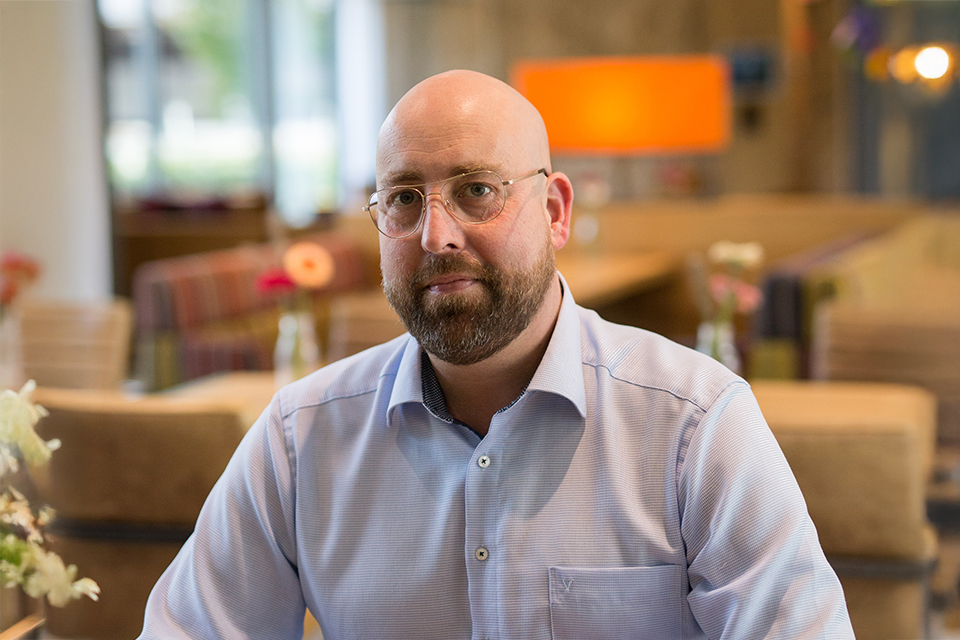
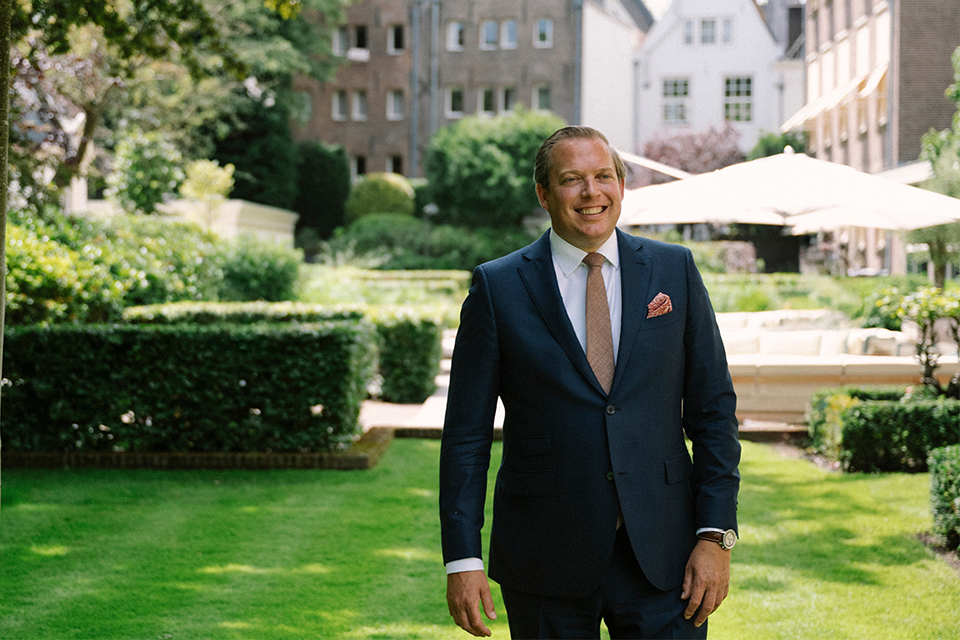
“I'll do almost anything for a happy, returning guest. Almost anything,” says Floris van Es with a straight face. That one nuance – that one "almost" – encapsulates his entire vision of hospitality. Setting boundaries is also part of it. A hotel is not a setting where anything goes; it is a home where you are welcome as a guest, as long as you respect each other's boundaries.
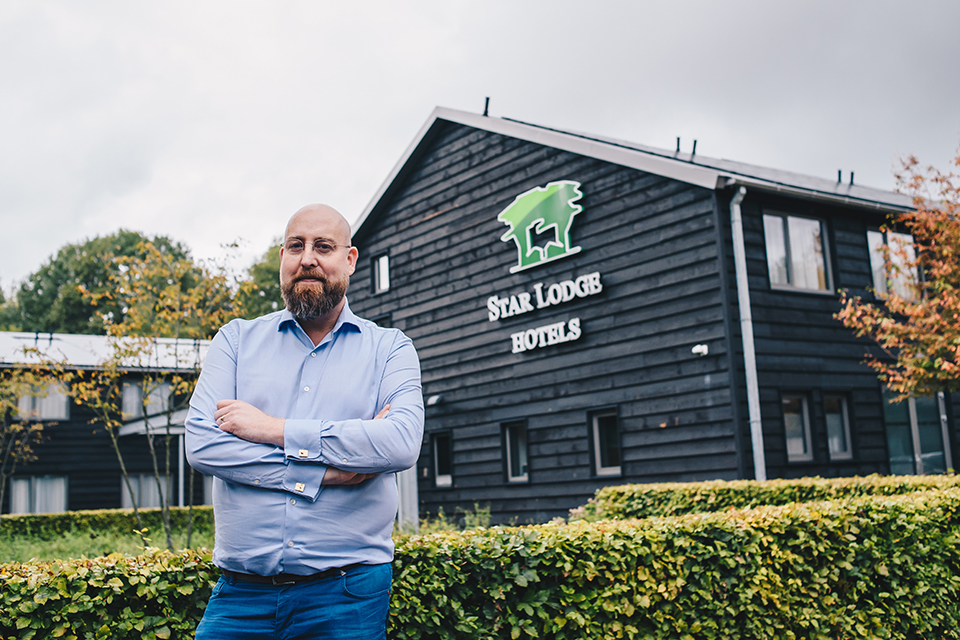
Van Es is general manager of Star Lodge Hotels and City Centre Lodge Utrecht. He has been working in the hotel industry for thirty years. He calls himself a “hotel nut”, someone who genuinely gets energy from a busy lobby, a full breakfast room and the endless switching between guests, teams, systems and figures. Yet his story is much more than that of the classic hotel manager who has worked his way up. Advanced HIV, a 75 per cent disability rating and a conscious decision to live with his mother are just as much a part of who he is today.
Having been given a second chance himself, he now tries to give others the same opportunity. To employees who are distanced from the labour market, to guests with a special story.
His fascination with hospitality began at an early age. “When I was four, I used to go out for dinner with my grandmother on her birthday,” says Van Es. “I would sit there breathlessly watching the black brigade. Black and white, waistcoats, bow ties: I thought it was fantastic.” At home, he persuaded his mother to make him a little waistcoat and bow tie. “Then I would just play restaurant at home.”
His father works at a beverage wholesaler. As a result, young Van Es spends a lot of time in cafés, restaurants and hotels from an early age. These are not exotic five-star hotels, but the spark is definitely ignited. The logical next step was hotel school. At first, he wanted to work in the kitchen, “cooking came easily to me,” but the romance of the stove ended rather abruptly when he was also asked to scrub the entire kitchen after his shift. “Then I thought: maybe another department would be a better idea after all.”
That other department became the front office. Through internships and first jobs, he moved on to reception work, both during the day and at night. At the age of 19, he was running a 60-room hotel near Amsterdam all by himself. ’Looking back, it's bizarre how much responsibility I had at the time, but I learned a lot from it.“
Step by step, he progresses: from floor staff to supervisor and eventually to the position of general manager. An important detail: he sees this as a necessary route. “I don't really believe in hotel managers who have never worked a night shift, never dealt with an angry guest at the front desk or never checked rooms themselves. If you don't know how it feels, it's very difficult to manage it. You learn the trade in practice.”
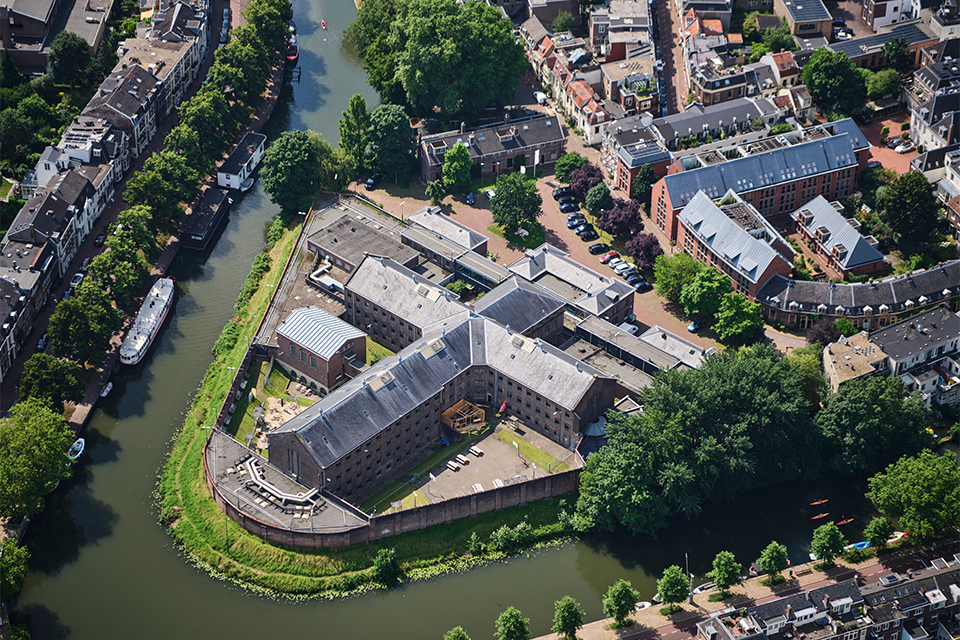
But then life takes a different turn than planned. Around the age of thirty, his health begins to falter. He loses weight rapidly, is constantly tired and feels that there is more going on than just being busy at work. After tests, the diagnosis follows: HIV, and not in its early stages. The virus had been in his body for years. His resistance was extremely low; he was declared 75 per cent unfit for work. “Until then, my career had been on a straight upward trajectory,” he says. “I wanted to work internationally, for bigger companies, with more responsibility. Suddenly, I was at home. Everything came to a standstill.” That period lasted a long time, about three and a half to four years. The medication worked, and he recovered physically. But returning to the hotel industry proved more complicated than expected. Job applications came to nothing; the gap in his CV and his medical history did not help. Through his contacts, he came into touch with Abbe Plijnaar, owner of Star Lodge, then still a hotel under development. Initially, he was only going to do some reception work so that the owner could go out and about before the opening. “Within a few days, I felt the energy again. The smell of a new hotel, setting up systems, devising processes, I was back in my natural habitat.” That opportunity proved to be a turning point. Not only did he return to work full-time, but after two years of continuous full-time work, his incapacity for work was officially reversed. “In fact, I was the same Floris as before the diagnosis, but with more respect for my own limits and health. And with one tablet a day that I have to take.”
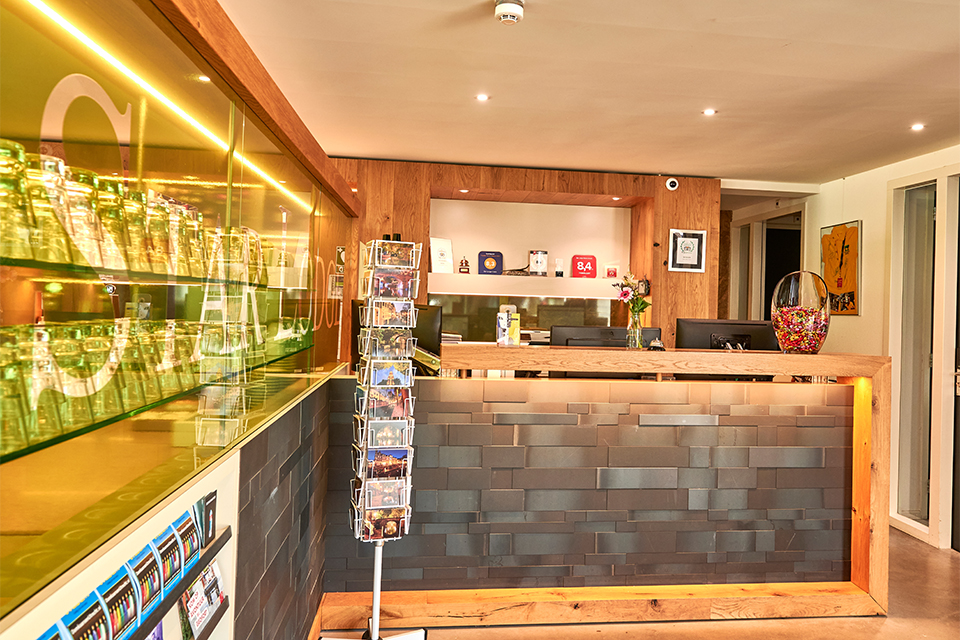
For years, Van Es's life was a series of jobs, relocations and hotels. A year and a half here, two years there; exactly the kind of rhythm that many hospitality professionals recognise. Building a stable private life? Not easy. Then his father suddenly passed away. Van Es was working at Star Lodge at the time. His mother was left alone in a big house. “I wanted a permanent place, not another temporary address,” he says. “My mother was in that house that was too big for her alone. So we decided to do it together.”
It turns out to be a decision that not only gives him personal stability, but also keeps him going professionally. During the years when he worked 60 to 70 hours a week, his home life was not a burden but a source of support. “A place where someone says: it's fine, but please think about yourself too.” He took that message to heart. He has now built in regular moments of rest: two holidays a year during which he switches off his phone. Not just silent mode, but completely off. “The hotel industry is like a village,” he says. “All kinds of things happen. But that doesn't mean you have to be available 24 hours a day.”
His experience with illness and incapacity for work also changed his view of being an employer. “When I was declared 75 per cent unfit for work, I thought: that's it. If someone hadn't given me that opportunity back then, I wouldn't be sitting here now.”
He now wants to pass on that opportunity himself. Star Lodge and City Centre Lodge deliberately recruit people who are distanced from the labour market. People who have been out of work for some time, have physical limitations, or for other reasons are not immediately the easy choice.
“We are a commercial organisation,” he emphasises. “We simply have to make money, there’s no getting around that. But that doesn’t mean you only have to select the perfect CVs. Sometimes someone with a bumpy path can be a huge asset. If someone like that flourishes in the workplace, it energises the whole team.”
This approach has not gone unnoticed. In 2018, the hotels won the accessibility award from the municipality of Utrecht. This is wonderful recognition, but Van Es is particularly pleased when he sees the impact it has on people. “As an employee who has been on the sidelines for years and is now fully involved, this is perhaps the most beautiful form of hospitality there is.”
When speaking with Van Es, one frequently hears the term 'hospitality'. For him, it is not merely a marketing term; it is the essence of his profession. At times, this results in scenes that are almost cinematic in nature.
There was that three-day wedding in a castle, where he was banquet manager at the time. Friday, Saturday, Sunday celebrations. Saturday afternoon was to be the highlight: a hundred guests and a singer with live accompaniment.
“She arrived two or three hours early and asked, ”Where is my guitarist?" Everyone looked at each other. Guitarist? That wasn't on our booking. It turned out to be in the rider, but no one had noticed.”
A family member says he can play the guitar. Small detail: there is no guitar. “So I got in the car, drove to a music shop and just bought a guitar. That uncle or cousin played all afternoon and saved the wedding. After the weekend, I went back with the receipt and got my money back.”
The story has become a classic in his repertoire, but the underlying question is more serious: where is the line? “At this wedding, it was clear: these are guests for whom you are happy to go the extra mile. But there are also situations where expectations do not match what your establishment can and is willing to offer. In those cases, I consciously choose to help a guest find another hotel. That is also good hospitality.”
In fifteen years, he has only had one or two occasions where he explicitly did not want a guest to return. “We do almost anything to make a guest happy. But not at any price.”
Hospitality is not just about guests, but just as much about the team. Van Es is very clear about this. “Our employees are given a lot of freedom. Some managers find that scary, but for me it's essential.”
His principle: make a choice, justify it to yourself, and if you can defend it, he will support you at that moment. “We'll discuss later whether it was the best choice. But at that moment, I support you. Only then do people dare to really take responsibility.”
He has also learned a clear lesson in business. In his early years as a manager, he was tough in negotiations. “I went all out to prove myself right. Until I realised that this sometimes leads to the loss of long-term partnerships.”
Now he asks a different question: do you go for happiness or for being right? “Of course there are limits. Sometimes you just have to say no. But often it's better to compromise a little, so that you can enjoy working together in the long term.”
His biggest blunder? Hiring a candidate without calling their last employer. Who, incidentally, he also knew personally. That employee turned out to be a thief. “You only make a mistake like that once. Since then, I've been listening much more closely to my gut feeling.”
Star Lodge and City Centre Lodge are not high-tech playgrounds, but Van Es is clearly charmed by smart systems. Digital check-in, PMS links, automation of guest queries: the goal is always the same. To save time for genuine attention. “For me, it's not a choice between quick self-check-in or a warm smile. It's both. Systems do the repetitive work, so employees have time for contact.”
He is also pragmatic when it comes to OTAs. At the time of opening, 99 per cent of reservations came through online travel agents. That figure has now been reduced to 30 to 35 per cent. “OTAs are perfect as a showcase, but after that you have to actively build up direct bookings. We ensure that you always get the best rate with us.” Meanwhile, he is eagerly awaiting 2026, when the VAT increase for accommodation will come into effect. “It's annoying for large hotels. For small and medium-sized hotels, it could become really problematic,” he says. ”Organisations that cannot deduct VAT in particular will have to make choices."
As secretary of the HOST foundation, he works with hotels in Utrecht and the local council on policies to boost quality tourism. “With the limited number of rooms in Utrecht, you have to choose the right guests: people who stay longer, spend more and don't cause any trouble.”
Would he ever want to do anything outside the hotel industry? Van Es thinks long and hard, but his answer is simple. “Making guests happy gives me energy. I don't know where else I could do that on this scale.” And as soon as he walks through the lobby again after a long day, he knows enough. “When I see a guest checking in there, I immediately feel why I do this job.”
The three lessons of Floris van Es
1. Believe in yourself, but also in the process.
Setbacks do not mean that the story is over. Sometimes the solution is not on the path you had mapped out for yourself.
2. Choose consciously: are you going for your happiness or for being right?
Proving yourself right in the short term may seem appealing, but a sustainable partnership ultimately yields greater rewards.
3. Give employees space and support them when it matters.
When employees feel that you support them, they dare to take responsibility and grow in their role.
 Nederlands Nederlands
  English (UK)