hotelvak.eu
EN

Platform on hotelmanagement, interiordesign and design in the Netherlands
‘On the second day of my first internship in the hotel industry, I experienced something that no one, absolutely no one, could have predicted.’
He started his internship at the Waldorf Astoria in New York in 2001 as a 20-year-old student at the Leeuwarden Hotel School. (And on the second day – which was also his birthday – things turned out completely differently than expected, forcing him to return to the Netherlands). In the spring of 2025, he was appointed General Manager of the prestigious and beautiful newly opened Waldorf Astoria Hotel on Herengracht in Amsterdam.
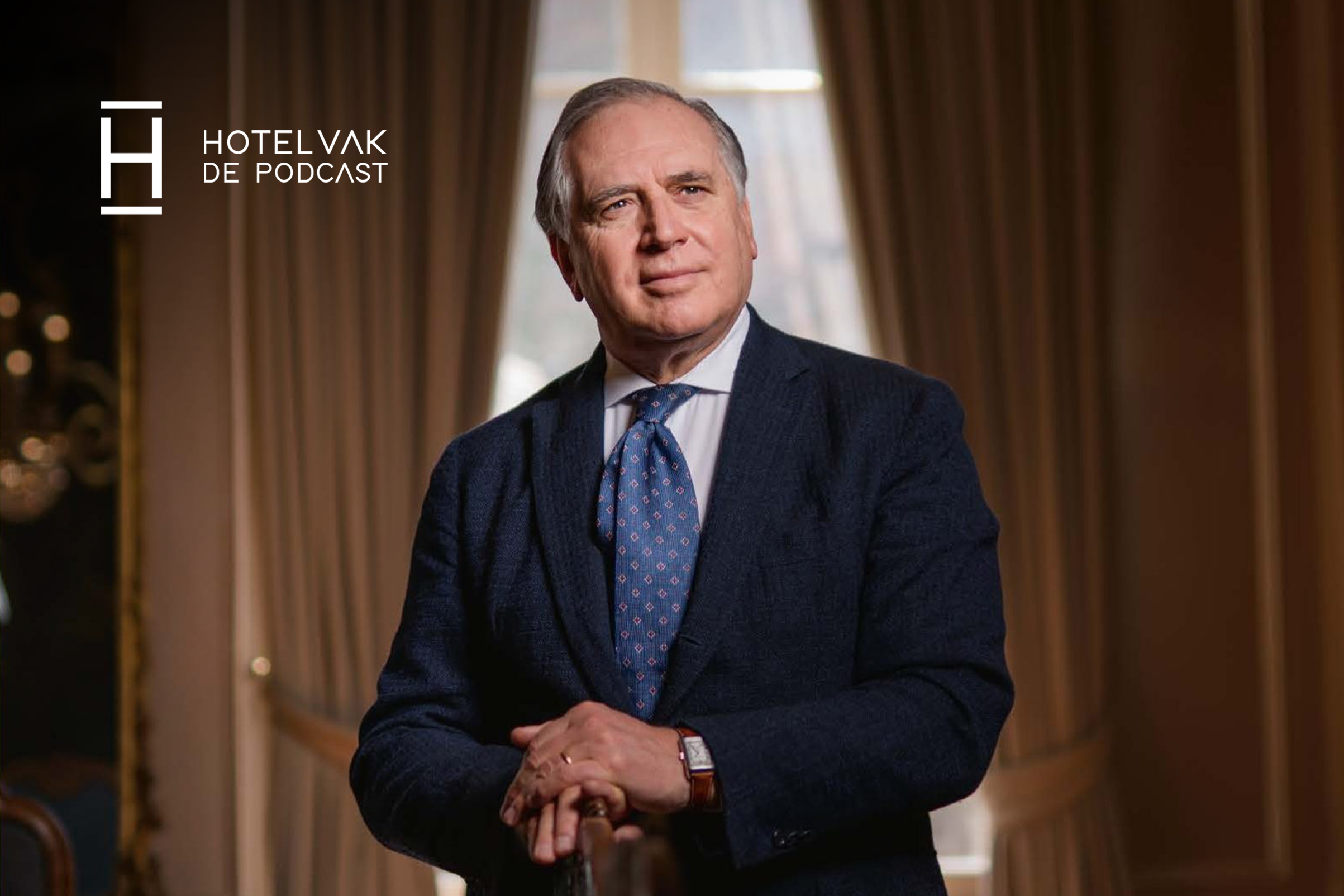
We created a beautiful personal portrait of and with Jeroen Werdmölder (45), who had to get used to Dutch customs and mentality again when he returned to the Dutch hospitality industry after almost 25 years. Working is his passion and his life, but he believes that's how it should be when your job is to organise hospitality for your guests.
We discussed his career path with him, what drove him, what drives him? Are there differences between the way Americans deal with hospitality compared to how we – Dutch people – do it? Spoiler alert: yes, there are! And is there a limit to what even wealthy guests, who regularly stay at the Waldorf Astoria Hotel in Amsterdam, are willing to pay for service? Yes, indeed: of course you discuss this with your employees, so we also talked about what kind of manager you need to be when you work in the luxury hotel industry. And to what extent do you delegate responsibility?
In this episode of the podcast series, we also asked our guest to give some relevant tips for all listeners who work in the hotel sector.
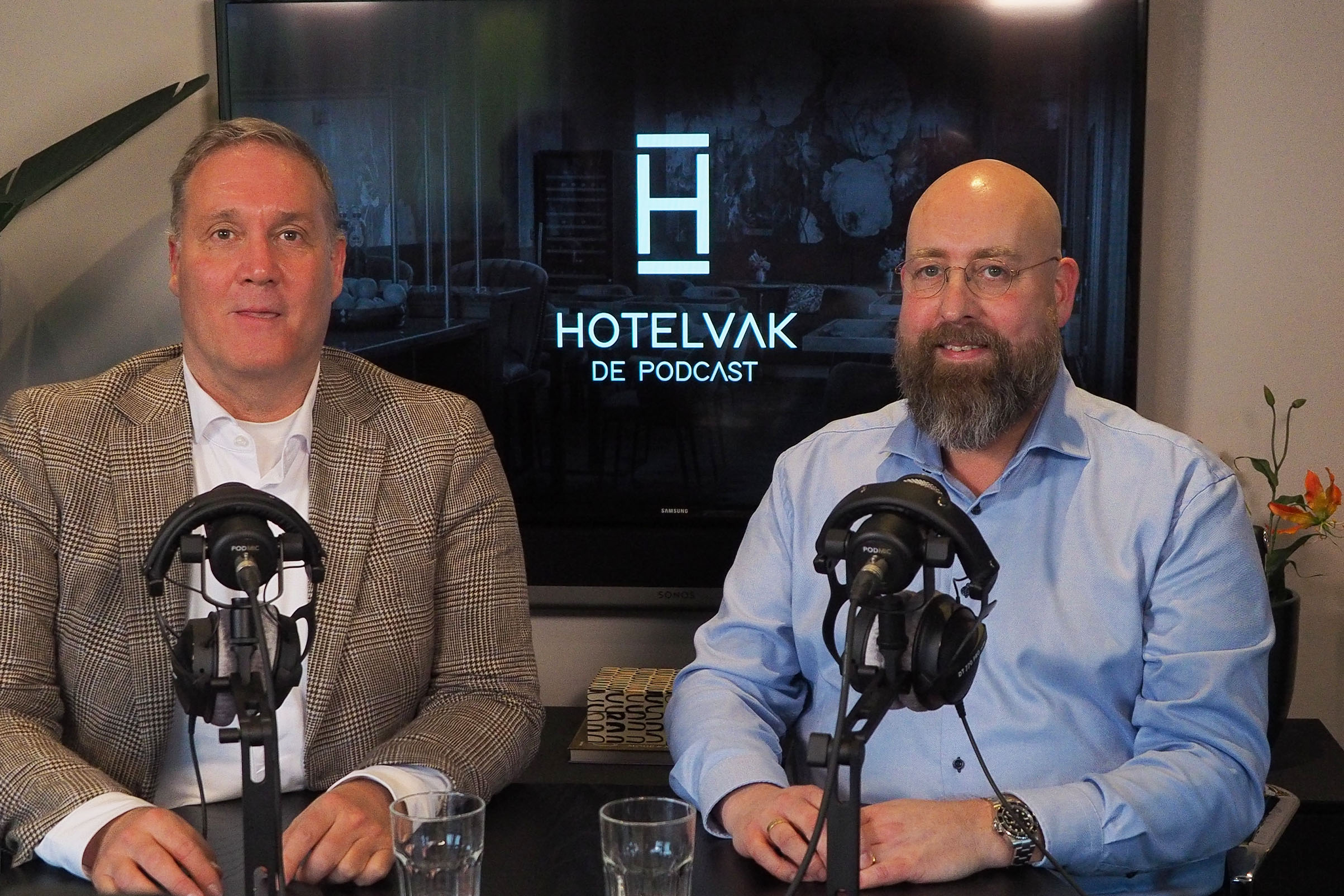
The presentation will be led by Jerry Helmers.
HOTELVAK – EPISODE 7
Conversation with Jeroen Werdmölder – General Manager, Waldorf Astoria Amsterdam
Host: Jerry Helmers
[00:00] Lightspeed – introductory message
Lightspeed Restaurant, the leading platform for the best hospitality entrepreneurs worldwide.
[00:10] Introduction by host
Jerry Helmers: Welcome to Hotelvak, the podcast. A podcast about entrepreneurship in the hospitality sector. Today we are in one of the most iconic hotels in the Netherlands, the Waldorf Astoria Amsterdam. And sitting opposite me is someone whose name has been synonymous with international luxury hospitality for years. Jeroen Werdmölder, the new general manager of this extraordinary canal hotel. Jeroen began his career in the hospitality world at a young age, and that passion has never faded. He learned the trade at the heart of the international hotel industry, Waldorf Astoria New York, where he held various operational positions and laid the foundation for his leadership in the luxury sector. This was followed by impressive steps in the United States, including a crucial role in the reopening of the Plaza Hotel in New York and his contribution to the opening team of the Waldorf Astoria Beverly Hills. After years at the top of the American hotel industry, he made the move to the world-famous Mandarin Oriental in New York, where he was responsible for one of the city's most prestigious hotel operations as hotel manager and later as interim general manager. And now, after more than 20 years of international experience, he has come full circle. Jeroen has returned to the hotel where he played a key role in its opening in 2014. With his in-depth brand experience, sharp operational eye and outspoken passion for hospitality, he has been at the helm of the Waldorf Astoria Amsterdam on Herengracht since this summer, which is the summer of 2025. Today, we want to explore not only his career, but above all get to know the person behind that impressive career. Welcome, Jeroen.
[01:56] Welcome from Jeroen
Jeroen Werdmölder: Thank you very much.
[01:57] First impression of the hotel
Jerry Helmers: Or rather, I should say: how incredibly kind of you to allow me to set up my podcast studio here on Herengracht in Amsterdam to hopefully have a nice chat with you. So thank you very much, and what a beautiful hotel this is.
Jeroen Werdmölder: It's great to have you here and fantastic that we have this opportunity. You and everyone else are always welcome, of course.
[02:17] Is the introduction correct?
Jerry Helmers: Before we talk about this beautiful hotel on Herengracht, Jeroen, I would first like to hear from you. I just introduced you. Is what I said accurate?
Jeroen Werdmölder: That's a wonderful story, and thank you. It was very generous of you to announce that. Yes, indeed, I worked in America for several years. Beverly Hills came after Amsterdam, and the last step was indeed Mandarin Oriental. And then I was allowed to return to the most beautiful address in Amsterdam. Of course, I have to say that now. But it has been that way for years. It is a place that has always been very dear to my heart from the beginning and still is. So I am very honoured to be here.
[03:07] Why return to the Netherlands?
Jerry Helmers: What was your reason for returning to the Netherlands or for taking that step again?
Jeroen Werdmölder: My wife, child, and now two children and I always returned here once or twice a year on holiday. We always said: it's a fantastic country. If we ever had the opportunity to live here, it would be great to come back. And then this opportunity came along. And if we hadn't done it for this beautiful hotel, we would never have come back. It was a unique opportunity.
[03:42] How the position became available
Jerry Helmers: But how did that opportunity pass you by?
Jeroen Werdmölder: Over the years, I have always maintained good contact. And my predecessor, Catharina Slijver: when she was promoted, I contacted her to congratulate her. And from then on, the ball started rolling.
[03:57] Application process
Jerry Helmers: How many job interviews have you had? Because I don't think they'll rush into this, will they?
Jeroen Werdmölder: No, I had lots of conversations with several colleagues from the corporate team. Fortunately, I still knew a lot of people, so it was quite open. And once everything had been said, all the wishes... then it was just a matter of arranging the movers and going. And getting on the plane and flying back to the Netherlands. Taking the slow train and flying back, yes.
[04:34] Second child born
Jerry Helmers: But when you arrived in the Netherlands, something else exciting happened, which is perhaps even more exciting than working at the Waldorf Astoria Hotel. You became a father for the second time.
Jeroen Werdmölder: Yes, we have an Amsterdam native. Our daughter was born here. And credit to my wife – she was seven months pregnant when we moved internationally. She is amazing and managed everything really well. She adapted well to the Dutch systems. She was cycling with our son until the very last moment and is proud to have given birth to a beautiful daughter here.
[05:11] Busy family life
Jerry Helmers: Okay, so you have a very busy life in that area as well.
Jeroen Werdmölder: It's not boring. Short nights, no nights, and sometimes a good night's sleep.
[05:18] The role of the family
Jerry Helmers: But you can always escape to the Waldorf Astoria, can't you, if the nights are really dramatic.
Jeroen Werdmölder: I don't think my wife would appreciate that. We do it together and she does a lot, of course. I have a lot of respect for her. But it's going great. And the smiles on my wife and children's faces are worth everything.
[05:39] How Jeroen describes himself
Jerry Helmers: How would you describe yourself as a person? Because perhaps you had to explain that during the job interviews you had here. What kind of person are you?
Jeroen Werdmölder: I am someone who likes to be surrounded by other people. That is very important in our industry, in hospitality. But I like to be busy at home. I like to be busy at work. I like to be involved in lots of different things, but always in collaboration with others.
[06:14] Balance between hustle and bustle and tranquillity
Jerry Helmers: But busy – does that also mean you always want to feel like your schedule is just a bit too tight?
Jeroen Werdmölder: I do like pressure, but I also like to be able to take time out now and then. So I make sure to schedule that in. And that's important too: being able to maintain your composure in front of your team at work, but also at home. Sometimes you have to take a step back.
Jerry Helmers: To recharge for a bit.
Jeroen Werdmölder: Yes, definitely.
[06:54] The road to hotel school
Jerry Helmers: You started out at the hotel school in Leeuwarden. Did you always know you wanted to work in the hotel industry? Even when you were at hotel school?
Jeroen Werdmölder: In fact, even as a young child, I wanted to work in restaurants and the hospitality industry. So, as a 14-year-old boy, I started washing dishes and working on weekends. When I was allowed to go from secondary school to hotel school, I became a different person. Secondary school was a bit more difficult, but at hotel school I found my passion. I breezed through it with love and pleasure, with the clubs and the subject we were learning.
[07:43] Student life and societies
Jerry Helmers: What do you mean by associations?
Jeroen Werdmölder: IOVVAT, the student association where I was active. I was also actively involved in the hotel school. After three years, I was allowed to do an internship. Then the Waldorf Astoria New York came along and I had the honour of doing an internship there.
[08:01] Internship opportunity at Waldorf Astoria New York
Jerry Helmers: How did that happen?
Jeroen Werdmölder: They came to Leeuwarden for recruitment. And three students, including me, were invited to come to New York.
[08:13] First impression of New York
Jerry Helmers: So as an 18, 19, 20-year-old lad, you went to New York. Was that a big adventure?
Jeroen Werdmölder: I was twenty years old. I will never forget arriving in a taxi at the grand Waldorf Astoria. It was very impressive. The large building, the lobby with hundreds of people walking around, a huge reception area with about twenty computers. And I was allowed to live there for the first few months. It was the best internship you could wish for. A unique experience.
[08:49] Internship abruptly ended by 9/11
Jerry Helmers: What did you do as an intern?
Jeroen Werdmölder: The internship didn't go as planned. On my second day, 9/11 happened. That changed the world. I was the last one in, so I was the first one out. I went back to the Netherlands and finished my internship at the Hilton in Antwerp. Then the Waldorf called to ask if I wanted to come back – I returned a year later and stayed for six years.
[09:27] The day of 9/11 – what happened
Jerry Helmers: Can you recall what happened? You were young, and something happened that changed the world.
Jeroen Werdmölder: We were in orientation, in a welcome class. It was also my birthday; they were singing for me. We went to our rooms and watched what was happening on television. It was surreal. Communication had broken down. We went to the lobby to help where we could. The hotel was sealed off. We were newbies in a big hotel and knew nothing.
[11:02] First leadership lessons during a crisis
Jerry Helmers: Have you learnt anything about leadership there?
Jeroen Werdmölder: I think so. In a crisis, you have to stay calm, even if your mind is racing. And you have to have the courage to make decisions when necessary – especially when it comes to the safety of staff, guests and the building.
[12:13] Examples of decisions during 9/11
Jerry Helmers: Give me an example. The Waldorf is towards 50th Street, a bit away from the towers – but still in the centre of the city.
Jeroen Werdmölder: Smoke and dust spread throughout the city. No one knew what was happening. We decided to lock down the hotel completely. Guests were not allowed to leave. Guests who were outside were allowed in if they could prove they were guests. I think we were locked down for a week. After that, we analysed where our guests were and who needed help. People had left the city and left their belongings behind; some guests were lost. It was an emotional and extraordinary experience that taught us a lot.
[13:31] The most lasting memory
Jerry Helmers: What moment from that week will you never forget? Perhaps a conversation with a guest?
Jeroen Werdmölder: No, I think it was later... I think at the time it was the teamwork with colleagues, with interns, with people who had just started; how we supported each other. But later that month, we went downtown and everyone was standing there applauding and handing out things – food and drinks to the first responders. We went there to support where we could. And those are lessons you will never forget.
[14:16] Why the internship formally ended
Jerry Helmers: This may be a strange question, because your internship was ultimately terminated. Why?
Jeroen Werdmölder: The hotel industry collapsed. There was no one left in New York, so there was no work. And of course, we were the last to join, so we were the first to leave.
Jerry Helmers: Would you still dare to board a plane to the Netherlands?
Jeroen Werdmölder: I have to tell you: back then, and that's partly why I fell in love with Waldorf. The hotel took such good care of us during that turbulent time. They flew us back in style and took care of everything. I thought: this is very unpleasant, but the way they handled it... they couldn't have done better. And when they called a year later to ask if I wanted to come back, I was honoured.
[15:16] What good employment practices mean
Jerry Helmers: Did you already discover what good employment practices or good leadership entail at that time?
Jeroen Werdmölder: Taking care of your people. It’s key to success.
Jerry Helmers: Your people determine the success of the hotel?
Jeroen Werdmölder: Absolutely.
[15:31] Translation to his current leadership
Jerry Helmers: How do you translate that to the present day?
Jeroen Werdmölder: Everything I have learned over the years, I put into practice every day. The team takes care of the hospitality. You always have to take care of the team in order to provide a good experience for our guests. You can have all the gold and marble, all the Fretté linen, the most beautiful crockery – but without a team, it's all worthless.
[16:20] How Jeroen motivates his team
Jerry Helmers: How do you motivate your team?
Jeroen Werdmölder: I try to be part of the team. I'm not afraid to roll up my sleeves, to walk along or to clear a plate from the table. I'm a big believer in empowerment.
Jerry Helmers: What do you mean by that?
[16:55] What empowerment means
Jeroen Werdmölder: Empowerment is something I learned a great deal about in America. You give your team the confidence to make decisions. And if it's a decision you disagree with, you approach it later in a coaching manner – so that they learn how to do things differently.
[17:16] Placing responsibility on employees
Jerry Helmers: Does that mean you are relinquishing responsibility?
Jeroen Werdmölder: Yes, my team is allowed to make decisions if they feel comfortable doing so.
Jerry Helmers: But do they also bear the responsibility?
Jeroen Werdmölder: Yes, ultimately I am responsible. But if they say, “I want to do this for this person to create something special or to compensate for something,” then they can make that choice and bear that responsibility.
[17:57] The art of delegating
Jerry Helmers: Is delegation essential? It has to be in your DNA.
Jeroen Werdmölder: That's right. And as a hotelier at this level, you want to be in control of everything. But it's important to relinquish control so that people can learn and develop. And when you relinquish control, you free up time for other things.
[18:17] Leadership development at the hotel school
Jerry Helmers: Do they teach you that at hotel school?
Jeroen Werdmölder: Yes. Leeuwarden Hotel School was very strong in how they taught. It was PGO – problem-based learning.
Jerry Helmers: Controlled education.
Jeroen Werdmölder: I'm glad you brought that up. We always worked in teams, did assignments in teams. We had to work in the company restaurant, in the kitchen. You learned to support each other, to lean on each other.
[19:15] Learning to deal with criticism
Jerry Helmers: But also criticising each other?
Jeroen Werdmölder: Yes, absolutely.
[19:17] What hospitality means
Jerry Helmers: Is hospitality objective or subjective? What is hospitality?
Jeroen Werdmölder: Hospitality means different things to different people. For some, a two-star hotel is special; for others, it's a five-star hotel. The same applies to employees – you can work at all kinds of levels. It's about what you value and where your passion lies.
[20:08] Why Jeroen chooses high-end hospitality
Jerry Helmers: Why did you choose the high-end segment?
Jeroen Werdmölder: I love beautiful things. The most delicious food, the finest service. I appreciate that and enjoy taking care of people as best I can – down to the last detail. Whether that's for my parents or the President of the United States. When people come to our house, we want the snack platter to be perfect.
[21:09] Working with presidents and celebrities
Jerry Helmers: You just said: the President of America. Have you ever done anything for him?
Jeroen Werdmölder: I have had the privilege of meeting all American presidents since Bush junior.
[21:20] Are high-profile guests demanding?
Jerry Helmers: And have you spoken to them personally? Are they demanding guests?
Jeroen Werdmölder: I have lots of stories – but I'll save those for when the microphone is off. The team is demanding. You deal with police, ambulance personnel, snipers... and also with the president and his assistants. Ultimately, they are all people who want normal interactions.
[22:49] Personal interactions with celebrities
Jerry Helmers: Is there room for personal moments?
Jeroen Werdmölder: Yes, absolutely. They are ordinary people. Sometimes you just have a pleasant conversation, if the moment is right.
[23:17] Thank you gifts from presidents and celebrities
Jerry Helmers: Have you ever been thanked personally?
Jeroen Werdmölder: Yes. Letters from presidents, photographs with presidents, photographs with celebrities. I later encountered a celebrity whom I had welcomed here in Amsterdam two weeks earlier in Beverly Hills. He said, “Jerome, how is this possible? What are you doing over here?” They appreciate a familiar face.
[24:10] Discretion as an absolute value
Jerry Helmers: Is that also a code of honour – that you don't tell the outside world about these things?
Jeroen Werdmölder: Yes. You have to maintain integrity. That's important for your team, for guests, for those who book trips. They need to know that this is a warm and welcoming place – and that what happens here stays here. What happens at the Waldorf Astoria Amsterdam stays with us.
[25:05] Selfies and social media behaviour of employees
Jerry Helmers: Do you ensure that employees do not secretly take selfies?
Jeroen Werdmölder: Absolutely. There are always things happening that you have to respond to. Sometimes you have to be strict. But you also have to coach so that it doesn't happen again – and that's how you regain loyalty.
[25:46] Differences between Dutch and American hospitality
Jerry Helmers: You have now worked in the Netherlands and abroad. What are the biggest differences?
Jeroen Werdmölder: Two different worlds. Just like LA and New York – completely different. My ideal hotel combines Dutch and American mentalities. Dutch pragmatism with American sparkle.
[26:34] Superficiality in American hospitality
Jerry Helmers: Americans can be superficial sometimes, can't they?
Jeroen Werdmölder: It's a certain way. Americans are very fake. “How are you?”
I always say, “I'm peachy.” Because if you say, “I'm dying tomorrow,” the response is, “Oh, that's great, have a nice day.” They don't listen.
[26:52] The Dutch cannot stand superficiality.
Jerry Helmers: We can't compete with that, can we?
Jeroen Werdmölder: No. But we can learn something from that American warmth.
[27:10] What Americans can learn from the Dutch
Jerry Helmers: Give me an example.
Jeroen Werdmölder: It starts at the front door – with the doorman who gives you a warm and enthusiastic welcome. That sparkling feeling.
Jerry Helmers: And what should Americans adopt from us?
Jeroen Werdmölder: Our sincerity. When we ask, “How are you?” we mean it. And if something is wrong, we respond accordingly. Dutch people are honest and direct. That is valuable.
[28:20] Getting used to the Netherlands after twenty years abroad
Jerry Helmers: Can you still get used to it after so many years?
Jeroen Werdmölder: Certainly. But it is a challenge. I have to get used to the culture, business practices, and how people work together.
[28:56] The biggest cultural difference: email behaviour
Jerry Helmers: What strikes you most?
Jeroen Werdmölder: I'm used to receiving 200 emails on Saturdays and Sundays. And in the evening at 10 or 11 o'clock. The first few weeks, I thought my phone was broken. In the Netherlands, that's not necessary. Here, people protect their private time more.
[30:00] Work ethic and expectations
Jerry Helmers: Do we protect our private time better in the Netherlands?
Jeroen Werdmölder: Much better. In America, you are expected to respond late. My wife and I worked late – without reluctance.
[30:41] Leadership in the Dutch context
Jerry Helmers: So it's a different way of managing?
Jeroen Werdmölder: Yes.
Jerry Helmers: And these first few months – do you feel that you have been able to adopt that for yourself?
Jeroen Werdmölder: I'm starting to get used to it.
Jerry Helmers: Do people dare to give you feedback here, your employees?
Jeroen Werdmölder: If necessary, certainly. Especially the people I manage directly. I have an open relationship with them. I always tell them to speak up if they disagree with something or if something bothers them.
[31:19] Dealing with criticism
Jerry Helmers: How do you deal with criticism?
Jeroen Werdmölder: Very good. Criticism is difficult, but useful. And it's part of leadership that you make decisions – and sometimes you make the wrong ones. Then you have to be able to go back to your team and say, “Sorry, this wasn't the right decision. We're going to do it differently.”
[32:07] Ego and humility
Jerry Helmers: Does it literally mean putting your ego aside? Can you actually have an ego as a manager?
Jeroen Werdmölder: You should always strive to be humble. That is an important quality. You need to be able to position yourself within your team. Together, you create the ultimate guest experience. The ultimate experience results in a successful business and good operating results, which pleases the corporate team and the owners.
[33:00] Can people touch Jeroen?
Jerry Helmers: Can people get to you? Because everyone has their limits. Do you ever lose your temper?
Jeroen Werdmölder: No. I don't go crazy – I never have. I'm the middle of three boys; I think I learned that calmness there.
[33:11] Maintaining calm in stressful situations
Jeroen Werdmölder: I think I thrive on a little unrest, a little stress. It brings out the calm leader in me. If someone gets angry with me – a guest or a member of staff – I am very good at staying calm and taking a step back. If you don't do that, things escalate.
[33:42] Always listen, always be available
Jerry Helmers: You have to listen carefully and be patient. Can you do that? Employees may have personal problems.
Jeroen Werdmölder: You should always listen. You should always be available for your team – whether you have time or not.
[34:20] Availability outside working hours
Jerry Helmers: Even on Saturdays and Sundays, when you're at home?
Jeroen Werdmölder: Absolutely. They can call, text or WhatsApp. Sometimes you think: that phone call wasn't necessary – but you have to be there for them. Afterwards, you can coach them: “Perhaps you could have handled that differently.” But you have to make them feel that they can always come to you.
[35:02] Price elasticity in the luxury segment
Jerry Helmers: Lightspeed conducts market research. Is there also price elasticity in the ultra-luxury segment? Do wealthy guests set limits? How far can a luxury hotel go?
Jeroen Werdmölder: Service and price are different for everyone. Some guests have unlimited budgets and are happy to pay – as long as the service is good. Every guest has a level they are willing to pay for. You have to decide what service you want to provide. Focus on quality; the price will follow.
[36:40] Ambitions for the coming years
Jerry Helmers: Suppose I return in three or four years: what would you like to have achieved by then?
Jeroen Werdmölder: I think we can be very happy with our hotel. Fantastic leaders for me, a fantastic team. The goal is to keep improving. To maintain our number one position in the Netherlands. We are the only Forbes 5 Star Hotel in the Netherlands. And today we were named on the Forbes Icon List.
Jerry Helmers: Congratulations!
Jeroen Werdmölder: Thank you – I received the call half an hour before you arrived. Number two in the award.
[37:53] Continuous improvement
Jeroen Werdmölder: We must continue to develop: rooms, restaurants, F&B. We have Spectrum – two Michelin stars – and are constantly improving. Even in the details: Christmas decorations, the new tree in the garden...
[38:47] Dealing with pressure and inspiration
Jerry Helmers: Does that put pressure on you? You've just become a father for the second time, you have a family and this job.
Jeroen Werdmölder: I love pressure. I thrive.
Jerry Helmers: Do you ever lie awake at night?
Jeroen Werdmölder: Yes, when the baby cries. But also about work. That's part of it. In luxury hospitality, you always have to be working on your own development. Inspiration comes from everywhere: on your bike, in the middle of the night...
[40:15] New culinary concepts
Jerry Helmers: What is something specific you are currently working on?
Jeroen Werdmölder: We are working with our culinary team on new concepts. New menu, new Peacock Alley experience. Our festive afternoon tea – magical. Tiny works of art. A unique experience; I have never seen anything like it anywhere else in the world.
[41:36] How Jeroen knows what guests appreciate
Jerry Helmers: How do you know that guests will appreciate that?
Jeroen Werdmölder: By empathising. Through my global experience. I believe we have something truly special here — for international guests and for Amsterdammers alike.
[42:04] Minor improvements in service and details
Jeroen Werdmölder: We look at everything: coffee, the biscuits that go with it, how we can improve. With ADE, we had a DJ in Spectrum. With Amsterdam 750, we gave Amsterdammers the opportunity to enjoy a cup of coffee and biscuits. Hundreds of people over four days.
[43:28] Everyone is welcome
Jerry Helmers: The perception is that the rooms are expensive, but surely a cup of coffee is not a problem for any Amsterdam resident?
Jeroen Werdmölder: Certainly, everyone is welcome. Anyone can come here to gain experience.
[44:01] Career prospects for the next ten years
Jerry Helmers: You are 45 – your career is far from over. Do you ever think about what you will be doing in ten years' time?
Jeroen Werdmölder: I hope to continue for another 25 years. Waldorf Astoria Amsterdam is a fantastic opportunity. Maybe one day I'll have my own hotel – I never say never. We are an international family; we're not afraid of newcomers knocking on our door. But I think I'm lucky enough to be managing the most beautiful hotel in the Netherlands.
[45:16] Proud of the Waldorf Astoria Amsterdam
Jerry Helmers: You have to say it's beautiful.
Jeroen Werdmölder: It really is beautiful. I opened the hotel with Roberto Payer. I've always noticed that, wherever I worked, when people asked me what I did, I always lit up when I talked about the Waldorf Astoria Amsterdam. I feel a great sense of pride here.
[45:54] A ‘Waldorf baby’
Jerry Helmers: Your children's names are not quite Waldorf and Astoria.
Jeroen Werdmölder: Our daughter was born here. We couldn't find a house, so she was born in the hospital – but was allowed to come back to the Waldorf afterwards. She is a real Waldorf baby.
[46:24] Which anecdote should be included in his book?
Jerry Helmers: Imagine you are writing a book. Which anecdote should you include?
Jeroen Werdmölder: I would write about all my experiences with my teams. All the moments that define who you become. Not just celebrities or presidents – although they are there too.
[47:32] The Rolling Stones in the ballroom
Jeroen Werdmölder: As a banquet manager, I organised parties in New York. Rock & Roll Hall of Fame. My parents were visiting; I took my father into the ballroom... and there were the Rolling Stones rehearsing. The look on my father's face – priceless.
We had an old sign at the Waldorf: “The difficult immediately. The impossible will take a few moments longer.” That has always stayed with me.
[48:52] The pride of his parents
Jerry Helmers: Your parents must have been incredibly proud.
Jeroen Werdmölder: Yes – but they were even happier when we returned to the Netherlands.
Jerry Helmers: Because of the grandchildren?
Jeroen Werdmölder: More for the grandchildren than for me. First the grandchildren, then my wife, then me. I've dropped in the rankings.
[49:23] Mistakes and lessons learnt
Jerry Helmers: Have you made a blunder?
Jeroen Werdmölder: Not major blunders. We all make mistakes – you learn from them. I've had good leaders who coached me. Others did things that made me think: I would do that differently – you learn from that too. I've certainly experienced major crises; you learn from those as well.
[50:17] Tragedies in hotels
Jerry Helmers: Are you referring to tragic moments?
Jeroen Werdmölder: Yes. Deaths, suicides, arguments... You experience everything in hotels.
[50:54] How hospitality can be improved
Jerry Helmers: Do you have any tips for listeners – hotel and hospitality professionals?
Jeroen Werdmölder: Hospitality can always be improved. Luxury is personal. You can have all the gold and marble you want, but without the people, it's nothing. Show genuine interest, take your time, listen for five seconds longer – then you can anticipate what guests need.
[52:04] Does that apply to every segment?
Jerry Helmers: Also for 1-star hotels?
Jeroen Werdmölder: Yes – for everyone. Including bicycle shops. Anyone who provides an experience should do this.
[52:53] Use of first names
Jerry Helmers: Is the use of first names important?
Jeroen Werdmölder: It has changed. If the moment is right and the guest feels comfortable with it, there is nothing wrong with it.
[53:36] Online check-in in the luxury segment
Jerry Helmers: How should employees deal with rapid technological developments? Such as online check-in.
Jeroen Werdmölder: We are working on it – we have just installed the system. Some guests like it. Business travellers who stay 200 nights a year want to get through quickly. We like to welcome guests personally, with a drink or some chocolates, but technology helps.
[54:17] Technology and the human touch
Jerry Helmers: Is there an ultimate common thread?
Jeroen Werdmölder: The human touch must never disappear. Technology helps – but without people, there is no experience.
[54:47] The guest is central
Jerry Helmers: It may be a cliché, but the guest is the focus, right?
Jeroen Werdmölder: Absolutely. Without guests, we are nothing. Without a team, you are nothing. Ultimately, we do it for the guests.
[55:06] How to keep employees happy
Jerry Helmers: Do you have any tips on how people in the sector can keep their careers enjoyable?
Jeroen Werdmölder: Celebrate successes. Stay positive. 99% of our guests is nice – 1% is special. Focus on the 99%.
[56:09] Concluding the conversation
Jerry Helmers: I enjoyed being here with you on Herengracht. This was your global podcast debut. How do you look back on these 45 to 50 minutes?
Jeroen Werdmölder: It flew by. It was very nice talking to you. Thank you for taking the time to come here.
[56:37] Discretion and professionalism
Jerry Helmers: Unfortunately, I didn't catch the names of the presidents or celebrities. But that says something about you: discretion. You know how it works.
Jeroen Werdmölder: I learn something new every day, and I hope I've done well.
[57:00] Acknowledgements and end of the episode
Jerry Helmers: Thank you for the interview. Perhaps I will return in two or three years to see how you have realised your ambitions. Thank you for having me here at the Waldorf Astoria Hotel on Herengracht in Amsterdam. Until next time. Thank you for listening. Do you enjoy this podcast and don't want to miss a single episode? Click on the plus sign to follow us.

 Nederlands Nederlands
  English (UK)
