hotelvak.eu
EN

Platform on hotelmanagement, interiordesign and design in the Netherlands
Attention for the guest or grip on the back office? According to Maarten Pluim, sales manager at AFAS Software, hotels don't have to choose: those who organise the basics smarter will actually make more room for hospitality. Maarten Pluim did not stay in the hotel industry, but the hotel industry has stayed with him. He studied at hotel school, started his career at Golden Tulip and had serious ambitions to become a hotel manager himself one day. Things turned out differently. A temporary move to AFAS turned into a long career with the Leusden-based family company.
While talking to Pluim, he visibly enjoys talking about the industry. About teams that sense each other during peak hours, about employees who really see guests and about the difference a well-employed colleague can make. This is precisely why his story does not start with software, but with hospitality. “I have a soft spot for the industry. If you don't work in it, then work with it,” he says. That sentence marks his view of AFAS: software is not an end in itself, but a means to help people do their jobs better.
Work pressure is something every hotelier recognises, of course. Colleagues are scarce, margins are under pressure and the expectations of guests and employees are increasing. At the same time, behind the scenes, the number of processes, systems, checks and reports is growing. Pluim sees the real hotel dilemma there: how do you organise the back end so well that the front end gets more room for true hospitality? A guest might not notice which HR or payroll system a hotel uses. But he does notice whether a team works in a relaxed manner, whether a new colleague is properly inducted and whether a manager has time to really guide people.
In conversations with hotels, Pluim sees three themes recurring: finding and retaining staff, software fragmentation and grip on margin. Not surprisingly, he starts with staff. “How do you find them now? And when you have found them, do they stay with you or not?” That question sounds simple, but goes to the heart of being a good employer in the hotel industry.
Attracting new employees is already a task. But then the equally important work begins: making sure someone lands well in the organisation. Contracts need to be drawn up, data checked, documents provided, clothes prepared, training scheduled and a buddy or supervisor ready to go. On paper, onboarding is a checklist. In practice, it is a chain of actions in which HR, payroll, facilities, managers and the employee himself all play a role.
That is precisely where Pluim believes there is much to be gained. Not by digitising onboarding just because you can, but by making an employee's start more reliable, personal and clear. Everyone needs to know what needs to be done, when and with what information. An employee who on the first working day still has to search for clothes, an account, a contract or basic explanations is not starting with energy, but with noise. That is neither a strong start to employment nor a convincing signal of good employment practices.
With all his experience, Pluim also sees things go wrong sometimes. Hotels that do not yet have a good enough dialogue with employees and therefore do not have all their needs mapped out. “Make sure you know what makes your employees happy or what makes them less happy,” he says. That advice is typical Pluim. First look at what people need and only then determine which processes can be smarter. Sometimes that means faster onboarding because the throughput in hospitality teams is high. Sometimes it means better coaching and development because a hotel wants to retain employees for longer. In both cases, improvement does not start with a package, but with the question of where employees are currently losing time, energy or fun.
Pluim knows the culture of the hotel industry. He knows how natural it used to be that your private schedule adjusted to the operation. “When I worked in the hospitality industry myself, you didn't make an appointment in the evening because you didn't know what time you would be ready. It doesn't work like that anymore,’ he says. The new generation of employees looks at work differently. They want clarity, balance, guidance and communication that is right.
Many managers in hotels are strong in that human part. They see talent, sense what someone on the floor can grow into and take colleagues along in the profession. But recording, following up and administratively securing what has been agreed is by no means always done consistently. Pluim also recognises this in himself. He does not call himself an administration tiger, even though he is sure he can guide people well. That is precisely where software should help: not to take over the conversation, but to ensure that the conversation leads somewhere.
A performance review should not disappear into a loose note or folder. It should be able to lead to training, a follow-up interview, insight into competences or a development step. Not because the system demands it, but because it benefits the employee. That is the practical AFAS line: don't make work more bureaucratic, but easier and more fun. Make sure managers have less to memorise and more to supervise.
Hotels rightly invest a lot of attention in the primary guest process. Property management, POS systems, reservations and planning are often well organised. The supporting processes are more often historically grown: an HR solution here, payroll there, finance somewhere else, reports in Excel and links that just don't do what is needed.
Pluim does not see this as unwillingness. Hotels' attention logically goes to the guest side first. But meanwhile, behind the scenes, an application landscape emerges in which data is re-entered, checks are done manually and nobody is always sure what the current version of the truth is. This slows down workflows, increases the chance of error and takes time that is hardly there in hotels.
The solution Pluim sees is down-to-earth: make the basics logical. Bring HR, payroll and finance processes together. Capture data properly once. Let workflows take the right person at the right time. And link with hotel management systems, cash registers, planning and BI solutions where necessary. Don't cram everything into one system, but create one reliable basis on which the organisation can manage.
This is why he talks about AFAS as a platform for supporting processes. From recruitment and onboarding to development, remuneration, reporting and retirement. For hotels, this means less duplication of effort, less risk of error and faster insight. More importantly, employees experience less internal hassle. A contract arrives on time. The pay slip is correct. Tasks are clear. The manager keeps an overview. It sounds administrative, but the effect is very human.
AFAS strongly believes in standard processes. In the hotel industry, this can be sensitive, as each hotel is rightly proud of its own character. Pluim therefore makes an important distinction. Many supporting processes are not unique at all in their basis. Payroll processing, collective bargaining agreements, entry into service, authorisation and exit follow logical steps. There is no need to reinvent the wheel each time.
It is precisely by standardising that basis that space is created for what does make a hotel its own. Pluim mentions the example of a voucher after the probationary period. An employee can spend a night at the hotel to experience the guest experience for himself. This is not a standard process from a booklet, but it is exactly the kind of thoughtful detail that reveals culture.
You can smartly organise that too. Is the probationary period over? Then the employee is automatically notified. The manager knows the voucher is ready. The moment is not forgotten and the gift gets the attention it deserves. Pluim calls this “a gift”: a warm gesture you don't want to leave behind because no one thought of it. Therein lies the AFAS logic: standardise what makes no distinction, so that more attention is paid to what makes an organisation special.
Besides employees and systems, Pluim cites grip on margin as a major theme. According to him, this is no longer a luxury. Hotels face rising costs, staff shortages, changing guest expectations and pressure on returns. Then you don't want any surprises. No unexpected purchase invoices. No reports that only show afterwards what should have been visible earlier. No HR data that exists somewhere but does not help you make choices.
Again, this is not about collecting data for the sake of collecting it. It's about making better decisions. Which department is running well? Where is absenteeism rising? Where is turnover? Which employees have competencies that would be valuable elsewhere? Which costs move with occupancy and which do not? Pluim therefore doesn't just ask hotels whether they can access their figures. His sharper question is whether those numbers actually work for the organisation, or whether teams are mainly busy collecting and analysing.
For AFAS, steering information is only valuable when it provides peace of mind. Data should not become extra work, but take work off your hands, provide direction and help you steer earlier. This is also reflected in the Hotelvak stories about hotel organisations strengthening their administrative basis: one source, more overview, faster reporting and less dependence on separate files. The lesson is practical: anyone who wants to grow must first be able to rely on their own information.
AI is now on the agenda at almost every hotel. Pluim sees that too. On the guest side, AI is already being used for answering reviews, for example. On the back office side, too, AI can be an extension of operations. There, AI can help managers summarise conversations, make competences visible or recognise development opportunities.
His example is concrete. A manager is having a conversation with an employee. Instead of mainly typing during that conversation, AI can help record, transcribe and summarise. This keeps the focus on the employee during the conversation, while action points are recorded neatly afterwards. That is exactly the balance Pluim is looking for: technology that supports human contact instead of replacing it.
At the same time, he warns against naivety. Especially with HR data, security is hugely important. Where does the data reside? Who has access? What authorisations are in place? And does the organisation understand what AI can and cannot do? AI can speed up a lot, but only if processes, authorisations and data are set up reliably. Those who automate chaos get faster chaos. Those who get the basics right can use AI to make work smarter, more fun and more human. It all sounds logical but it is still important to name it.
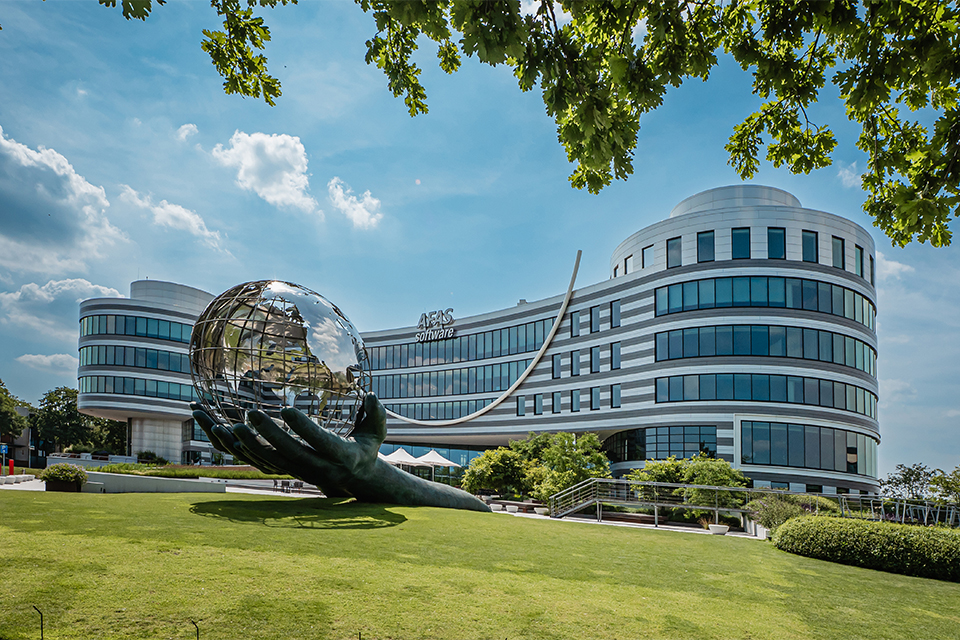
A switch to new software remains exciting. Pluim does not downplay that. Hotels don't just replace a system, they start working differently. This is precisely why he believes that organisations themselves should be in the lead. Not sit back and wait for IT to solve it, but understand what choices are being made, why they are needed and how they land in practice.
He also encourages hotels to ask around in the market. The hotel industry is close-knit. Those who want to know how an implementation really goes should talk to fellow hoteliers who have already done it. Not only about success, but also about tips, choices and what they would do differently afterwards. Pluim can tell from AFAS that they often do this and are happy to help hotels, but in the end, he says, it is something you do together.
This brings the dilemma back to where it started for Pluim: love of hospitality. A hotel is not a system world. It is a people's world. It's about guests who want to be seen and employees who want to do their job well. But that is precisely why supporting processes have to be right. If the back runs stiff, the front pays the price. When the basics work, space is created.
Those who want to retain employees need to reduce internal hassle, says Pluim in the podcast. He immediately corrects himself: “Or make it fun.” That phrase suits him as well as AFAS. Work can be smarter, better and more fun if systems don't get in the way but help. When onboarding runs. When the payslip is reliable. When the manager has insight. When data gives direction. When AI supports without taking over the human touch.
For hotels, that means getting the back end in order so that the front end can do what hospitality is meant to do. Not less human because of digitalisation, but more human because employees get room for attention again. For guests. For colleagues. And for the profession Pluim once started and still visibly enjoys.
Neem dan rechtstreeks contact op met AFAS Software.
 Contact opnemen
Work can be so much more fun and better. And with more consideration for society. In many organisations, people are busy doing the wrong things. Unnecessary actions, double work, repairing mistakes: it costs hands full of time and does not benefit quality. AFAS Software's mission is: inspire better business. AFAS does that with software [...]
View Company profile Nederlands Nederlands
  English (UK)