[00:00]Lightspeed Restaurant. The leading platform for the world’s top hospitality entrepreneurs.
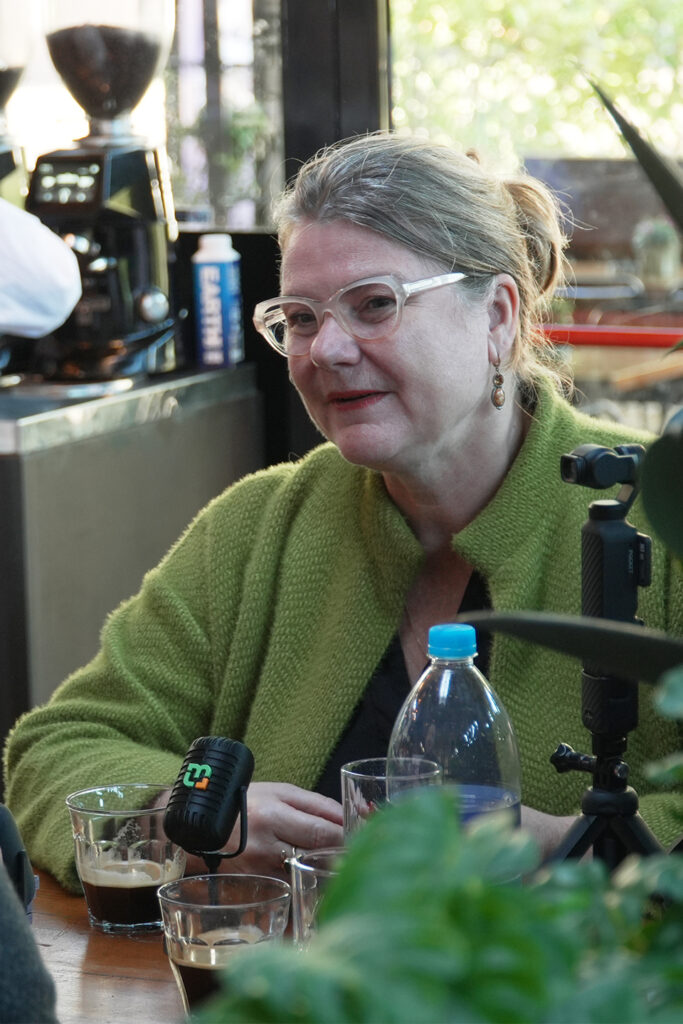
[00:11]Dear listeners, my name is Jeannine Sok, the Netherlands’ first ‘guestologist’. Welcome to the bar – the place where the best conversations take place. It’s lovely to see you here at the bar.
[00:26]Certainly.
[00:26]What would you like to drink?
[00:27]A cup of coffee – lovely.
[00:29]A cup of coffee, yes. Well, let’s sort that out then. A cup of coffee. Would you like to introduce yourself? Because who are you, actually?
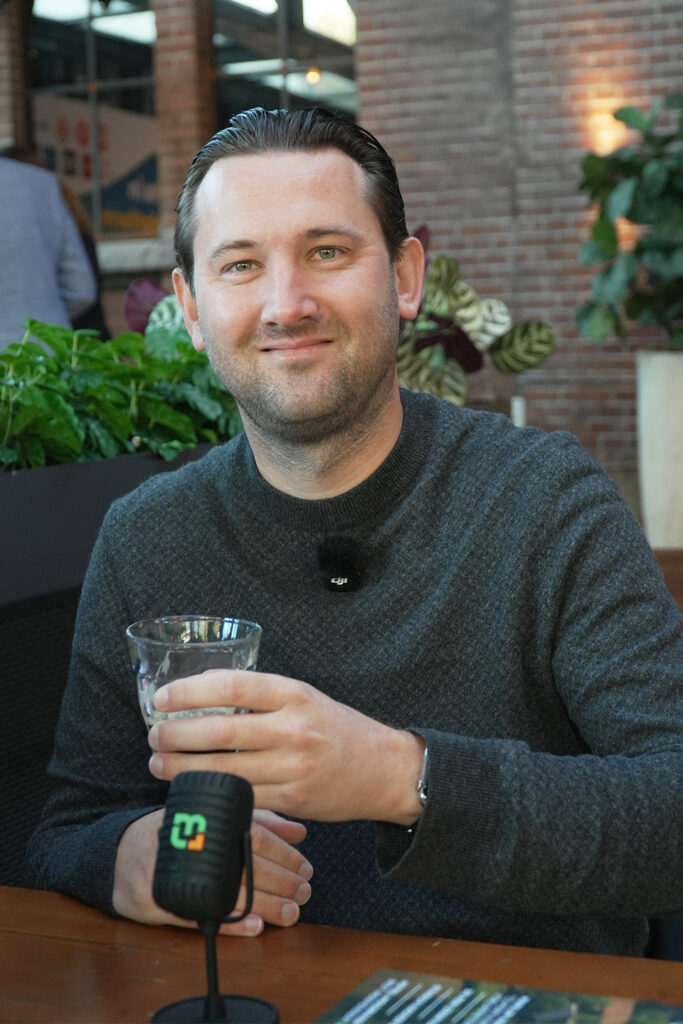
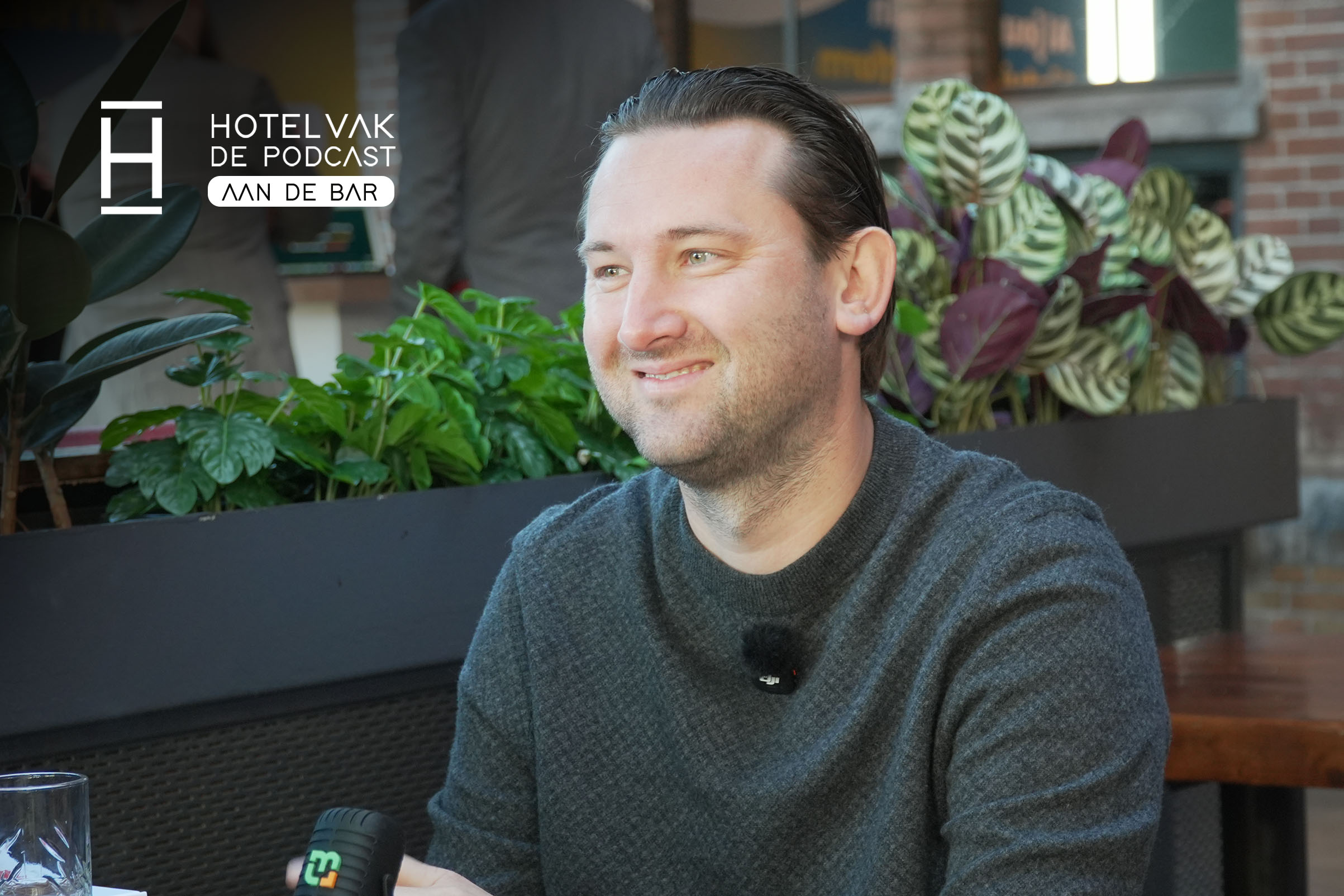
[00:36]Can I say that? Yes, of course. I’m Mitchel Schenderling, 38 years old, and I have two children. That’s also very important to mention. I’m the owner of Top Chefs. We’re a platform for the hospitality industry. [00:49]There’s a lot to say about that, of course. We’ve actually built a comprehensive compliance tool right from the start, so that we can continue to work with freelancers and maintain that flexibility.
[00:59]Right, that’s lovely. And have you had that business for a long time?
[01:05]We launched it in 2017. In 2019, I sold it to the former owner of VakantieVeilingen.nl. And in 2020, we bought it back, during the coronavirus pandemic.
[01:14]Right, that’s quite a remarkable step you’ve taken.
[01:18]Yes, certainly.
[01:20]Yes, because 2020 was certainly a risky time to do that. After all, the hospitality sector was shut down.
[01:26]Certainly, but we did see opportunities. We believed that, of course, things wouldn’t always stay that way. At the time, we had plenty of time to develop everything at our leisure, based on the regulations that were already in place, [01:40]but which weren’t being enforced at the time. Not by the tax authorities.
[01:43]No, exactly. And then, in 2020, it was taken over again. So you were able to build everything up at a steady pace. But some hospitality venues were open at the time. How did you manage that?
[01:53]We didn’t do any business until 2022. In 2023, we really started rolling it out. Right. So that’s why we had a good year and a half to take our time [02:05]building the app, incorporating the right regulations and developing effective compliance tools. We took our time with that too.
[02:12]Yes, that’s quite clever. Because you really do need the foundations first.
[02:16]Yes, that’s right, correct.
[02:17]Yes, that’s really good. And then you were able to gradually start filling up again. Then, of course, there was demand from the hospitality sector as well. Yes. And how did that go? How did you make sure you had enough staff?
[02:30]Yes, we’ve simply run campaigns to find people. We currently have nearly 2,500 people registered, 1,500 of whom are actually active. That means a thousand people simply haven’t got their paperwork in order. [02:44]So they aren’t active on our app either, and can’t be hired. As soon as they’ve got their paperwork in order and completed the compliance process, they’ll be activated and can work for us.
[02:57]Yes, so 1,500 – well, that takes quite a bit of organisation.
[03:01]Yes, we’ve automated it.
[03:03]That’s what I wanted to say, because you’d had two years, of course, to build it all properly. To iron out all the bottlenecks and teething problems.
[03:12]Of course, you can also see that there are other platforms that are struggling these days because they didn’t organise things properly from the start. Fortunately, we did. We have a great direct link to the Chamber of Commerce and a direct link to the VAT system. [03:29]A thorough identity check. We carry out business eligibility checks. Yes, we sign framework agreements with LoA 3. So we actually go via their bank to verify their identity once again. [03:41]There’s no such thing as 100 per cent, but it is a 95 per cent compliance tool.
[03:48]Yes, exactly. Because, of course, you hear plenty of horror stories from business owners: oh yes, and then the payment never comes through. That’s obviously something you never want to happen.
[04:00]We process an average of 200 people a day. We are a NEN-certified company, so we are also audited by Normec every year. We have already been visited by the tax authorities, and the way we manage our back-office processes results in a reduced risk. [04:13]They never say whether it’s good or bad, but they do specify a risk level. In our case, the risk is reduced, because 100 per cent doesn’t exist. That applies to all areas of employment law.
[04:24]Yes, exactly.
[04:25]But we’ve got everything very well organised, if I do say so myself.
[04:28]A compliment, of course. The fact that the tax authorities also came to check and see: ‘Hey, how are you lot getting on?’
[04:35]Yes, certainly. But, well, there’s quite a lot going on with colleagues these days, of course. So I do understand that, given we’re growing so fast, they’ll pop round to see us too. [04:47]That’s absolutely fine.
[04:48]Yes, I think the same thing: you’ve got nothing to hide, because you don’t have an inside pocket full of cash. No, no. That’s how things used to be.
[04:55]No, those days are over. The old way of doing things – just sending an invoice and letting a freelancer get on with the work – those days are well and truly over. There’s actually a whole compliance system behind it. [
[05:07]We’ll just have to get on with it – that’s the way it is.
[05:10]How do you ensure the quality of your chefs?
[05:15]Yes, that’s a very good question. I originally worked in the kitchen. Among other places, I worked at Aan de Poel.
[05:20]A lovely company.
[05:21]Yes, in the kitchen too. I’ve been away from it for a while – I think it’s been about 10 or 12 years now. I’d started a catering business. And because that catering business was taking off really well, I needed staff.
[05:35]And that’s actually how Top Chefs came about.
[05:40]Through the question. Arising from the question.
[05:42]Yes, exactly. That’s pretty much the gist of it. That enabled us to scale up quickly and also to carry on with the catering. But eventually, we also gained clients such as Adecco and Randstad, who started hiring from us.
[05:56]So yes, we knew there was a risk involved. We were a young company and decided to sell at that point. And during the pandemic, we also did some work on the software side.
[06:06]Yes.
[06:07]We then bought back our own company so that we could develop it further and because we had also matured as a business.
[06:13]Yes. But how do you ensure that you actually deliver that standard of quality to your client?
[06:20]Yes, that’s right. They submit a CV to us. We always ask for the CV from before they became freelancers. Because we believe that once you become a freelancer, you naturally pick up bits and pieces as you work for different companies. [06:34]But the learning process is actually pretty much over by then. So we ask for the CV from before they became freelancers. That’s automatically sent to the relevant employer in Europe. We can’t do that in America yet. [06:49]That employer then receives an email asking: ‘Do you know this person? What did you think of them?’ So to speak. That’s automated. But that’s the only thing we still do manually: we also follow up with a phone call.
[06:59]Yes, because that’s what I was going to say. You don’t really have a job interview in that case. People get hired anyway.
[07:07]Well, that’s not true, because they have to complete a compliance training programme. And you actually find that the younger generations are used to helping out their colleagues.
[07:19]For example, they might not have a website, or they might have a residence permit that doesn’t actually allow them to work in the Netherlands. We simply block them. And they can only create a profile with us once.
[07:31]So it’s not the case that they can re-register. They must first sort out their affairs, and only then can they start work.
[07:39]Yes, exactly. But behaviour is, of course, important in the kitchen too. Definitely. And do your staff stick to their commitments when working for your client?
[07:52]Here’s how it works: if you’re a no-show, you’ll be removed from the list straight away and won’t be allowed back in. That’s one. Two – that’s important, isn’t it? Yes, definitely. All the ‘nonsense’, as I call it, that comes in via the messaging app or over the phone,
[08:08]are automatically recorded in their profile. Suppose a client says: ‘Pietje is 30 minutes late.’ The system then automatically checks which shift that is. And it is recorded in their profile that they were 30 minutes late.
[08:20]Yes, because it can always happen. Usually, you just have a chat with each other. But for 1,500 people, or 200 people a day.
[08:33]Is that a lot? Yes. The difference is that we aren’t their employer, so we can’t tell them what to do.
[08:39]No.
[08:40]They really are their own bosses.
[08:42]Yes.
[08:42]It’s true that we do advise them: listen, if you’re 30 minutes late every day at this client’s, the client might block you. Yes. And then you’ll simply lose that client. So these are different areas of expertise.
[08:55]Yes, exactly. And it’s all digital, of course. But do you ever speak to any of the chefs?
[09:03]Well, at the start it was a lot, because I was, of course, involved in the day-to-day operations myself back then. These days, it’s a bit less. We’ve got a great team in place. But when it comes to the problem cases – let’s just call them that – [09:15]I do have a word with them to see where the bottleneck actually lies. That’s also a learning process for us: how can we improve our communication, or better support the lads and lasses?
[09:32]So that they really do have that work ethic and a professional attitude. Some of them still need to be taught that.
[09:38]You really do see that all the lads who join us start at level 0. Even if you’ve worked in Michelin-starred restaurants. They actually work their way up through reviews or by becoming a favourite with clients.
[09:50]And as soon as you become a premium member with us – provided you’ve laid a solid foundation – you’ll actually be able to see the whole app. You’ll then be able to view all the assignments, from Michelin-starred restaurants to brasseries.
[10:04]You then have the first 15 minutes to sign up for a shift, and as a premium member, you’ll be accepted more quickly.
[10:11]Yes, exactly. And you worked at Aan de Poel yourself, of course. Absolutely brilliant. Really great. It’s great fun working in the hospitality industry – that’s certainly true there.
[10:20]Yes, and a good employer – that’s what it’s all about.
[10:22]Yes, they’re a really good employer. And there’s a great atmosphere there too. I’ve actually eaten there a few times. Yes, it’s a really lovely experience to be a guest there.
[10:33]You can also see that the hospitality sector has some catching up to do. Look, we believe that the self-employed – as you see in other countries too – simply aren’t going anywhere. There are people who perform very well in salaried roles.
[10:44]What’s more, a self-employed person can carry out their work. That’s simply not a problem.
[10:47]Because you do need that flexible workforce.
[10:50]Exactly.
[10:50]But I’m curious: don’t you miss being in the kitchen? Because you’re really working in a data-driven way now, if I may say so.
[10:58]Yes, but we have several businesses. We still have a catering business as well. We’ve still got that one too. I also have a [unintelligible]. And during the coronavirus pandemic, we were one of the eight commercial organisations in the Netherlands authorised to carry out testing on behalf of the Ministry of Health, Welfare and Sport.
[11:09]We’ve got a bit of everything. And that includes Top Chefs. We’ve simply got a great team of 20 people in the office, who do all sorts of things.
[11:20]And what do you actually enjoy doing most on a day-to-day basis?
[11:24]What I find really challenging is that online – on LinkedIn, for example – you hear loads of tall tales. People are all just parrots these days.
[11:36]When the NOS or someone else posts something, everyone starts repeating it, and you can see that it contains a great many untruths. For example, we often hear from parties: ‘Yes, but my accountant says this,’,
[11:52] My accountant says that. So we always give the following advice: look, an accountant is good for your accounts and your tax affairs. That’s all well and good, but for that you simply need an employment lawyer.
[12:04]That’s a different ball game. And it really energises me to prove that it is possible after all. If someone says, ‘No, it can’t be done’, I always take up the challenge, because then I say, ‘Yes, it can be done.’ We just need to focus on how it can be done, rather than on how it can’t.
[12:18]Exactly, because you’re really into all that legal stuff.
[12:20]That’s right, yes, we’ve got a really great team that does that.
[12:23]Yes, but I do think that’s quite an achievement, because it’s completely different from cooking up a storm.
[12:29]Certainly, but it’s the same in the hospitality industry. Or, for example, in the armed forces or that sort of thing. You’ve got a team around you. One person is very good at this, another is very good at that. And nobody’s good at everything. [12:40]I haven’t studied law – it’s as simple as that. So we have a great team to help with that. We work with John van Lodensnaar, a business lawyer, and Joost van Ladenstein.
[12:52]And he also advises the Ministry on the new Self-Employment Act. We can discuss this with him in detail to see what else we need to add. For example, if that Self-Employment Act goes ahead,
[13:04]Then we’ll have to adapt again. Because that means we’ll need to add some extra checks to the app.
[13:09]Yes, exactly. Because how can a catering business actually employ chefs safely without running into problems with the tax authorities?
[13:19]Yes, well, I’d stop just sending out invoices and hoping everything will work out. You really do need to do a bit more. Our biggest challenge is finding chefs – and high-quality chefs at that. But 80 per cent of it is actually compliance.
[13:32]When I see how much time we spend on that, even though we’ve already automated a huge part of it: the average hospitality business owner simply doesn’t have time for it. I’m just being completely honest about that. So I’d say: come and join us.
[13:46]Sign up with us. However, we are also very open to the idea of companies, for example, registering their regular freelancers – the ones they work with – on our system. We will then ensure compliance simply by applying the appropriate compliance tool.
[13:59]In that case, we don’t have to handle the recruitment, so the rates are different from those for actually providing a chef, so to speak. There are always several ways to skin a cat.
[14:08]Yes, because how do you go about ensuring that as a chef? Because, of course, as an employer you can run into problems with the tax authorities, but so can the chef themselves.
[14:17]Yes, that’s right. It’s still fairly limited at the moment, but they are expanding it: so that a manager is also given responsibility. But we’re keeping a close eye on that. As soon as they register on our app, they’re immediately given access to that compliance tool.
[14:30]They have to go through these steps before they can even start working. They are, however, given time to provide certain documents. For example, a tax clearance certificate. You first have to apply for this from the tax authorities, as proof that you’re paying your taxes properly.
[14:42]And it takes another two weeks before you receive it. But the application is enough for now. If you don’t have it by then, you’ll need to have it by the next quarter, otherwise you’ll be blocked again.
[14:52]Yes, exactly. So you’ve all organised and arranged that very well.
[14:57]Yes, that’s how it works.
[14:58]So, as a manager, you can say: ‘I’m self-employed myself and I work for various clients. So I’ve got no problem with that.’ That’s what I’ve always found so appealing.
[15:11]These days, it’s about more than just having multiple clients. You really do need to carry out business checks, and that’s what we do. We actually log everything. Every month, we check whether the Chamber of Commerce registration and the VAT number are still active. [15:28]Business checks – we need to have a framework agreement. We draw up service agreements on a daily basis; they’re generated daily. Passports that are scanned again, that sort of thing.
[15:41]So yes, that app runs 24 hours a day.
[15:44]Yes, and then you have to keep developing them all the time, of course.
[15:47]Certainly, yes. Even if that Self-Employed Persons Act is introduced. In that case, we will add a provision stating that everyone must accrue a pension and be insured.
[15:55]Yes.
[15:56]Minimum insurance cover, because that’s what it says there too. Then we’ll introduce a 330 check. Essentially, this means: are people still working on site in accordance with the agreement? Because that’s also very important.
[16:07]And the 640-hour rule – but we’re already doing that anyway. They’re not allowed to work more than 640 hours for a single client.
[16:16]No, exactly. Yes, that is important. Not everyone realises that. As you said, there are loads of tall tales. Definitely, yes.
[16:23]With the old-fashioned approach of ‘come and work, then send an invoice – that’s all it takes’, you’re really taking a huge risk. And that risk amounts to 35 per cent of the freelancer’s hourly rate. Because that’s simply the payroll tax, so at least 35 per cent. [16:37]Plus the fines. That can end up costing you a fair bit.
[16:41]Yes, exactly. So you really shouldn’t want that at all.
[16:45]Well, you can simply organise things properly, but you see, for example, that hotels have cut back on HR, because it all costs money. HR staff aren’t usually lawyers either. It’s usually someone who’s been promoted from the front line to HR. [17:00]They haven’t had any legal training. And that’s something we do come up against: hotels that simply say, ‘Yes, we’re not doing it any more.’ And then there are problems on the shop floor, because suddenly that flexibility is no longer there.
[17:11]No, and that’s absolutely essential in the hospitality industry. Definitely. In my view. Yes, of course you need a core team, but sometimes things just get so hectic. Yes. A flexible workforce is essential.
[17:23]Yes, that’s right. And that’s all fine, but it does need to be well organised.
[17:27]Yes, exactly. So there’s still a world of opportunity out there.
[17:30]Certainly, yes. There’s a whole world of opportunity out there. We think it’s a really exciting time, and if people say no, we ask: why not? We’ll just sort it out.
[17:42]That’s part and parcel of the hospitality industry, of course: always offering alternatives.
[17:46]Yes, that’s right. You can just see that our colleagues don’t dare to do it, because they don’t have the team that we have. We can build very flexibly; we build everything ourselves. You need to have all that in-house. [17:59]And the average recruitment agency or temp agency simply doesn’t have that. So that’s a bit of a problem.
[18:06]I reckon those will fall over too, won’t they?
[18:08]Yes, or quit. Lots of colleagues are giving it up, or they’re still taking the risk and thinking: well, we’ll see how it all turns out.
[18:14]Yes, that’s not very clever. No, I don’t think so. So you’re forward-thinking. What other opportunities do you see? I’ll fill in the blanks for you: I see that in those HR people.
[18:28]Well, I think we need to be careful not to just parrot each other, because that actually creates confusion. Working with freelancers is perfectly fine; you just need to organise it properly. [18:43]If you’d like to do that with us, that’s fine too. Need some advice? Give us a call. We’ll simply advise you on how it can be done. We’re very open and transparent about that.
[18:53] Sharing knowledge means multiplying it.
[18:55]Exactly. Keeping everything to yourself doesn’t make any sense either.
[19:00]No, exactly. We’re sitting at the bar, of course. And happy customers leave a tip. Do you have a golden tip to put in the tip jar?
[19:10]Well, I’d actually already given him a bit of advice: don’t just parrot what everyone else says. Seek advice from the people who specialise in that particular area. So don’t take advice from an accountant: they’re good for your accounts and tax matters, but they know absolutely nothing about employment law. [19:29]Go to an employment lawyer – or, ideally, of course, an employment solicitor – and ask what is actually possible. Don’t just parrot your neighbour who says it can’t be done and that it’s all over, because it can be done. [19:41]There are always options; you just need to organise things properly.
[19:45]Yes, exactly. Well, I think that’s a brilliant tip for the tip jar. Yes, I’m afraid I have to go now: my next appointment is just coming in. It was a real pleasure speaking to you. [19:58]Certainly. I look forward to seeing you next time at the bar.
[20:00] That’s absolutely fine, thank you.
[20:02]Thank you very much.
[20:03]OK.
hotelvak.eu
EN

Platform on hotelmanagement, interiordesign and design in the Netherlands


 Nederlands
 English (UK)