hotelvak.eu
EN

Platform on hotelmanagement, interiordesign and design in the Netherlands
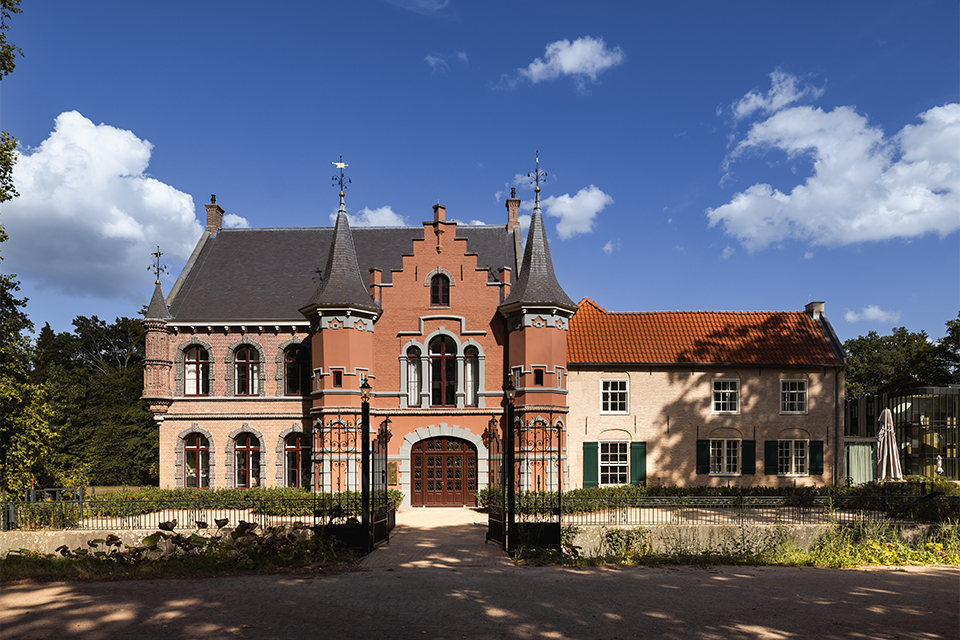
Anyone driving onto the Steenenburg Estate will immediately see that more has happened here than just the opening of a new hotel. On the former site of the Land van Ooit, the castle once again takes centre stage – no longer as a prop from a bygone theme park, but as a reception area for hotel guests, conference groups and restaurant visitors. Next to it, the new four-star-plus hotel is nestled amongst the greenery. Modern, sleek and comfortable, yet clearly designed as an integral part of the estate.
A guided tour of Steenenburg Castle reveals just how extensive the renovation work has been. The former ‘Pink Castle’ has been restored to its historic appearance; the interior spaces have been rebuilt, and contemporary systems – including underfloor heating and air conditioning – have been concealed behind the monumental façades. The new conservatory houses the Orangerie Steenenburg, whilst the adjacent hotel offers 56 rooms and suites.
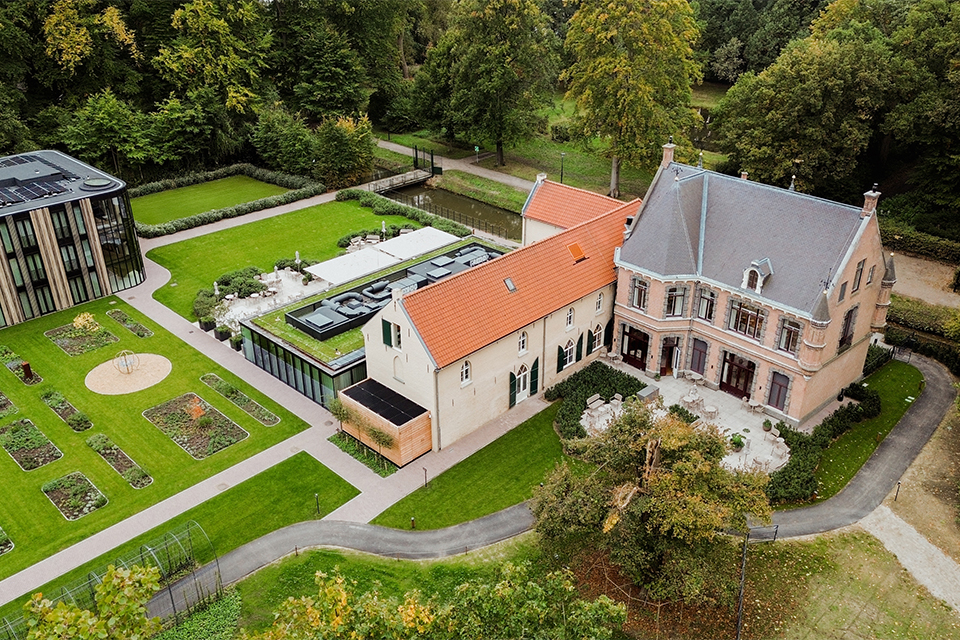
Behind the atmosphere of history, tranquillity and hospitality lies a construction project in which renovation, new-build, engineering and finishing work are closely intertwined. Bouwgroep Goesten from Kerkdriel, Libéma’s long-standing contractor, built the hotel and was also responsible for the renovation and extension of the castle.
Bouwgroep Goesten has been specialising in new-builds, conversions, extensions, refurbishments and restyling since 1979. Following on from various logistics and (detached) residential construction projects, the Kerkdriel-based construction firm built a new hotel on the Steenenburg Estate near Nieuwkuijk, as part of the redevelopment of the former ‘Land van Ooit’ site. In addition, the ageing Steenenburg Castle was carefully renovated and extended with a glass conservatory.
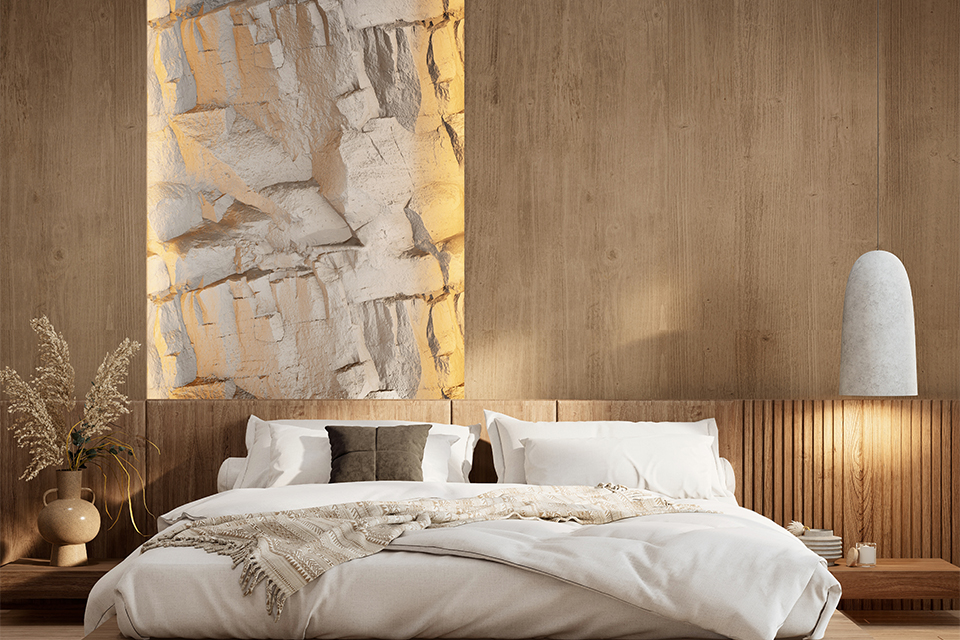
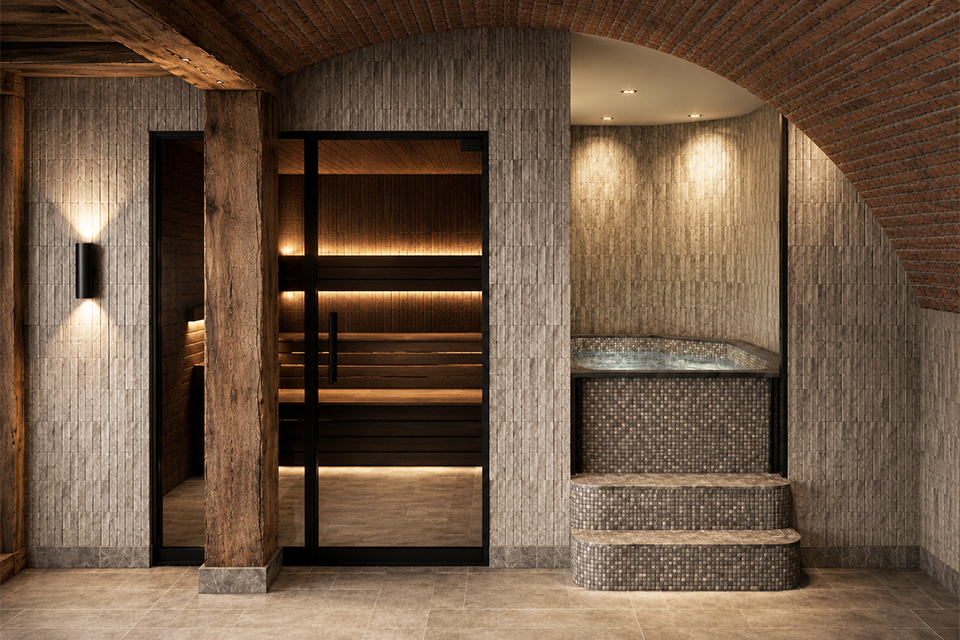
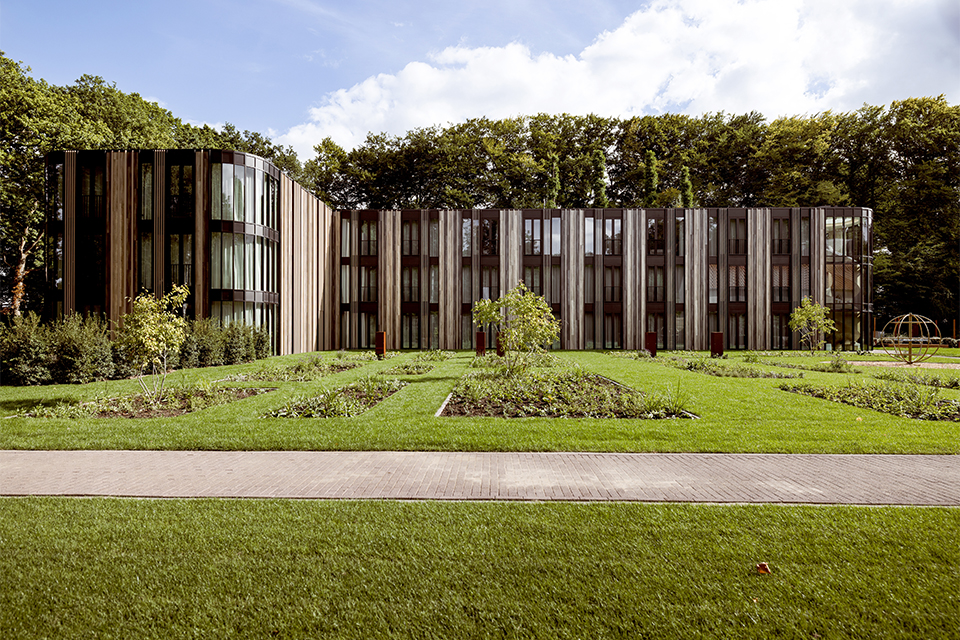
The former Roze Kasteel, which forms part of Libéma, has been transformed into a restaurant, hotel and conference venue. “Commissioned by Libéma, we have built a new four-star-plus hotel with a gross floor area of 2,400 m², offering space for 56 deluxe rooms and suites and a luxury gym,” explains Dennis van Engelen, project manager at Bouwgroep Goesten.
“Beneath this is a 350 m² basement housing the technical rooms and general storage areas (for linen). We began work on the project in May 2024.”
The building is enclosed by an imposing curtain wall measuring 135 m1 and standing 9 metres high, explains Van Engelen. “A fine example of engineering, as is the spiral staircase. This eye-catching feature is clearly visible from both the garden and the renovated castle, and is beautifully illuminated in the evening.’
Last autumn, Bouwgroep Goesten handed over the hotel with a complete, high-quality finish, including floor coverings, wall finishes and sanitary facilities. “Even the loose furnishings were installed during the construction phase and under our coordination,” explains Van Engelen. “This meant that the first trial sleep sessions could take place as early as the weekend following handover.” The hotel is a genuine ‘place to stay’, he emphasises. “For the restaurant, bar and lounge, guests can visit the castle, which we have extensively renovated and refurbished. The years of disuse had really taken their toll.”
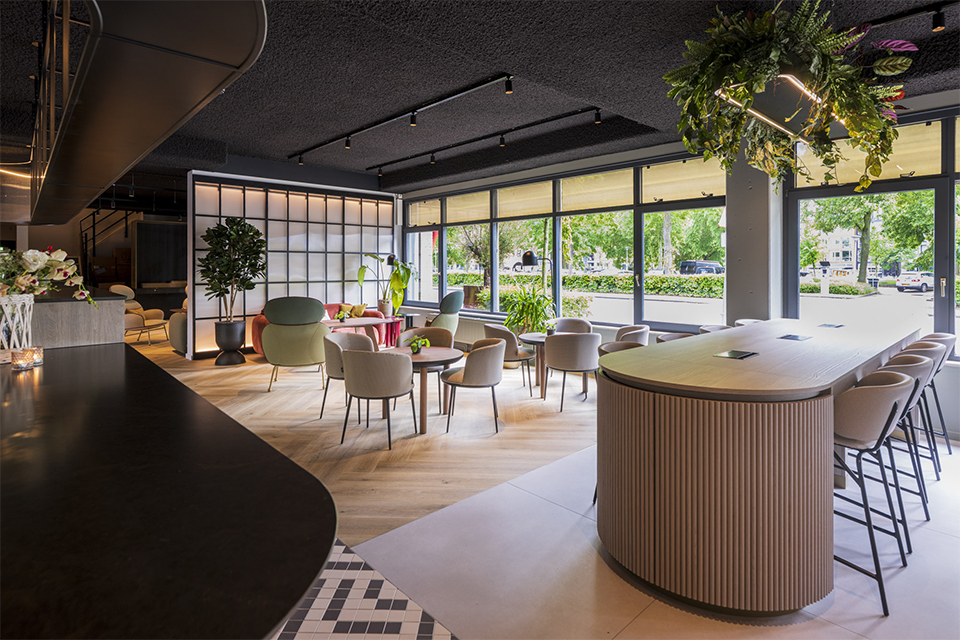
When the Land van Ooit theme park went into administration in 2007, the Steenenburg Estate came into the possession of the municipality of Heusden. Since then, the municipality has carried out only structural repairs, with the result that the interior has fallen into ruin. The building was not suitable for use as a hotel, due to the wooden floors and the noise disturbance this would cause. However, it was ideally suited to meetings, training courses and brainstorming sessions. Under the supervision of the municipality of Heusden, the façade was restored, with the characteristic pink colour being replaced by a more historic appearance. Subsequently, between October 2024 and July 2025, Bouwgroep Goesten stylishly renovated the interior of the building, transforming it into six meeting rooms and a bar & lounge.
“We have largely demolished and rebuilt the interior, whilst respecting both the past and modern-day comfort,” explains Van Engelen. “For example, the entire ground floor has been replaced with an insulated ground floor featuring underfloor heating. Furthermore, every room has been fitted with a modern ventilation system. Combined with extensive insulation measures and heat pumps, the castle operates entirely on electricity, with the exception of two gas fireplaces which remain as decorative features in the bar and lounge.”
During the renovation, various historic features were preserved, such as the monumental beam structures, two ceilings with wooden finishes and a ceiling with rough-plastered decorative mouldings. “We also completely renovated the staircase and balustrade. The same applies to the distinctive skylight with its decorative moulding above the main staircase and the roof structure in two rooms on the upper floor.” At the rear of the castle, a new 300 m² conservatory with a sedum roof has been added, housing the Orangerie Steenenburg with seating for 120 people. “By creating a large skylight where the extension meets the existing building, daylight still shines beautifully onto the existing façade,” says Van Engelen. “This ensures that the historic castle is honoured in every respect.”
 Nederlands Nederlands
  English (UK)