hotelvak.eu
EN

Platform on hotelmanagement, interiordesign and design in the Netherlands
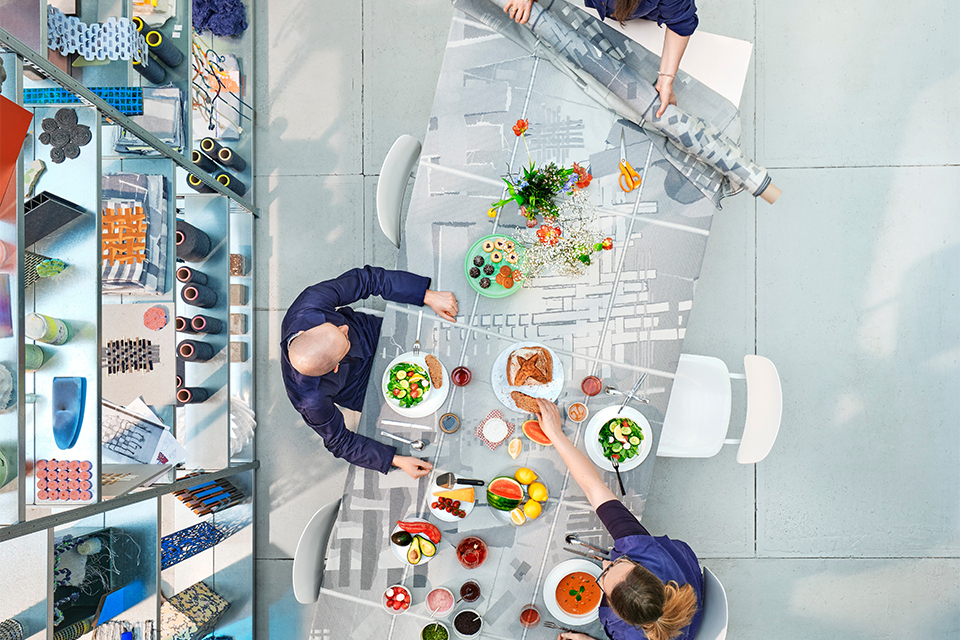
A tablecloth that you can cut up into napkins, a table runner or cleaning cloth: it sounds like something from the past. That very principle runs like a thread through the tableware Re_Work by TextielMuseum. The collection, designed by design studio Envisions and woven in the TextielLab, the TextielMuseum's professional workshop, shows how sustainable design comes to life at the dinner table.
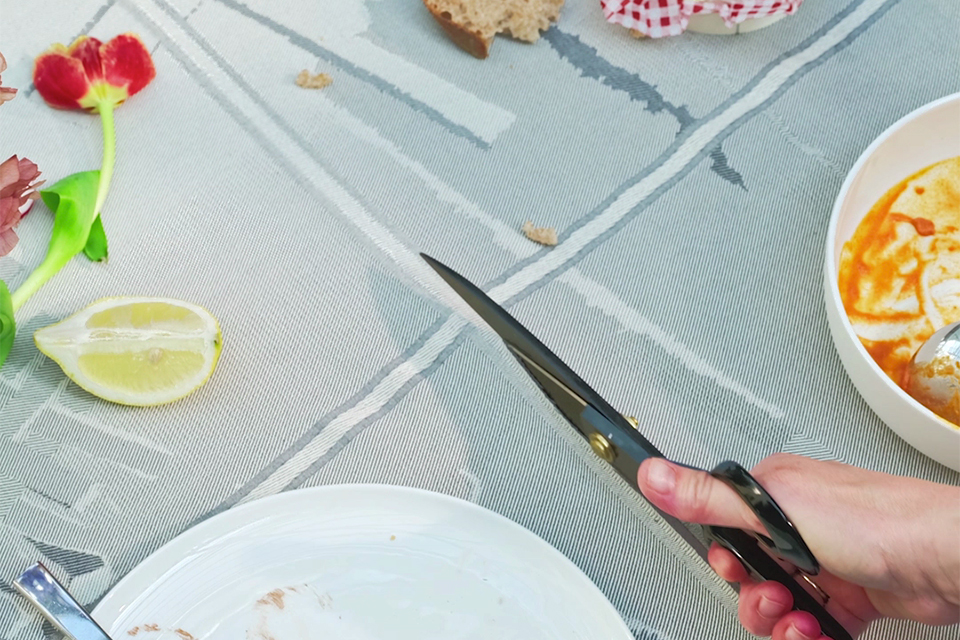
Cut lines are subtly woven into each sheet; graphic details that are part of the pattern and fulfil a function at the same time. They invite you, over time, to give the sheet itself a second life: to cut it up into new uses. It is a contemporary nod to the traditional
pellengoed on which this collection is based: the chequered pelle cloth or pellendamast that used to be used daily in every household and whose worn parts were reused. Re_Work brings that everyday, practical reuse back to now, in the form of thoughtfully and sustainably designed tableware that moves with the user.
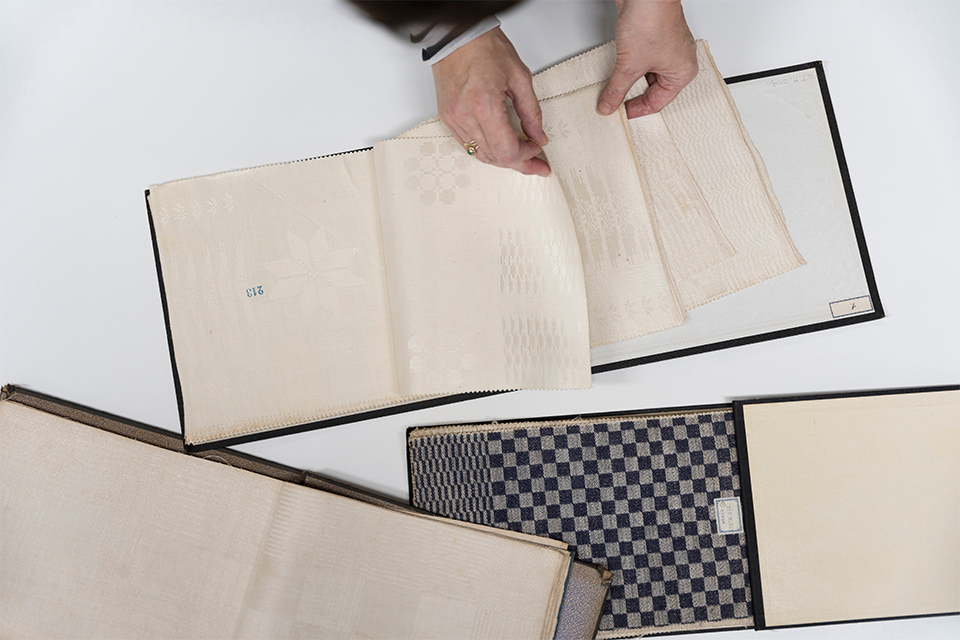
The design of Re_Work contains a subtle reference to the familiar pelt cloth of yesteryear, translated into a contemporary composition in structure and texture. The collection harks back to the simplicity and functionality of traditional peeling cloth, but brings it back to life in a contemporary form. The tableware is designed to be used, lived with and, when the time comes, adapted. The woven cut lines make that possible: they give the user the freedom to reshape the cloth into napkins, a runner or whatever the next use calls for. This creates design that is not only functional, but also conscious of material and lifespan. Re_Work is an invitation to throw away less and appreciate products for longer.
The Re_Work collection is woven at the TextielLab, the professional workshop of the TextielMuseum in Tilburg. Here, designers, artists and technical experts work together on innovative applications of both traditional and modern weaving techniques. For this collection, the team investigated how a functional element - the cutting line - could be made not only technically feasible, but also aesthetically part of the design. The lines are woven in such a way that the textile is largely ready for a second life after cutting, with any finishing being minimal. This creates textiles that are not only cleverly designed, but also reveal craftsmanship.
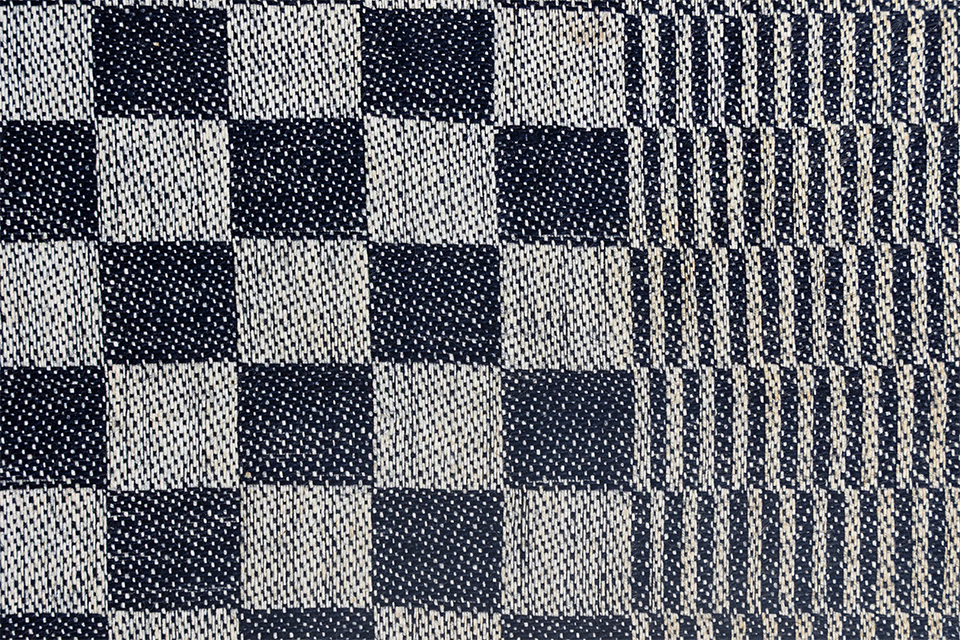
For Re_Work by TextielMuseum, the museum collaborated with Envisions, the Eindhoven-based design collective known for its experimental approach to materials and production processes. Their design vision - free thinking, research and play - fits perfectly with the TextielLab's open way of working. For this collection, they chose to work with yarns from Spinning Jenny, produced from recycled workwear. The character of this recycled yarn was an important starting point for the design: a visible and honest material whose origin is not concealed, but rather part of the aesthetics. The collaboration resulted in a collection of tableware that brings together research, craftsmanship and sustainability. In Re_Work, the making process is not hidden away, but remains proudly visible in the final product.
Every two years, the label by TextielMuseum presents a new collection, developed in collaboration with a leading designer or studio. After previous collaborations with Studio Job, Kiki van Eijk and Scholten & Baijings, among others, Re_Work is the latest series within this label. The design label originated from the TextielLab, the professional workshop of the TextielMuseum, and brings together the knowledge, techniques and experiments from the lab into contemporary textiles for daily use. The products are woven locally, with attention to material, technique and sustainability. Values that are at the core of the label. Thus, by TextielMuseum builds a bridge between museum craftsmanship and contemporary design: collections that are not only to be admired, but also to be used.
The collection is available exclusively through the TextielMuseum's (online) museum shop and at selected museums worldwide.
 Nederlands Nederlands
  English (UK)