
[00:00] Introduction to the episode
Voice-over: Lightspeed Restaurant, the leading platform for top hospitality entrepreneurs worldwide.
Jerry Helmers: Welcome to Hotelvak, the podcast. A podcast about entrepreneurship in the hospitality industry.
[00:17] Introduction by Peter Bishoff
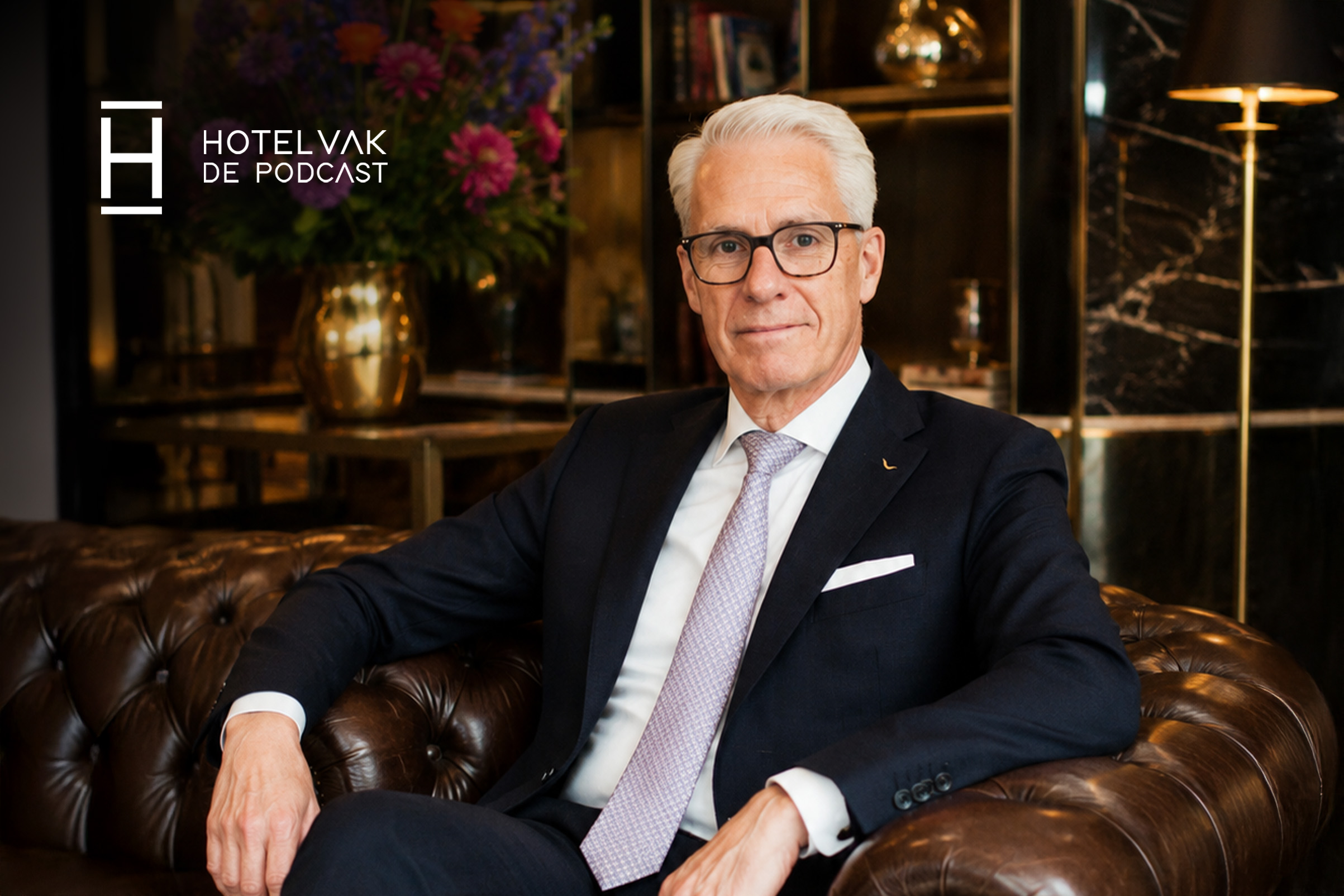
Jerry Helmers: Nice to have you listening again to a new episode of Hotelvak, the podcast. And guess who? And by that I mean: who are we sitting with in the studio? That's none other than Peter Bishoff of 3B Hotels. A warm welcome, Peter.
Peter Bishoff: Thank you, nice afternoon.
Jerry Helmers: Are you up for it?
Peter Bishoff: Yes.
Jerry Helmers: Have you prepared for all the critical, tough questions I'm going to ask you in this edition of the podcast?
Peter Bishoff: Those scare me a bit now.
Jerry Helmers: Well, I don't believe that at all. You are, in my opinion, a very experienced entrepreneur. You are verbally competent. In my opinion, you're going to get yourself out of it right?
Peter Bishoff: I hold my heart.
Jerry Helmers: We're going to witness it. Well, we are obviously going to have a portrait interview. The aim, of course, is for the listener to give you an impression of who you are and how you got to where you are today. What do you think is the reason why the listener should actually keep listening? Can you make a promise already?
[01:13] Entrepreneurship from a different background
Peter Bishoff: We meet an entrepreneur with a non-entrepreneurial background who also looks at business in a different way to a lot of entrepreneurs.
Jerry Helmers: OK, well then we want to know more about that later because no doubt many entrepreneurs in the hotel industry also listen to this podcast. They might then want some lessons learned from you as well. So can we agree that at the end of this podcast you will give three incredibly fun, inspiring, thought-provoking entrepreneurial tips?
Peter Bishoff: We are going to do that.
Jerry Helmers: Okay, seems like a good plan. Alright dear listeners, Peter Bishoff of 3B Hotels is here in the studio. We're going to meet him in more detail in a moment. But Peter, I'd like to be the first to present you with a number of statements, which you may answer with either agree or disagree. Do you dare?
Peter Bishoff: Yes.
[01:51] Theses on hotel management and leadership
Jerry Helmers: Coming up, the first one. In the hotel industry, you make a career only if you dare to make sacrifices privately too.
Peter Bishoff: Yes, agree.
Jerry Helmers: So those who work in hotels for a long time automatically learn to read people better.
Peter Bishoff: Yes, agree.
Jerry Helmers: A good hotelier should be a people person first and only then a manager.
Peter Bishoff: Agree.
Jerry Helmers: I had noted several propositions. I'm going to unpack one more. I agree with you a lot anyway. This one, for example. Rather a loyal employee who does not excel than a top performer who brings unrest to the team.
Peter Bishoff: The loyal employee.
Jerry Helmers: Fine.
[02:51] Who is Peter Bishoff?
Jerry Helmers: Peter, tell us who you are, how old you are, what are you doing now? Just to set the context with that right away and then we go back to your childhood.
Peter Bishoff: I am now 47 years old, owner of three beautiful hotels. Hotel Magnolia, Hotel Andante and Hotel Mú in Andorra. I started playing sports in my youth. Made an attempt to become very good in Spain.
Jerry Helmers: But then what sport are you talking about?
Peter Bishoff: Cycling.
Jerry Helmers: Cycling, yes yes yes. Made an attempt to become very good. That attempt failed, unfortunately.
Peter Bishoff: Yes.
Jerry Helmers: What did that look like? But you mean: you wanted to be a professional cyclist?
Peter Bishoff: Okay.
Jerry Helmers: Why didn't that work out then?
Peter Bishoff: Not being good enough. Or not worked hard enough. Well worked hard enough. That's why I got further than I probably should have gotten talent-wise. But in the end, you need talent too.
[03:50] From top sport to entrepreneurship
Jerry Helmers: At the end of the day, you also need talent. But have you raced with any of the big names in history? Which you then probably lost to or couldn't keep up with?
Peter Bishoff: I was the level below.
Jerry Helmers: It's called Pro Continental these days, I think.
Peter Bishoff: Okay, but then is it a boyhood dream that has fallen apart?
Peter Bishoff: No. At some point you make a rational choice and then you start using that same commitment in another area.
Jerry Helmers: Okay, but good. Tried to become a top athlete in your younger years, it didn't happen. You tell us that you have three hotels, one of which is in Andorra. Tell a bit more about yourself, that the listener who has never heard of you has a bit more context.
Peter Bishoff: Besides my work, I have two beautiful children, married. I run hard with which I still keep myself a bit fit and yes, work is also my hobby, so that keeps me busy.
[04:42] Work as a hobby
Jerry Helmers: Is that so, work is your hobby? That's always very dangerous when people say that, isn't it?
Peter Bishoff: Let me put it this way, I hope for everyone who works that a piece of it is a hobby and that that piece of hobby does keep the somewhat lesser sides of the job fun.
Jerry Helmers: And keeping it bearable.
Peter Bishoff: Yes, because of course it's not always in...
Jerry Helmers: Every job has its pluses and its minuses.
Peter Bishoff: Yes, that's right.
[05:02] Youth and family
Jerry Helmers: Going back to your childhood for a moment. What kind of family do you come from?
Peter Bishoff: Father, mother, two sisters. Warm family. Still all complete.
Jerry Helmers: Okay, that's fine. Already not everyone can say that. Or someone who is 47, then you also have to wait and see if they still have their father and their mother.
Peter Bishoff: Yes, still completely complete. Nice.
Jerry Helmers: You no longer live in the Netherlands yourself.
Peter Bishoff: Ireland, very warm country to live in.
Jerry Helmers: A warm country.
Peter Bishoff: Warm in terms of culture.
Jerry Helmers: In terms of culture.
Peter Bishoff: Yes, unfortunately they have a bit more rain, but if you look through that, it is a warm country.
[06:02] Not an entrepreneurial family
Jerry Helmers: But do you come from an entrepreneurial family?
Peter Bishoff: No. My mother worked for the government and my father on a project basis. And entrepreneurship grew in me. Probably also because of my sports background and behaviour that you automatically go in that direction. Because entrepreneurs are a bit stubborn left and right.
Jerry Helmers: Cocky or self-centred?
Peter Bishoff: Well, I think that does get confused with each other very quickly. One may well come across as the other.
[06:29] The urge to win
Jerry Helmers: But then were you the same way as a boy? Because how young were you when you started cycling?
Peter Bishoff: I did want to win everything.
Jerry Helmers: You did want to win everything. But are you saying: for an entrepreneur to feel that way, too?
Peter Bishoff: Yes, because entrepreneur... Let me put it this way: the route I took did not come naturally. And people might roll into it somewhere and normally have it come naturally, it could. I didn't have that route. And then it does mean that you have to do what you have to do to achieve that goal you want to achieve. Because that goal doesn't come to you automatically.
[07:02] Discipline and elite sport
Jerry Helmers: No, exactly. So always take responsibility yourself. But when you were still hoping to become a professional cyclist, were you also very disciplined with eating and going to bed on time? Did you also miss all the parties as an adolescent?
Peter Bishoff: Yes, yes.
Jerry Helmers: So how do you look back on it now?
Peter Bishoff: I caught up with them all.
Jerry Helmers: You caught up with them all. Well, you said: you also have two children. I don't know what ambitions they have, but...
Peter Bishoff: Are they still too young?
Jerry Helmers: Are they too young for it now? Are they not yet of puberty age?
Peter Bishoff: No, they may find they want to run hotels today and be firefighters tomorrow.
[07:44] School time and study choices
Jerry Helmers: Where did you go to school?
Peter Bishoff: In Amsterdam. First at MAVO, then I did HAVO. And then I found it necessary to... I did one more year of college. Then I found it necessary to become a world-class sport. Then I quit. And at 32, I then...
Jerry Helmers: Oh, then you make quite a leap indeed.
Peter Bishoff: Yes, the level is higher.
Jerry Helmers: About from when you were 20 to when you were 32. But in between that, did you work here and there or something? What did you do then?
Peter Bishoff: Yes, I stopped playing sports quite young. I think I was 25. And then I went into the hospitality industry. In Mallorca, of course, you speak a number of languages if you've been in sports. And then you are a very popular employee.
Jerry Helmers: Is that so? In those parts?
Peter Bishoff: In the average Spaniard spoke no more than Spanish. Maybe some poor English at the time. And of course you just speak three, four languages when you have travelled around.
[08:38] First steps in the hospitality industry
Jerry Helmers: Travelling around cycling. Yes, exactly. What did you do in the hospitality industry specifically? Why didn't you start working in an office?
Peter Bishoff: That actually happened to roll into it that way. I stopped cycling when I lived in Mallorca. And yes, the only job you can do then if you speak some languages is catering. And then you stick around.
Jerry Helmers: But then was it kind of a necessary evil where you ended up getting stuck?
Peter Bishoff: No, because I did like it a lot. And I really started all maybe at the nicest point. As a propper on the boulevard.
Jerry Helmers: Propper on the boulevard?
Peter Bishoff: Yes, yes.
Jerry Helmers: In Mallorca?
Peter Bishoff: Yes, the smooth talk.
[09:20] Working as a propper in Mallorca
Jerry Helmers: Please explain to the few among the listeners who don't know what a propper is.
Peter Bishoff: Well, it's rather flat. Actually, I much prefer the Spanish term publicidad. That is that you actually advertise.
Jerry Helmers: Yes.
Peter Bishoff: And then you actually try to talk people into your hospitality business.
Jerry Helmers: But then you're talking about what I think every holidaymaker, certainly people who go to Croatia, Greece, Spain or Portugal, recognise. You're walking on the promenade at night and you get talked to every one.
Peter Bishoff: Yes, by five thousand people. And you can do it that way and it's very boring. Because then you're just playing a tape. Or you can be a local tourist office and tell people all kinds of things, help them. And then they will automatically come and eat something with you.
[10:06] A different way of addressing guests
Jerry Helmers: Oh, something suddenly springs to mind now. Let's pretend we're on the boulevard in Mallorca somewhere... You're standing there cramming for a steakhouse. And I walk by with my half-drunk friends and you go and try to chat us up inside.
Peter Bishoff: By the time you're half-drunk, you're past dinner, so that gets a bit tricky.
Jerry Helmers: I think it's nice to do that for two minutes anyway. See if you convince me to go in.
Peter Bishoff: That's the wrong mindset right away. I'm not trying to convince you to go in at that point.
Jerry Helmers: Well, that has been my experience with proppers though.
Peter Bishoff: That is also true. And that is also the negative experience. That's why I also think publicidad is a better word. Because if I fly full in and you don't have an appetite now and I keep pushing, whining, which they often do, then you never go again. Because you have built up aversion. But if I say: where do you want to eat tonight? Then you say Chinese, for example.
Jerry Helmers: Yes.
Peter Bishoff: Then I referred people to the best Chinese in El Arenal.
Jerry Helmers: Oh?
Peter Bishoff: Because you're not hungry for steak. So why should I try it?
Jerry Helmers: So what did your boss think about that?
Peter Bishoff: My boss loved it, because the tent ended up being full with those people.
Jerry Helmers: You mean the next night or so?
Peter Bishoff: Yes, because they went to eat at the Chinese and were very happy. And then they say: well you know, if that Chinese is good, then yesterday's joint will also be good.
[11:49] No pushy salesman
Jerry Helmers: Well, then I'll have to practice a bit more, because with these boulevard types I always shout very quickly: no gracias, no gracias. I walk on.
Peter Bishoff: Yes.
Jerry Helmers: Because then you also have no need to communicate this.
Peter Bishoff: No, but that is also not publicidad as we know it from television series. That is also very irritating. If I'm walking around on a boulevard myself and someone is standing with those pamphlets at the ready, I also walk around them in a bow.
Jerry Helmers: But doesn't that block you from addressing people? Because you always have to assess a little bit whether people are open to being addressed.
Peter Bishoff: Yes, so you also have to be able to assess very quickly. You can say: do you want to have dinner with me? Or: hey, are you guys enjoying your holidays a bit? Open question.
[12:31] Helping people instead of selling
Jerry Helmers: Yes, and Dutch people were they open to that? Or were they just the awkward guests or the awkward passers-by?
Peter Bishoff: Their initial reaction, of course, is always the same. Because then you have another propper. But by your tone of voice, your questioning, your approach, at some point you become for a lot of people just their local tourist office. They want to go on a boat trip. Where can I go on a boat trip? I want to go cycling. Where can I do that?
Jerry Helmers: But then, in that sense, you knew more than just the spot where you were cramming.
Peter Bishoff: Yes, you live there of course. So you were really the reliable guide as well.
Jerry Helmers: That's a good one though. So but is that where you discovered, I'll call it, your love for the hospitality industry?
Peter Bishoff: Yes, you have very nice conversations on that boulevard. It sounds very different maybe from what people have as an image of promenading, but if you do it right you just have very nice conversations.
[13:34] From boulevard to hotel industry
Jerry Helmers: A really fun time. But then is that where you discovered your love for the hospitality industry?
Peter Bishoff: Yes. Then at some point I started working behind the bar and then you have even more fun conversations. And then I moved towards Crete, did the same thing. Then the financial crisis came and I went back to the Netherlands. That's how I then accidentally fell into the hotel business.
Jerry Helmers: When you talk about the financial crisis, are you talking about the years 2008 and 2009?
Peter Bishoff: Yes.
Jerry Helmers: Coming back to the Netherlands. What did you then immediately start doing in the Netherlands? Immediately into the hotel business?
Peter Bishoff: I needed a job.
Jerry Helmers: Oh, it was not yet the time when you were going to take over something yourself?
Peter Bishoff: No, no. I started the hotel job in a small hotel chain, a family chain. And had all kinds of different roles there.
[14:33] Starting at the bottom in the hotel industry
Jerry Helmers: So basically the whole hotel business. But again started at the bottom there?
Peter Bishoff: Bartender, hotel bar. And had different roles. Got a bit more responsibility at some point. Came to the realisation that with a HAVO and a big mouth, you do eventually hit a ceiling somewhere. Then I went to school, with the support of my wife, in Leeuwarden.
Jerry Helmers: What did you say, with support from your wife?
Peter Bishoff: Yes, because of course you are just going to do a college degree alongside your full-time job.
Jerry Helmers: Yes, a dual education.
Peter Bishoff: Yes, in Leeuwarden. I may advertise them a little bit, because I had a great education.
Jerry Helmers: Go ahead. You had a good time in Leeuwarden.
Peter Bishoff: Yes. Learned a lot of things that I also really needed concerning the human aspect of management. Because top sport and the boulevard and nightlife are ultimately just a very hard world.
[15:34] The first hotel takeover
Peter Bishoff: During my education, at the end, I was able to buy my first hotel.
Jerry Helmers: But where did that money come from? Does a bartender earn that much? And you're getting an education. Or do you have a wealthy wife?
Peter Bishoff: No, literally went around with the hat.
Jerry Helmers: With family and friends?
Peter Bishoff: Yes, also people who started participating. So not only as a funder, but also as a participant. So I don't have 100 per cent of the shares either.
Jerry Helmers: Okay. But then you buy that hotel.
Peter Bishoff: Yes, that was the end of the financial crisis. Really literally. Because a week later it went up steeply in Amsterdam. So that's the piece of luck you need when you fly in.
Jerry Helmers: Maybe you also felt: this crisis is so deep, it can't go any deeper. It can only go up.
Peter Bishoff: Well, I spent quite a long time on the acquisition. So that was really just: I want that one.
[16:40] Taking risk as an entrepreneur
Jerry Helmers: But then is having that guts to take risks in you? Even in top sport, if you want to win, you also have to take certain risks in a race. You were a cyclist, of course.
Peter Bishoff: You have to dare to drive down at 80 kilometres per hour. So that does take some kind of guts.
Jerry Helmers: But then what is the metaphor to that step of going around with the hat, raising money and then actually making that purchase? Of course, that's quite a lot.
Peter Bishoff: Well, mostly ambition. Proving that you can do it. Proving yourself I think. But I think that's in every sport. I'm more motivated by my own challenges than if other people think I can cycle hard or work well. I just want to prove to myself that I can do something.
Jerry Helmers: That in itself is one of the anecdotes actually how it all started. Because at my grandmother's birthday one time I said that people couldn't do anything at all about it.
Peter Bishoff: I really felt that if I had the opportunity to do it myself, I would be able to do it much better.
Jerry Helmers: Oh, that's how you mean.
Peter Bishoff: And then my uncle said to me: well, we're going to try that together anyway. And then the ball actually started rolling.
[18:11] Working with his uncle
Jerry Helmers: But was your uncle already an entrepreneur?
Peter Bishoff: No.
Jerry Helmers: But so that one took a gamble too.
Peter Bishoff: Well, that one was probably triggered by my cheeky remark.
Jerry Helmers: And then you made that investment together.
Peter Bishoff: Yes.
Jerry Helmers: Do you remember that moment? That you leave at the notary, you've signed the purchase contract. And then suddenly, from one moment to the next, you are an entrepreneur after all. And you have an incredible responsibility, because you want to start earning back your investment.
Peter Bishoff: Yes, that was indeed a realisation. But I didn't have much time for that, because it was an empty hotel. Or empty in the sense of: no staff, no reservation system, so nothing at all. So you were working 24 hours a day to build a tent that had anything at all on the go.
Jerry Helmers: This was in Amsterdam?
Peter Bishoff: Yes.
Jerry Helmers: One employee taken over?
Peter Bishoff: So literally an entire roster with one employee. All the other shifts were for me.
Jerry Helmers: And so sitting at the reception desk yourself, answering that phone.
Peter Bishoff: Literally 24 hours. Doing night shifts myself, sleeping over reception.
[19:20] Doing business without a safety net
Jerry Helmers: That might be the remedy. Just do it, then you won't have time to be afraid. That's very interesting. But what did your wife think about that?
Peter Bishoff: Who said I had to do it. Who was behind it, one hundred per cent.
Jerry Helmers: Did you have children by then or not yet?
Peter Bishoff: No, that's another anecdote. The day I was told by the bank that I got the financing was also the day we came to the conclusion that we were going to have our first child. So that's a very special day.
Jerry Helmers: But then don't you think: help, I now have a huge investment, I have a huge debt, I have to start paying it back at some point and a child costs money too.
Peter Bishoff: Yes, what can you do about it?
Jerry Helmers: But still.
Peter Bishoff: It's a go with the flow.
Jerry Helmers: But then are you the type to have sleepless nights because of that?
Peter Bishoff: No, not then. But you're already talking about 12 years ago. You're a bit younger, a bit wilder. And yes, what can you lose?
Jerry Helmers: You just go.
Peter Bishoff: Yes.
Jerry Helmers: The worst thing that can happen to you is that you go bankrupt.
Peter Bishoff: Yes.
Jerry Helmers: Is that kind of your mindset as well?
Peter Bishoff: Well, look, now you get a bit older. The risks I took then, I would take again now at that age. But not now at my current age. So to spend 24 hours a day in a hotel again to build something....
[20:49] Building the first hotel
Jerry Helmers: Because when you started, so you started building that, you took over one employee. But you say: being in your hotel for 24 hours. You don't yet have the resources to hire a new receptionist, so to speak.
Peter Bishoff: No, it was literally 24 hours. Doing night shifts yourself, sleeping above the reception.
Jerry Helmers: Yes, I can almost see how you were able to make sure you got pregnant in the first place.
Peter Bishoff: That was before the hotel.
Jerry Helmers: Yes, okay. But anyway, then you will have invested your time in that as well. You went around with the hat everywhere. Of course, that takes a lot of time as well.
Peter Bishoff: Yes, a lot of time. A lot of time was put into it in that year. So the fact that it went ahead was actually more of a relief than anxiety. You put so much time into it. You don't want it to fall through last minute.
[21:38] Entrepreneurship and fear of failure
Jerry Helmers: Have you ever been unsure that it will fail anyway? We just said of it: the worst that can happen is that you go bankrupt. But of course you don't want that to happen.
Peter Bishoff: You are always uncertain. Pointing out also does not equate to the power of entrepreneurship. I think that might be a good analogy towards sports. I don't know all athletes, of course, but the ones I knew all had some form of fear of failure. And then you have two options: you freeze from the fear of failure or you start fighting. And so I think most athletes just intrinsically train much more than the rest.
Jerry Helmers: But of course you relate it to your own story.
Peter Bishoff: Yes, and the same goes for entrepreneurs. If you don't do what you need to do to be successful, you are going to fail.
[22:30] The business plan
Jerry Helmers: But then surely you must also know where you are going. Because surely you started with some kind of plan together with your uncle. Of: this is what we want to achieve in a number of years.
Peter Bishoff: The business plan I was also very proud of.
Jerry Helmers: Really?
Peter Bishoff: Yes.
Jerry Helmers: So what will have been in that business plan?
Peter Bishoff: Well, you start with the basics of your operation. But of course you have to link all that to financial results and long-term goals. And we managed that very well in the documents to connect everything together. All the pillars of entrepreneurship.
Jerry Helmers: He also came out, better even.
Peter Bishoff: Right? That's why I mentioned your name.
Jerry Helmers: But of course there is a point somewhere from when you started. It can't run right away, can it?
Peter Bishoff: That has been our fluke. So that allowed all the figures we had used in the business plan to go straight into the dustbin, in a positive way.
[23:10] Initial targeting and positioning
Jerry Helmers: But back then, what kind of vision did you have of what kind of guests you would like to attract to your hotel?
Peter Bishoff: Well, we were in a hotel, which was near the Vondelpark. Walking distance from Museumplein, walking distance from Leidseplein. So at the time, my target group was two earners, kids out the door. Two jobs, so quite a bit to spend.
Jerry Helmers: Yes, high end.
Peter Bishoff: Mid-high. And then especially looking for authenticity in Amsterdam.
Jerry Helmers: What do you mean by that?
Peter Bishoff: A real Amsterdammer behind the reception desk who shows them everything they can go to. Attention. Small hotel, 23 rooms at the time. So the reception also really had time for the guest. That was also our USP. Instead of, for example, a very good hotel which is the Holiday Inn. 500 rooms, check in, get out.
Jerry Helmers: You necessarily didn't want to be?
Peter Bishoff: Well, on that site, that wouldn't work. And with that pricing and with that kind of property. That is also an authentic Amsterdam property. A really beautiful building even. And with that target group, the hotel also hit the mark very well.
[25:11] Cashless payments in the hospitality industry
Jerry Helmers: Our partner Lightspeed does market research on all kinds of hospitality-related topics. Every episode we cover one of the topics and are curious to hear your views on it. Peter, in countries like Germany and Austria it is still very common to be able to pay with cash in the hospitality industry. Much more so than in the Netherlands, where the number of locations where you can't pay with cash - card only - is increasing. What is the reason why the Netherlands is becoming a card-only country?
Peter Bishoff: I think there are two main reasons. One is security. Especially within hotels. If you have a weekly turnover of rooms and you have 300 rooms in the safe, you do become a very interesting target for criminals. And secondly, it is becoming increasingly difficult in the Netherlands to deposit money at all. The number of ATMs, drop safes et cetera is decreasing so fast that it is almost impossible for entrepreneurs to safely deposit money. Unless you are again so big that you have a money runner pick it up.
[26:25] Working with family
Jerry Helmers: You are still working with your uncle?
Peter Bishoff: Yes.
Jerry Helmers: How does that work, working with family? Because then are you characters who are very complementary to each other, so who fit well together? Or are you incredibly different? Because of course it's also quite something, working with family.
Peter Bishoff: We are quite different even. And that is our strength and our weakness. The strength namely is that as a team you can really operate in different facets of a business case or tackle a project. And the weakness, of course, is that you do fundamentally think about some things differently. And that can chafe.
Jerry Helmers: Can you give examples of that?
Peter Bishoff: No, I prefer to keep that within the company.
Jerry Helmers: Okay, but obviously you've had robust discussions.
Peter Bishoff: Yes, yes.
Jerry Helmers: So do you think it's harder to have a robust discussion with someone who is family, versus having a robust discussion with someone to whom you might have more distance anyway?
Peter Bishoff: I do think you have less inhibition, but on the other hand, you have more opportunities to fix things if necessary.
[27:36] Rules of the game within cooperation
Jerry Helmers: Do you have ground rules for a good discussion? Or are you also just two Amsterdam guys with your hearts on your sleeve?
Peter Bishoff: Stop right there.
Jerry Helmers: Why won't you tell?
Peter Bishoff: Well, officially there are ground rules, but the moment it chafes, they are then sometimes jettisoned.
Jerry Helmers: Yeah, but that's kind of part of it, isn't it? But you can have that from each other? Is it then also agree to disagree at some point, even though a decision has to be made?
Peter Bishoff: What worked very well in new projects is that we actually had our own areas within which we had some kind of veto power. My strong side was operational, HR, marketing, sales, pricing the rooms. His background is accountancy, legal. So the layout of the collaboration was actually ready as a blueprint. And then he has an opinion on the operation, but ultimately the final decision lies with me. I have my opinion on tax aspects or internal legal matters, but there the final decision lies with him. And that has actually always been the case. Because otherwise you get gridlock everywhere.
Jerry Helmers: Yes, then you won't get out.
[29:13] Headaches for hoteliers
Jerry Helmers: That's what makes it difficult when your partner, your uncle in this case, then makes a decision. You accept that decision, because that is of course the agreement you made on how you work together. But that it still gnaws at you a bit?
Peter Bishoff: No.
Jerry Helmers: Not?
Peter Bishoff: That's a choice you make.
Jerry Helmers: That's a choice you make. It wouldn't be good I don't think if you then also go over that...
Peter Bishoff: I already have enough headache files.
Jerry Helmers: Hotel tech?
Peter Bishoff: Yes, there is always something in hotels.
Jerry Helmers: What is your biggest headache right now?
Peter Bishoff: The VAT increase is obviously not a party. Not a party. You really do have to make things more operationally efficient, intervene to save costs. I don't think there are many hotels that can absorb it like that without changing the way they operate.
[30:10] Support from home
Jerry Helmers: Can you also spar about this with your wife? Because your wife doesn't work in the hospitality industry.
Peter Bishoff: No, my wife is a physiotherapist. Quite something else. And great fun, she should keep doing it. But she has always supported me in entrepreneurship. She herself comes from an entrepreneurial family, so she knows what it takes to be successful. So she has also always given me the freedom, the freedom to put in all those hours and personal investments in the hotels. So yes, I like to spar with that most of the time.
[30:49] Government as a challenge
Peter Bishoff: To return to the headache files: then I am going to say some politics. Surely the government is a reasonable headache file for entrepreneurs.
Jerry Helmers: Local government and national government?
Peter Bishoff: Yes, especially if you are in Amsterdam. We are very keen, and so are the colleagues I speak to, to work with Amsterdam to guide tourism. Look, we also see that Amsterdam is busy. We also see that Amsterdam is getting dirty. But is an idiotically high tourist tax with which you drive tourists to Zaandam, who then still take the train to Amsterdam, the solution? Of course, we can have a very long discussion about that with Amsterdam. They have made that choice. But these are things we as a hotel have to deal with. Because if you pay 12 per cent on top of the price we charge, you still expect me to deliver that quality. Because you see on Booking.com 150, 200 euros and you just want that quality. That nowadays 33 per cent of that goes to the state and local government, that's not your problem as a guest.
[32:06] To fight or not to fight policy
Jerry Helmers: So are you a bit of a knucklehead then? So are you in regular consultations with the Amsterdam municipality? Or are you affiliated with local platforms that represent you towards the Amsterdam municipality?
Peter Bishoff: No, I don't actually consult with municipalities. And it also has to do with the fact that the times I have ever been in consultation with municipalities, I felt heard there and then they still do what they want. So I prefer to spend that energy on things that I can adjust within my circle.
Jerry Helmers: But then why is there not the will to fight there? Because you also want to stand up for your own interests, right?
Peter Bishoff: Well, look, I'm not going to fight Mike Tyson either.
Jerry Helmers: But you might surprise Mike Tyson.
Peter Bishoff: Yes, with a chance of one in a thousand. Then I'd rather spend it on things that are realistic. Which you are sure might yield results.
Peter Bishoff: Yes, if a government just decides: we're just going to do it this way. Of course you do some reactions online and you join any petitions. You have Koninklijke Horeca Nederland who, in the case of VAT, put a huge amount of energy into it. As well as from ABN AMRO, Stef Driessen who gave substantiated opposition. You join that and then just hope for the best. But recent dossiers have also seen the government push through what they thought. Despite interest groups showing that it was not a good idea anyway. So then you better prepare for what they will do next.
[33:44] Concerns over VAT increase
Jerry Helmers: But aren't you lying about it, then?
Peter Bishoff: Well, the VAT increase has been a headache though. I think for all my colleagues.
Jerry Helmers: I have that suspicion too. With all the people I talk to in the hotel industry, they don't always get too happy about that. Because you also see prices going up. The rates of hotel rooms. That's really unbelievable.
Peter Bishoff: You don't need to be a mathematician that if the average margin of a hotel is less than 12 per cent net, then if - quick arithmetic - an extra 12 per cent of gross revenue is retained, you end up with zero somewhere.
Jerry Helmers: No, you don't need to be a mathematician for that.
[34:20] Opening a second hotel
Jerry Helmers: You took a step towards more hotels at one point. Because you sensed fairly quickly with your partner, with your uncle, that that was going to work quite well there in Amsterdam at the Vondelpark which you started up. When did you decide to open a second hotel? Because that's another step, isn't it?
Peter Bishoff: So actually, like all my other steps, that was also a bit accidental. Because I was just quietly working at Hotel Atlas where I started. And I got a call from an estate agent. And he said: yes, the hotel on the corner - literally the other corner - is for sale. And if you can arrange it within a short time, we want to deal with you.
Jerry Helmers: Oh, unexpected phone call.
Peter Bishoff: Yes. And I did have my feelers out left and right. So unexpectedly, yeah... the timing.
[35:17] Support from his wife
Jerry Helmers: But then again, is that what you consult with your wife again? Of: should we make this move?
Peter Bishoff: Yes, but who stood behind everything business-wise. So those were very easy consultations.
Jerry Helmers: Maybe also because you explained it well.
Peter Bishoff: That could be. But also maybe with her background from an entrepreneurial family, she just understands what the route is.
Jerry Helmers: Did you ever think - it's kind of a very private question I'm about to ask - if it ever fails, my entrepreneurial adventure, at least we'll still have the income from Madam?
Peter Bishoff: Certainly in the beginning it was like that. My wife worked alongside Atlas, I had no income.
Jerry Helmers: You had no income.
Peter Bishoff: No.
Jerry Helmers: Had you - that's a purely hypothetical question - would you have done it?
Peter Bishoff: Well, the fact that you have an income jointly, that does make a decision easier. Had I maybe been single, I might have flown in anyway. Might it have worked out, too? Maybe it would have. But my wife's help has been indispensable.
Jerry Helmers: Surely it's also nice to have a bit of moral support. Because if you feel that when you get home in the evening that you have to have a discussion there too....
Peter Bishoff: No, that won't make you happy either.
[36:42] Expansion to Scheveningen
Jerry Helmers: And then came a third hotel. Was that the hotel in Andorra?
Peter Bishoff: No, it is in Scheveningen.
Jerry Helmers: In Scheveningen. Tell us that step. Because of course, how do you also get to Andorra and you live in Ireland? I'm very curious about that too, how that worked out that way in your life.
Peter Bishoff: We went well with the two hotels in Amsterdam. And then we actually did a risk analysis. If we then start doing a third hotel in Amsterdam, we do find ourselves in one market. At the time, terrorist attacks were quite a hot topic in Europe. You had just had Madrid, London. Then you start looking anyway: Amsterdam is also a hot spot. Suppose someone throws a bomb on Dam Square, then you do have a problem.
Jerry Helmers: Yes, definitely.
Peter Bishoff: So then we started looking outside Amsterdam. Did we also put the feeler out again. Because it's not like you buy a cheese sandwich and think: I want that one. And then something is offered and you start looking at the business case. And it felt right. And then we started working on that.
[37:42] From Amsterdam to Andorra
Jerry Helmers: But also going abroad after that.
Peter Bishoff: Yes, that's another couple of years later. We sold Atlas in between. Again, a conscious decision. Because two hotels in Amsterdam - we experienced that in the corona - is again a risk. Because Amsterdam was hit hardest in the Netherlands. Scheveningen still did quite well during corona actually. We wanted to enter another market. Then came the choice of: what is the right market?
Jerry Helmers: In the Netherlands, you make money in the summer, but you don't make as much money in the winter.
Peter Bishoff: It's not that I know of - except for our motorway friends Van der Valk - they will do pretty much the same thing all year round. They have a lot of business events. But that's an assumption of mine. So if you want to make some money in winter, you will have to go to a ski resort.
Jerry Helmers: Then most people think of Austria or Switzerland.
Peter Bishoff: Well, I looked there too. But that's so deathly expensive real estate that I'd have to turn 130 to ever earn it back. So we weren't going to do that. And then Andorra came around the corner.
[39:03] Working in Andorra
Jerry Helmers: In Andorra?
Peter Bishoff: Yes. In a ski resort.
Jerry Helmers: So then you go there. You already spoke Spanish, of course. I think in Andorra they also speak Catalan, French. That's a bit of a mix in my opinion right?
Peter Bishoff: The official language is Catalan. Everything you do there with the government, staff, suppliers, is in Catalan. I don't speak that language. But if you speak Spanish and they write it, you already come a little way in the right direction. But everyone speaks Spanish. On the street, everyone actually accepts that. You don't have to ask, as you do in the Netherlands: can you speak English? No, you can just speak Spanish. So that in itself was quite an easy linguistic transition.
Jerry Helmers: But culturally? Because you have to work together at the end of the day.
Peter Bishoff: Yes, but in Andorra you do have Andorran culture. You have some Andorrans, but half the country is actually first or second generation foreigners. So a lot of South Americans, Portuguese, Spaniards. So the culture is very similar to Mallorca in that sense. It is actually just an island with different cultures. On Mallorca, you actually spoke different languages with everyone. If you didn't know the word in German, you said it in English or Spanish and everyone understood you anyway. And I have the same idea about Andorra. That it is actually a kind of island.
[40:38] Why Ireland?
Jerry Helmers: It's in the mountains.
Peter Bishoff: It has two entrances.
Jerry Helmers: It has two entrances, true. But you live in Ireland in the meantime.
Peter Bishoff: Yes.
Jerry Helmers: Then again, that has been a surprising move.
Peter Bishoff: Yes.
Jerry Helmers: Why Ireland?
Peter Bishoff: Without kicking all the Dutch who think the Netherlands is great against their shins: I fit in better with an island culture I think.
Jerry Helmers: Really?
Peter Bishoff: Yes. It's a different kind of culture anyway. Not necessarily better, different.
Jerry Helmers: But did you know that beforehand, that it would suit you better? And you also had to convince your wife, didn't you?
Peter Bishoff: That one is Irish.
Jerry Helmers: Oh, that one is Irish.
Peter Bishoff: Yes, who didn't mind going back. That one lived in the Netherlands for 16 years before me.
Jerry Helmers: So now it's kind of a deal?
Peter Bishoff: Call it a deal. Let a lot of things be explained. I myself have lived in Mallorca, lived in Crete. Andorra is actually also a form of island. I do get on well with that, with that culture.
[40:50] Running hotels from abroad
Jerry Helmers: I wonder how you then run hotels from another country. You have to be on spot regularly, don't you?
Peter Bishoff: I also fly quite a lot. PETA won't be very happy with me. Because I fly I think 40 to 50 times a year. But the running itself... You get a change in vision. If you walk around the hotels yourself and you see ten packs of sugar that shouldn't have been ordered, you say: send it back. And you yourself are on top of everything. Now you have to deal more with judging people on output. OK, I have a manager in the Netherlands and one in Andorra who has to deliver a certain result. And if he then decides that the forks should be on the right and the knives on the left, so to speak, yes, I will have to let that go. You can't and won't do that level of management anymore either.
Jerry Helmers: Can you let that go?
Peter Bishoff: That did take some swallowing. But again: you do again what you have to do to achieve what you want.
[42:05] From operational to strategic business
Peter Bishoff: Look, when you have that sports background, you do get into the details. They are of course minimal margins, marginal gains. But we also made some mistakes in the beginning in attracting people who were therefore also not suited to that form of management. Then, of course, you go in all directions. But yes, this is a new learning curve for yourself as well. So it is also very interesting. Because you start looking at the company in a completely different way. Because first, of course, you are completely in the operation yourself. You are really busy with: those tables have to be placed there, that's how it has to be laid, that bottle of wine I want to have placed there and the beds have to be like that. Or have to be straight or apart. You start focusing more on the bigger business lines. Where do I actually want to go with my business? What results do I want to achieve with my business? Then you get into benchmarking, best practice benchmarking, what are other hotels doing? So what do I actually expect my managers to do. That's really fun and interesting then. I do feel some affinity with that, with figures. And then you really start working on long-term objectives and discuss them with your management and achieve them together. So not in the sense of: you throw it over the hedge and say to the manager, well, good luck with it, I'll see you in January 2027. No, you then discuss with them: how are we going to do that?
[44:11] Sustainability and energy management
Peter Bishoff: You have the energy transition. Energy is becoming very expensive, of course. So then we want to bring down energy use in hotels for sustainability. Well, I then looked into weather-dependent thermostats. Do you know that you basically just turn your heater off when it's 19 degrees outside? People can turn all they want, but nothing is just going to happen. Well, if you have 150 kilowatts of power running and it does nothing in summer, you're talking about a serious ball of gas. And then your manager is going to deal with sensors in a bathroom. Everyone in a hotel leaves the bathroom light on. Unbelievable. They all leave the stove on and the bathroom light on.
Jerry Helmers: Like it costs nothing.
Peter Bishoff: As if it costs nothing. Of course, it also costs basically nothing. And then you are working together, even though it is their objectives, you are working together to achieve those objectives. From my role, from their role.
[45:11] Trusting and delegating people
Jerry Helmers: So can you delegate easily?
Peter Bishoff: Yes.
Jerry Helmers: How do you discover you can trust someone? That's how I want to ask the question.
Peter Bishoff: That's that people knowledge from one of your theses. Which is slowly getting better and better. And you are also wrong sometimes. That also happened, of course, in the early stages of multi-unit. And eventually you also just know what kind of manager you need then. One that doesn't look like me, because we already have one.
Jerry Helmers: Yes, that's yourself.
Peter Bishoff: That's me. But especially one who can therefore also fill in those details well. And is also intrinsically concerned with that.
[45:53] Why Ireland is a better fit
Jerry Helmers: By the looks of it, you've got it right on track. One more question I still want to know: why did you move to Ireland?
Peter Bishoff: Without kicking all the Dutch who think the Netherlands is great against their shins: I fit in better with an island culture I think.
Jerry Helmers: Really?
Peter Bishoff: Yes, it is a different kind of culture after all. Not necessarily better, different.
Jerry Helmers: But did you know that beforehand, that it would suit you better? And you also had to convince your wife, didn't you?
Peter Bishoff: That one is Irish.
Jerry Helmers: Oh, that one is Irish.
Peter Bishoff: Yes, who didn't mind going back. That one lived in the Netherlands for 16 years before me.
Jerry Helmers: So now it's a deal?
Peter Bishoff: Call it a deal. That explains a lot. I myself have lived in Mallorca, lived in Crete. Andorra is actually also a form of island. I do get on well with that, with that culture.
[46:48] Moments remembered
Jerry Helmers: What anecdote could you still share with us? Something you will never forget if you ever quit the hotel business? Maybe a very unpleasant event or just a very happy, fun event. What is something that we might tell at your cremation or funeral one day, so to speak? Something that influenced your further formation as a human being.
Peter Bishoff: Sleeping in Atlas, the very first hotel. That was really literally just camping at my own work. 24 hours a day. Well, what I just indicated. That's why I said: we're slowly going through my anecdotes through the conversation. The fact that on the same day I was told I was buying a hotel and we were having a child. That was a seriously positive day though. Also had a very negative experience. Unfortunately, that happens in hotels too. Someone who attempted suicide. Fortunately, I was present in the hotel myself and was able to support my colleagues in that.
Jerry Helmers: But you found that person yourselves?
Peter Bishoff: The one was alive and, I believe, has continued to live.
Jerry Helmers: Ah, well, fortunately.
Peter Bishoff: But there was a lot of blood involved, so that was not so nice. What does help is when you've worked in the nightlife, you meet all kinds of weird people, weird situations. So luckily you learn to act and then get scared.
Jerry Helmers: But do you mean you can distance yourself from that anyway?
Peter Bishoff: Yes.
Jerry Helmers: You remember it, you know you went through it, you feel terrible that it happened. Yet it doesn't burden you?
Peter Bishoff: No. As long as it's not my family or people I care very much about. It has been someone's own choice.
[48:46] Three entrepreneurial tips
Jerry Helmers: Finally, in this podcast, shall we maybe - I'll ambush you with it - give three good entrepreneurial tips? This podcast is listened to fairly widely. That might include young girls, young boys who have ambition, or now have ambition, to one day do something in the hotel industry. Or maybe also looking for the guts to just buy a hotel overnight and make something out of it. Do you have three tantalising tips they could use?
Peter Bishoff: Two tips I think we have already touched on sideways. In fact, those have also been the common thread in where I am today. You have to do what you have to do to achieve what you want to achieve.
Jerry Helmers: Are you talking about perseverance then?
Peter Bishoff: Yes. There are a lot of people entering the labour market who don't know the word no or commitment. And I believe that is not the route to success.
Jerry Helmers: Clear. Perseverance. Tip one. Tip two?
Peter Bishoff: You always have to be improving. If not yourself, then systems you work with. Especially now, of course, in the AI era. I firmly believe that just like in sports: athletes get better and better, but actually remain just as good relative to their peers.
Jerry Helmers: Yes, because everyone is looking for the same facilities.
Peter Bishoff: Yes. And so the moment you literally stay as good as a company and the rest of the companies do improve, you will eventually fall away.
Jerry Helmers: Tip two: always look for improvement. And very concretely this could already be: really delve into AI?
Peter Bishoff: Well, look, we are now in the era where computer systems can pick up the phone. And as a business, you have to deal with that. Especially again with our government being an unreliable partner. Those costs have to come from somewhere.
[51:03] Economical entrepreneurship
Jerry Helmers: Do you have a third closing entrepreneurial tip?
Peter Bishoff: Perhaps the most important for an entrepreneur in my view: being frugal.
Jerry Helmers: Being thrifty.
Peter Bishoff: Yes. You could drive around in a €350,000 Lamborghini. But then you could also futureproof your entire company for the next ten years with it.
Jerry Helmers: By that you mean you also just started out in a little DAF or a little Honda Civic?
Peter Bishoff: I still drive around in the same car I had when I bought Atlas.
Jerry Helmers: That says something about you then. Perhaps this last sentence you utter before we go to your 90 seconds of commercial speaking time in a moment says everything about you: stay yourself.
Peter Bishoff: Yes.
[51:45] Call for new staff
Jerry Helmers: I said it: 90 seconds of commercial speaking time. I'm going to shut up. Are you ready for your 90 seconds?
Peter Bishoff: My 90 seconds then is not commercially about attracting guests, which of course is also desirable. But more about attracting staff who are very keen to learn, to grow with the 3B Hospitality Group, to enjoy training that we also facilitate. So if people feel called by this podcast, I would say contact me. I haven't filled 90 seconds, but I'm really going to stick to it.
[52:53] Closing the podcast
Jerry Helmers: Well, so we're very, very quickly through the finale of this podcast. You're economical, indeed you said that. Because you had 90 seconds, you did it in about 30 seconds. Sort of like a staff pitch, I would call it. Of course, the job market is challenging.
Peter Bishoff: The labour market is a challenge. There are several reasons for this, of course, but we have to deal with that.
Jerry Helmers: Yes exactly. Could we maybe do another separate special about it? The labour market and the hotel industry.
Peter Bishoff: Yes.
Jerry Helmers: Was it fun this podcast to be here in the studio?
Peter Bishoff: Yes, it was nice meeting you Jerry.
Jerry Helmers: Did I take you out of your comfort zone a bit with some personal questions?
Peter Bishoff: No, you kept it neatly inside the fence.
Jerry Helmers: I did make an effort from time to time, but then again I didn't succeed. But I think you knew damn well what you wanted to say and what you didn't want to say. But that's fine. That is also entrepreneurial to know exactly what you want to say or not. So I can only compliment you on that. No Peter, I really enjoyed having you visit me here in the studio. Who knows, maybe we will meet again, maybe in a few years' time. Then I'll be curious to see what next steps you've taken.
Peter Bishoff: A podcast on a different subject.
Jerry Helmers: A podcast on a different subject. Or then maybe you'd like to make another special podcast for the City of Amsterdam, that they should listen to you sometime.
Peter Bishoff: They won't thank me for that I think.
Jerry Helmers: For now, many thanks. Also listeners, thank you for listening to this episode of Hotelvak, the podcast. My name is Jerry Helmers. I was and am your presenter today. Project manager is Daniel Bundel. And Hotelvak, the podcast is co-sponsored by Louwers Mediagroep. Until next time.
Voice-over: Do you like this podcast and don't want to miss an episode? Then click on the plus sign to follow us.



 Nederlands
  English (UK)