hotelvak.eu
EN

Platform on hotelmanagement, interiordesign and design in the Netherlands

The asylum crisis has created a new hotel market. Not one based on tourists, business travellers or weekend guests, but on public sector contracts, long-term occupancy and emergency accommodation. Anyone following the news will once again see images from Ter Apel: people waiting outside, makeshift arrangements on the lawn and a registration centre unable to cope with the pressure. It is a visual cycle in which the Netherlands has become trapped. The same images time and time again. The same stopgap measures time and time again. Time and again, the same question arises: why isn’t a structural solution being found for the system?.
For hoteliers, this crisis is a source of unease. A hotel is intended for guests, not as a shelter. Yet the commercial appeal is clear. A standard hotel room has to be sold all over again every day – via the hotel’s own website, booking platforms, corporate contracts or package deals. Occupancy fluctuates depending on the season, the region and the day of the week. A shelter contract offers something that is in short supply in the hotel industry: predictable occupancy.
This raises the key question: is providing accommodation more financially attractive for some hotels than running a standard hotel business?
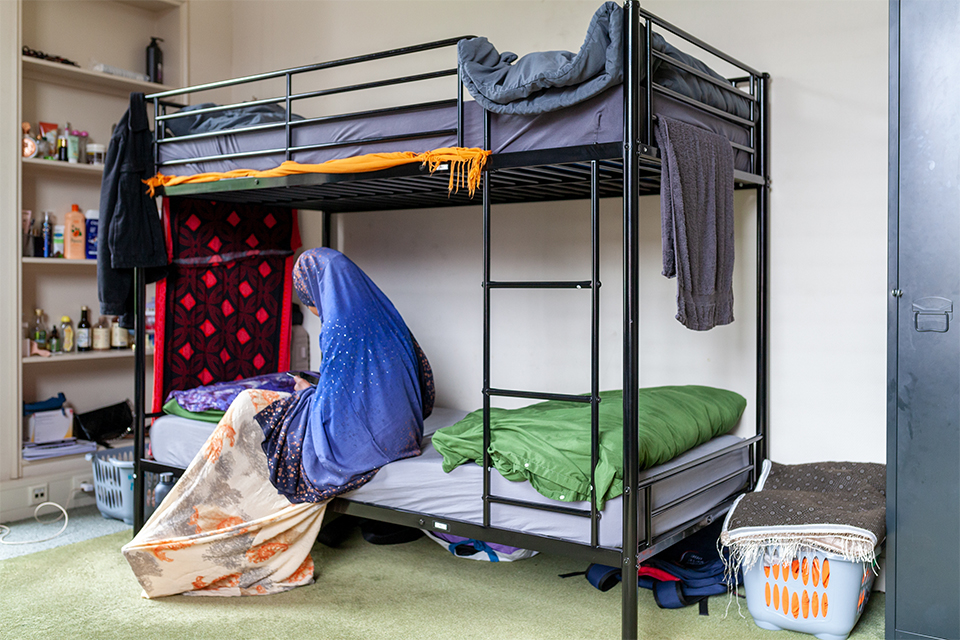
For certain locations, the answer is: yes. Hotels with low occupancy rates, outdated buildings or a location outside the main tourist area, in particular, may find that providing accommodation for evacuees offers a more stable revenue model than the regular hotel market. In such cases, the hotelier is no longer selling a hotel experience, but accommodation capacity. That is a fundamentally different product.
That certainty comes at a price. A reception centre requires management, cleaning, catering, security, support staff and constant coordination with central government and the local council. The premises are used intensively. Its image changes. And the business owner is getting involved in an issue that is politically and socially highly charged. But from a business perspective, the maths remains straightforward: long-term occupancy can be more attractive than empty rooms.
For the taxpayer, the cost is the most important factor. The central government quotes the average cost of standard accommodation as 91 euros per person per day. For emergency accommodation, the figure is 184 euros per person per day. These amounts cover not only accommodation, but also support, security, care, organisation and facilities. Nevertheless, the difference clearly illustrates why emergency accommodation places a heavy burden on the public purse.
In May alone, the NOS reported that Stadskanaal had once again had to step in to provide overnight accommodation for asylum seekers who could not be accommodated in Ter Apel. Groningen and Gieten also opened temporary overnight accommodation to relieve the pressure on Ter Apel. The registration centre was overcrowded for several days running, with more than 2,200 people arriving almost daily, whilst the complex is only authorised to accommodate a maximum of 2,000 people. On one evening, staff were still searching for places to sleep for people who were waiting outside. The Red Cross also set up open tents on the lawn to provide shelter from the heat, although aid organisations emphasised that these tents were not intended for sleeping in.
That’s the crux of the matter. A standard asylum seekers’ centre is cheaper, but takes time to set up. It requires premises, planning permission, staff, political decisions and local support. Accommodation in hotels is more expensive, but quicker. And speed is precisely what the system needs time and again whenever Ter Apel becomes gridlocked.
As a result, this temporary solution is starting to feel less and less temporary. At the end of 2025, the NOS reported that the COA was required to move family members joining their relatives to hotels in their future municipalities of residence in order to free up space in the reception centres. According to that report, there were around 8,000 family members at COA sites at the time, whilst approximately 18,000 status holders were waiting in reception centres for housing. The problem is therefore not confined to the front door of Ter Apel. It also lies at the back end of the system: people who are allowed to stay are not moving on to mainstream housing quickly enough.
This creates a business opportunity for hoteliers and property developers. A property that is only moderately profitable as a hotel may suddenly become attractive as a temporary accommodation facility. Particularly for hotels that need to invest heavily to become competitive again, long-term letting to a public sector organisation may seem a more sensible business decision than renovation, marketing and the daily struggle to maintain occupancy. That does not mean that a hotelier can simply open an asylum seekers’ centre. Setting up a reception centre requires agreements with the COA, the local authority, the security region and other relevant parties.
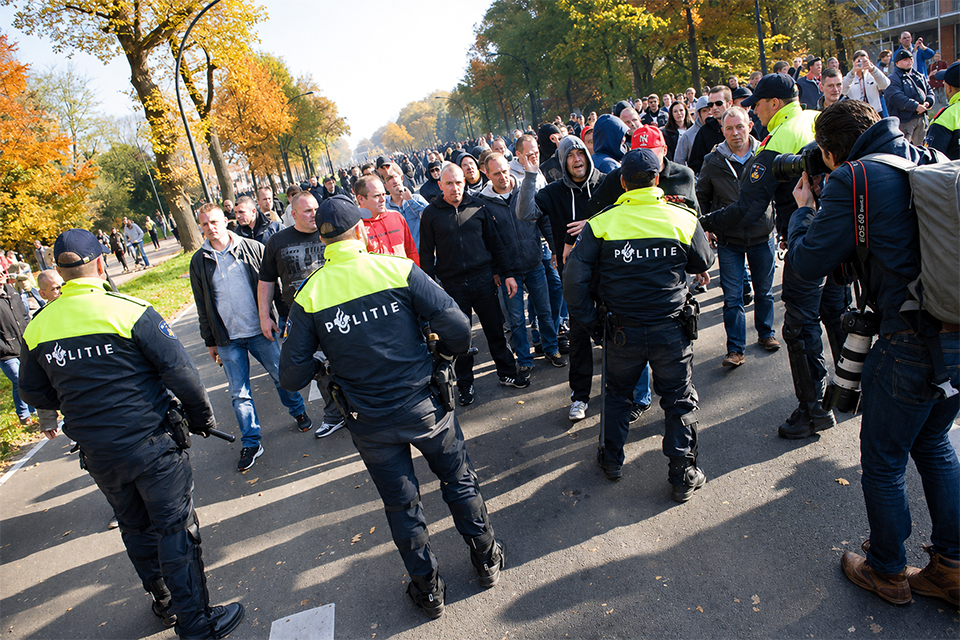
Sometimes temporary authorisations or additional licences are required. It must also be clear who is responsible for safety, management, care, communication with local residents and any nuisance caused. It is therefore not a standard hotel deal, but a form of operation with public implications. Those public implications are significant. The numerous protests surrounding reception centres show that not all residents of local authorities are happy about the arrival of such facilities. In any public debate, there are supporters and opponents, but when it comes to asylum accommodation, emotions often run particularly high. Sometimes the concerns relate to safety, quality of life, pressure on local services or the character of a neighbourhood. Sometimes the debate is fuelled by politics. In all cases, the same applies: any hotelier who thinks that providing accommodation is merely a property decision is underestimating the social implications. There are also administrative complications. The COA reports that there are more than 300 reception centres spread across the Netherlands. At the same time, there is no clear public overview that makes it easy to see how many of these are hotels, which contracts are in place, what is paid per location and how long the agreements last. This is precisely where mistrust arises. The accommodation is visible on the streets, but the financial arrangements often remain out of the public eye.
For the hotel sector, this holds up an uncomfortable mirror. Hotels are commercial enterprises. If the government needs capacity and pays for it, it is only natural that business owners should respond accordingly. But as soon as public money is used in a sensitive social issue, transparency is essential. Not to cast suspicion on every hotelier, but to be able to distinguish between reasonable compensation, necessary costs and excessive profit. The question is therefore not whether a hotelier is allowed to make a profit from providing accommodation. Of course, a business owner should be paid for accommodation, management and risk. The question is whether the Netherlands has become so dependent on expensive emergency accommodation that commercial accommodation capacity has become a parallel revenue stream alongside the regular hotel industry.
As long as mainstream accommodation is cheaper but takes too long to arrange, and hotel accommodation is more expensive but available immediately, that incentive will remain. For the government, it is a stopgap measure. For some business owners, it is an opportunity. For residents, it is a difficult decision. And for the taxpayer, it is a bill whose exact breakdown all too often remains unclear.
Sources: NOS, COA, Overheid.nl
 Nederlands Nederlands
  English (UK)