hotelvak.eu
EN

Platform on hotelmanagement, interiordesign and design in the Netherlands
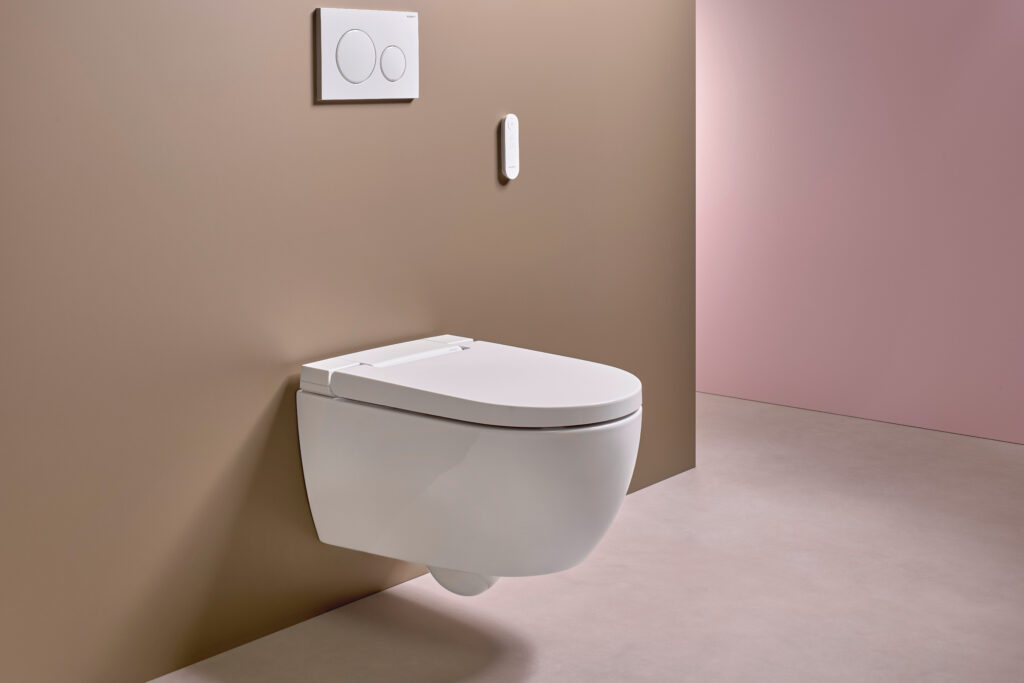
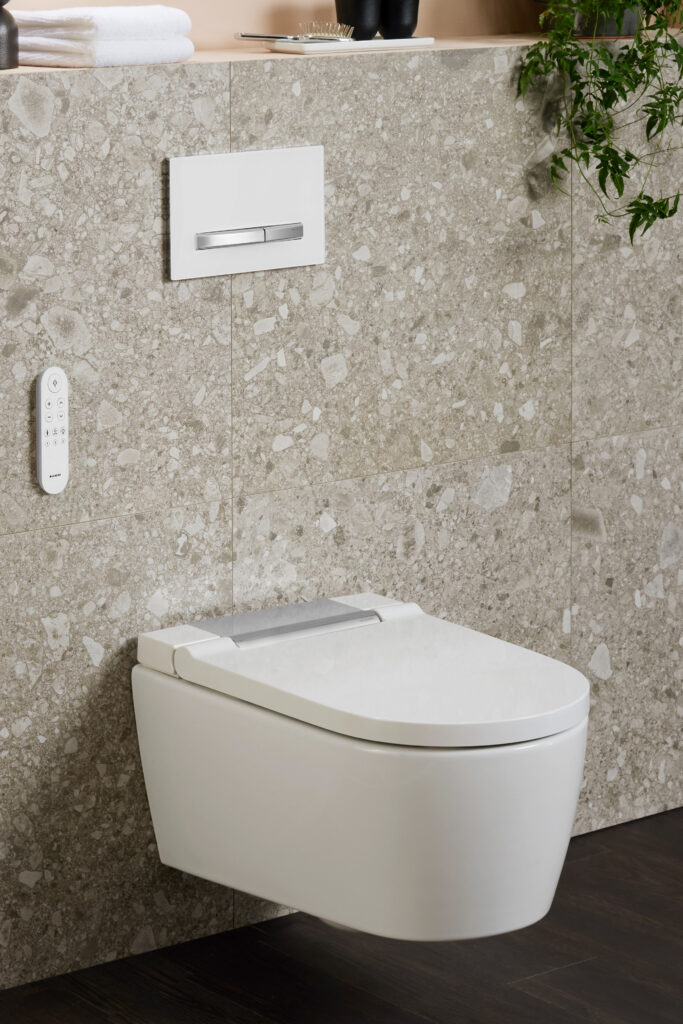
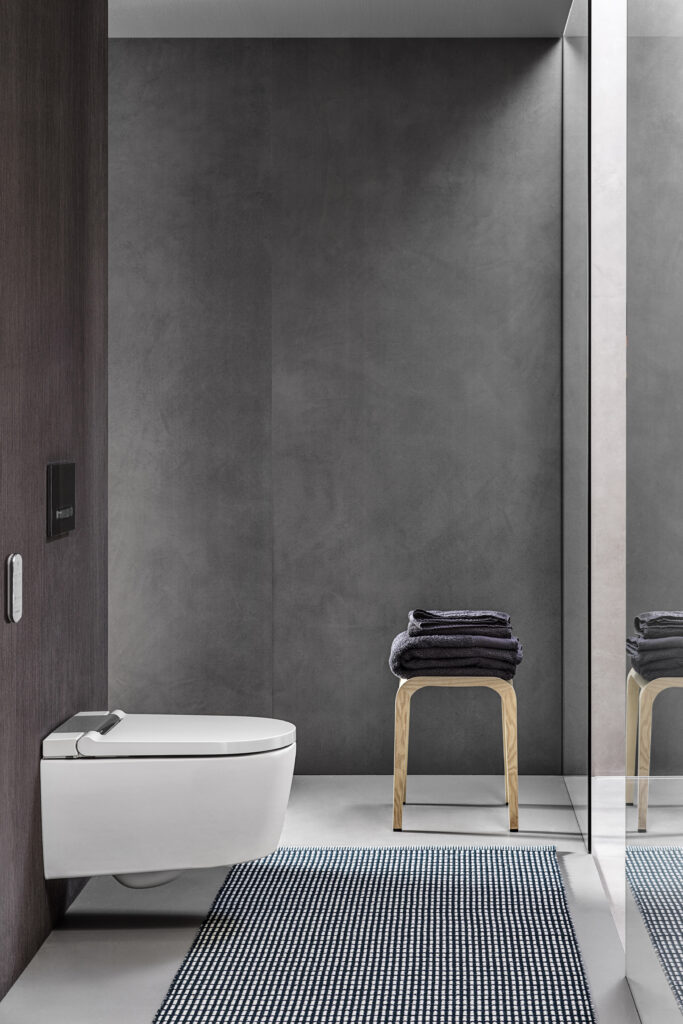
Geberit AquaClean combines comfort and hygiene with surprisingly low environmental impact
Toilet paper, water consumption and hygiene. These are topics that everyone has to deal with every day, but rarely really thinks about. Yet those very everyday choices in the bathroom make a bigger difference than you might think.
A shower toilet, a toilet that cleans with water instead of paper, is often seen as a luxury addition. In fact, recent lifecycle analyses show that Geberit AquaClean shower toilets deliver a slightly better environmental performance than normal toilets over their entire lifespan. All the while providing more comfort and higher hygiene standards.
The explanation lies in the overall picture. The amount of water required for the integrated shower function is limited, while the use of toilet paper is greatly reduced. When energy consumption, choice of materials and lifespan are also taken into account, a surprising picture emerges. A picture that shows that comfort and sustainability in the bathroom go perfectly well together.
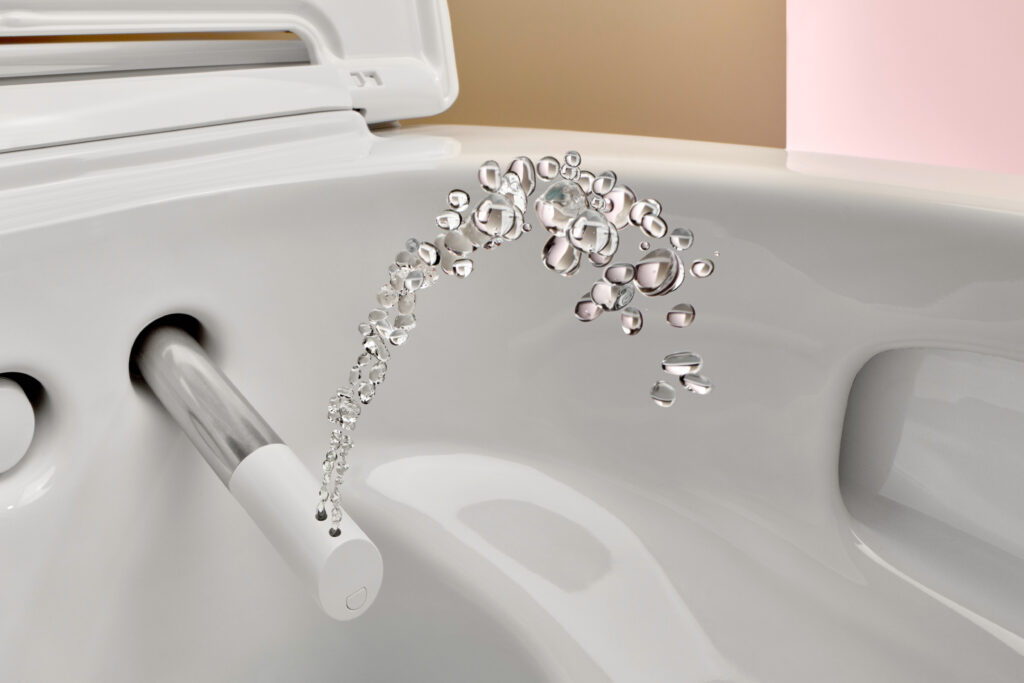
A common question about shower toilets is whether they don't actually consume more water. In practice, this turns out not to be so bad. The integrated shower function of a Geberit AquaClean uses about half to one litre of water per flush. For an average household, this means an annual increase of around two to three per cent compared to a toilet without the shower function.
Relative to total water consumption in the home, this is limited. Especially when you consider that toilet flushing and personal hygiene together already account for a large proportion of daily water use. The shower toilet hardly adds to that, while increasing comfort and hygiene standards.
A major difference from a conventional toilet is in the use of toilet paper. In an average household, this amounts to more than 15 kilos per year. The production of toilet paper requires a lot of wood, water and energy and thus has a significant environmental impact.
In a shower toilet, water takes over the role of paper for cleaning. Paper is therefore only needed for drying, or not at all in models with an integrated hot air dryer. This leads to a marked reduction in paper consumption and thus reduces the burden on raw materials and energy.
In addition to water and paper, electricity also plays a role. Geberit AquaClean shower toilets are designed with energy saving in mind. In idle mode, consumption is under half a watt, comparable to many everyday appliances in standby.
Total energy consumption varies according to model and use, but remains within manageable limits. This means that while electricity is an additional factor compared to a traditional toilet, it is not a decisive burden within the whole.
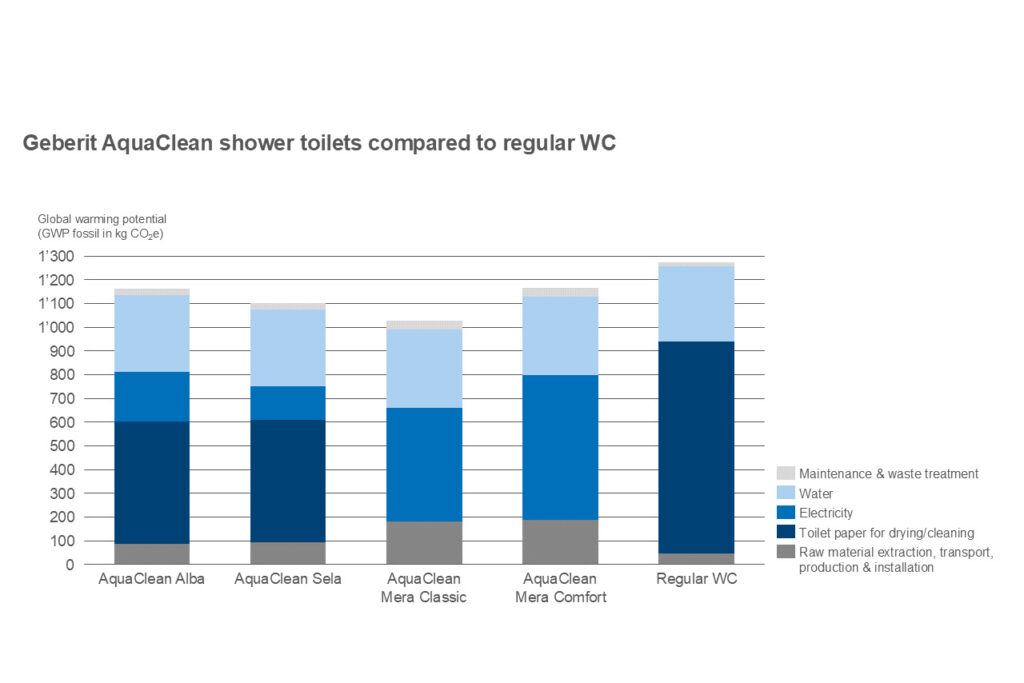
When all components are considered together, from raw material extraction and production to daily use and waste disposal, a clear picture emerges. The slightly higher use of water and electricity is offset by a sharp reduction in toilet paper and a long product life. Over the entire life cycle, Geberit AquaClean shower toilets therefore perform slightly better than conventional toilets.
To make that impact transparent, Geberit uses environmental product declarations (EPD). These transparently show the environmental impact per model, based on standardised calculations. This makes sustainability concrete and comparable, rather than an abstract concept.
EPD Geberit AquaClean Mera Comfort
EPD Geberit AquaClean Mera Classic
EPD Geberit AquaClean Sela
EPD Geberit AquaClean Alba
The bathroom has long since ceased to be just a functional space. Comfort, hygiene and conscious use of resources play an increasingly important role. The Geberit AquaClean shower toilet shows that these aspects need not be mutually exclusive. Intelligent technology and a thoughtful approach to use and service life combine comfort with a surprisingly low environmental impact.
An AquaClean shower toilet is a choice that is not only pleasant in everyday use, but also fits within a more sustainable way of living.
 Nederlands Nederlands
  English (UK)