hotelvak.eu
EN

Platform on hotelmanagement, interiordesign and design in the Netherlands
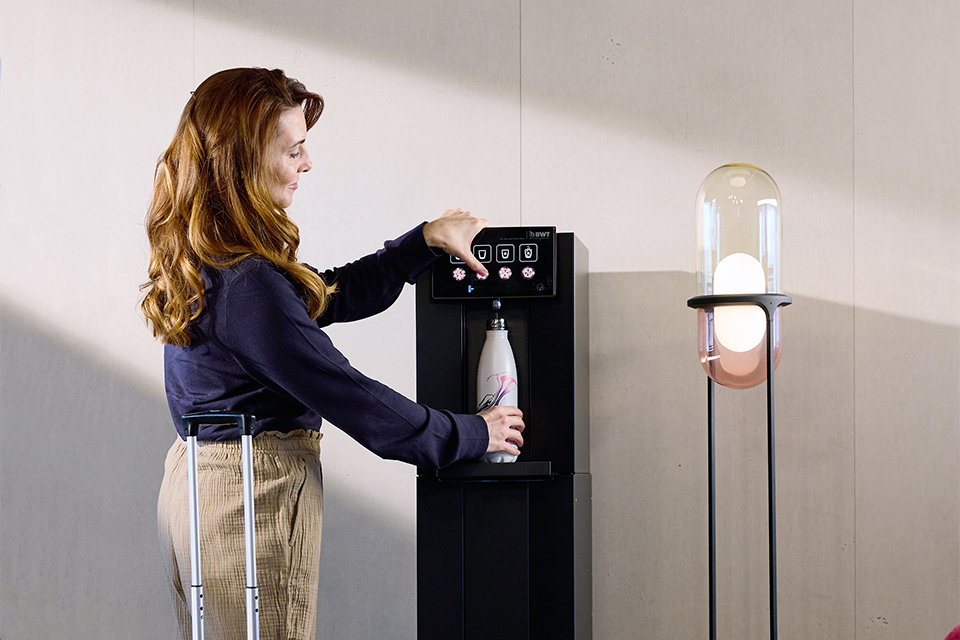
Water, cosmetics and sustainability are coming ever closer together in hotels. Lutz Hübner, CEO and chairman of the Pink Planet Group, sees in this not separate themes but one strategic playing field. His ambition is clear: eliminate single-use plastic bottles from hotel rooms while raising the standard for hygiene, efficiency and premium experience.
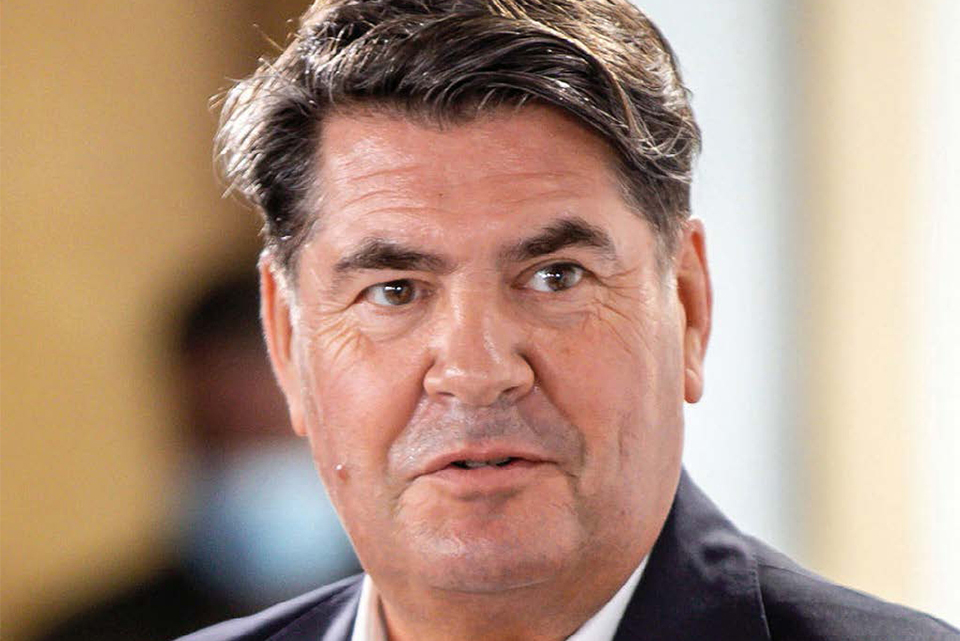
Lutz Hübner heads a group that combines ADA Cosmetics International, BWT Water Dispensers and BWT water+more. Together they account for some 340 million euros in sales and around 1,200 employees worldwide. Yet he says the distinctive strength is not in scale, but in the combination of expertise. Whereas BWT is strong in water technology, the acquisition of ADA Cosmetics in 2018 brought in-depth knowledge of hotel operations, product development and the global cosmetics market. For Hübner, that was the tipping point. According to Hübner, it is precisely in hotels that it is easy to see how decisive water is. It is in swimming pools, laundries, kitchens, air conditioning systems, coffee machines, ice production and showers. At the same time, each application requires a different quality. By strategically bringing water and cosmetics together, he wants to organise the hotel bathroom fundamentally differently. Not as a collection of separate products, but as an integrated system in which sustainability, operational security and guest experience come together.
For Hübner, the current practice with plastic bottles in the room is outdated. There are more than 220 million hotel rooms worldwide and huge numbers of bottles are used and discarded in them every day. According to him, this is neither ecologically sustainable nor technologically necessary any more. With in-house water treatment systems, premium drinking water can be produced locally, without transport, without unnecessary plastic and without loss of quality.
The technology behind it is based on patented reverse osmosis. This removes unwanted substances, including microplastics, from the water. The water is then precisely re-mineralised and, if required, cooled or fizzed. Hübner thus explicitly positions water no longer as a bulk product, but as a quality carrier. His Diamond Water is now also served in Michelin-starred restaurants.
This ties in with how he views sustainable luxury. According to Hübner, guests today expect not only comfort and appearance, but also responsibility and visible choices. Sustainability therefore no longer belongs behind the scenes. It influences investments, the brand positioning of hotels and, increasingly, the daily guest journey. For hotels, the challenge lies in solutions that combine ecological gains with efficiency and a high-quality product.
Hübner also rejects the idea that sustainability would lose momentum due to economic and geopolitical pressures. According to him, attention sometimes shifts, but the reality does not change. Raw materials are becoming scarcer, hygiene and safety regulations stricter and guests more critical. Anyone who still treats sustainability as non-committal marketing language will eventually fall behind the market.
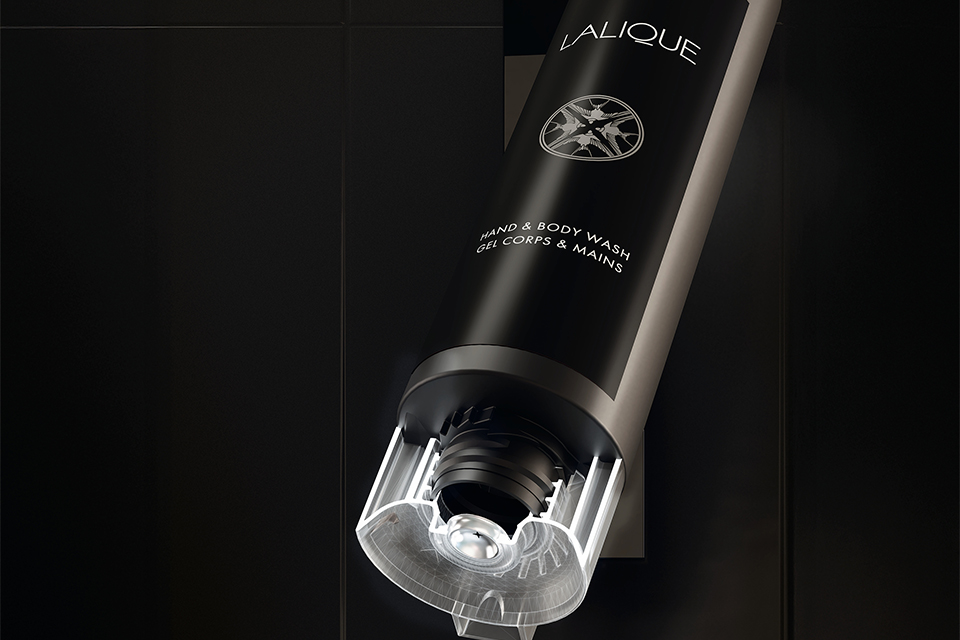
A striking part of Hübner's story is about hygiene in refillable cosmetics systems. For years, there was a perception in the market that refilling itself was risky. According to Hübner, scientific research actually shows otherwise: it is not the refilling that is the problem, but the construction of the pump. In many conventional systems, water remains in the pump head. This can create biofilm, which enters the dispenser via ventilation and causes health risks over time.
Therefore, the group developed two answers. According to Hübner, the SmartCare System prevents recontamination through membrane technology and downward dosing. It also developed a new pump with a drainage system that prevents stagnant water. Also, that pump consists entirely of one type of plastic, making it recyclable. This is relevant for hotels, as hygiene, circularity and operational reliability come together directly here.
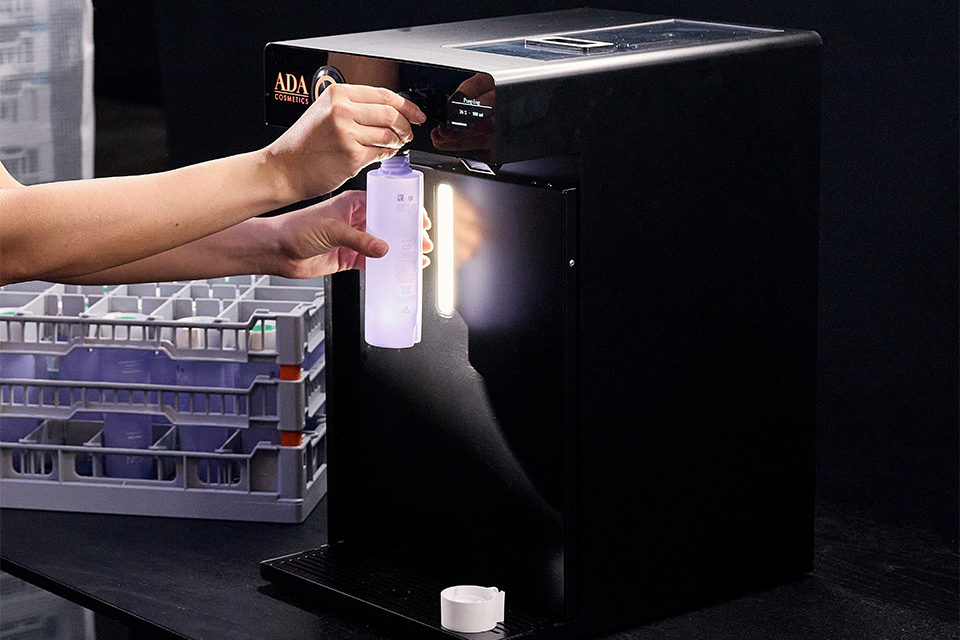
The next step is Refillution, which Hübner says is the first fully automated refill system for hotel cosmetics with full batch traceability. Every dispenser and refill pack is given a unique code, which is scanned and digitally recorded during refilling. This prevents mistakes, supports regulatory compliance and makes processes more manageable. The impact is concrete: up to 95 per cent less plastic consumption and more than 15 per cent efficiency gains.
Hübner is therefore emphatically looking beyond traditional supplierism. He wants to be a strategic partner for hotels making choices about their infrastructure, their sustainability goals and the quality of the guest experience. His ultimate ambition is clear: to become the global market leader in integrated water and cosmetic concepts for hotels.
Neem dan rechtstreeks contact op met ADA Cosmetics.
 Contact opnemen
Our business was born with the development of a completely new product concept: personalised hotel cosmetics.
View Company profile Nederlands Nederlands
  English (UK)