hotelvak.eu
EN

Platform on hotelmanagement, interiordesign and design in the Netherlands
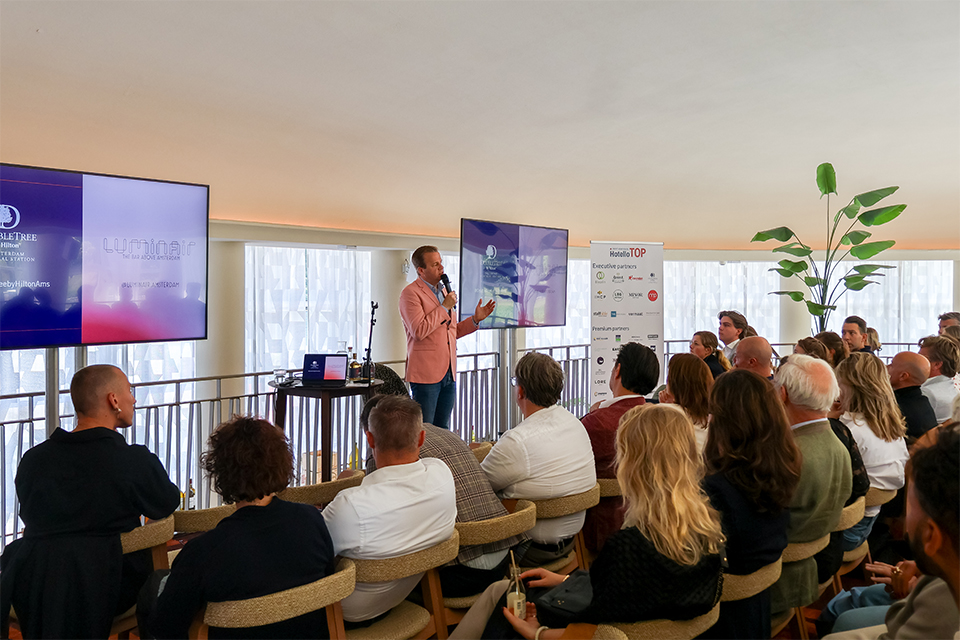
On 10 June, Hotel De Plesman in The Hague provided the setting for ‘Hotello’s in the Hotellerie’, a HotelloTOP event on branding in the hospitality industry. A more fitting venue would be hard to imagine. The former KLM headquarters on Plesmanweg is itself an example of how history, design, hospitality and urban regeneration can come together to form a brand narrative.
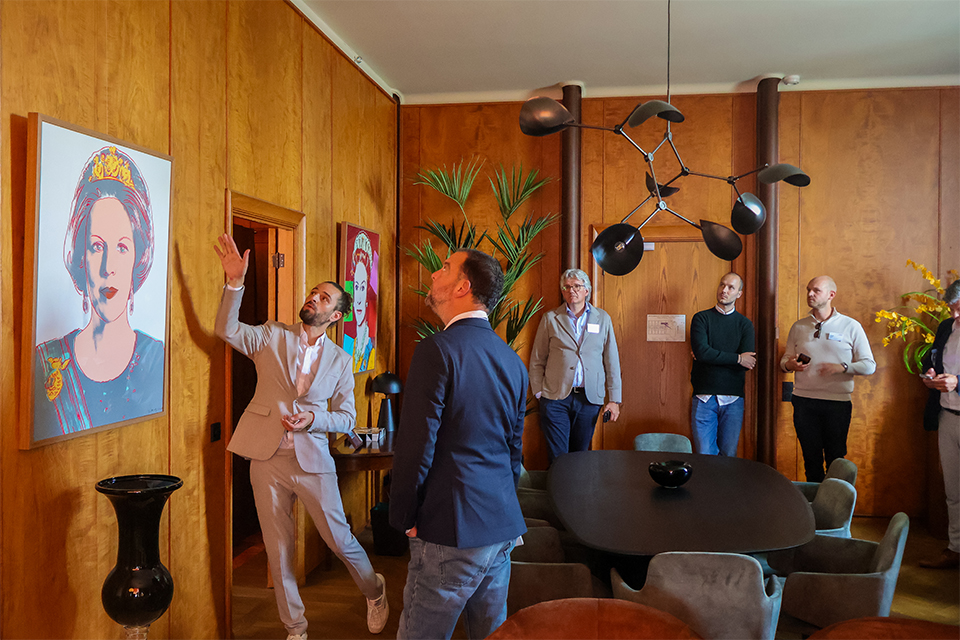
The afternoon focused on three case studies. Willem van Emden from Hotel De Plesman explained how a young boutique hotel is building its identity on a historic heritage. Floris Licht from DoubleTree by Hilton Amsterdam Centraal Station demonstrated how the former SkyLounge Amsterdam was repositioned as LuminAir. Daan Sterken from Typhoon Hospitality then took the discussion into the realm of operations: how do you translate brand values into day-to-day behaviour?
The common thread: a hotel brand isn’t created in a brand book, but in day-to-day practice. At reception, in the bar, in the guest rooms, on the wine list, in the queue and, above all, in the behaviour of staff.
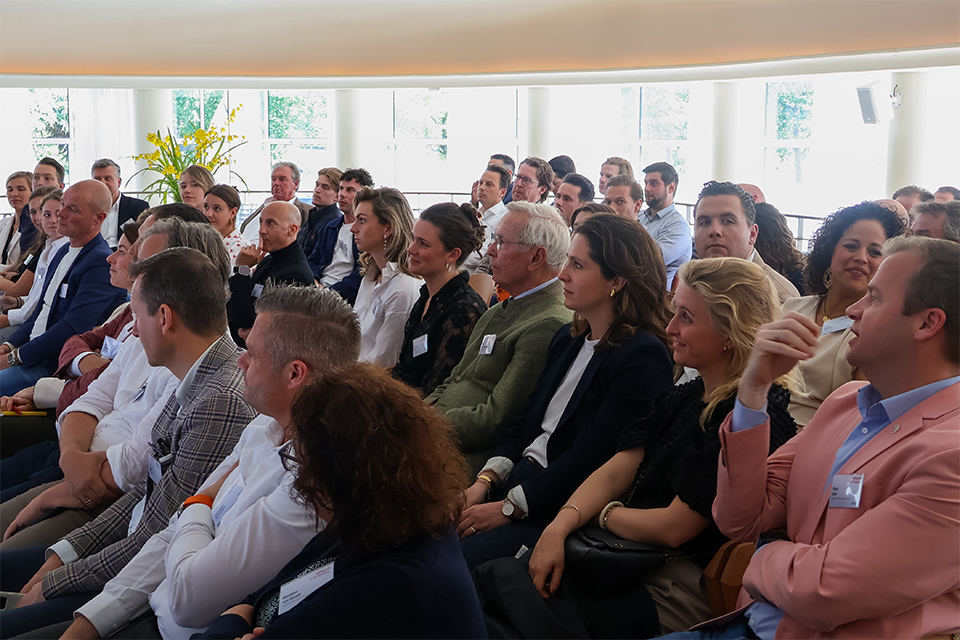
For Willem van Emden, the De Plesman brand begins with the place itself. “You are here today at a very special historic site,” he said at the start of his story. The building dates back to Albert Plesman, the founder of KLM. He set out in 1919 with great ambition, though without any aeroplanes at that stage. Later, KLM established its offices here in The Hague. The oldest part of the building, which now houses the hotel, was completed just before the Second World War.
At De Plesman, this history is not portrayed through a blue aviation theme or a nostalgic KLM museum. Instead, it is the human stories behind it that form the basis. One such story is that of Suze, Albert Plesman’s wife. Restaurant Suze is named after her. According to Van Emden, she once played a unifying role when a conflict between Plesman and the pilots threatened to escalate. She brought the parties involved together around the table. The idea behind this is still relevant today: food brings people together.
“We want the hotel to connect with the neighbourhood,” says Van Emden. De Plesman is explicitly aiming to be a neighbourhood hotel. Not just a place for hotel guests, but also for residents of the surrounding neighbourhood, business visitors, restaurant guests and users of the meeting rooms. In addition to the hotel, the listed complex houses, amongst other things, the Suze restaurant, the Albert bar, twelve meeting rooms, a gym and residential flats. The hotel is therefore part of a wider area development.
De Plesman collaborated with the branding agency Jasmine Ulrich on the brand identity. According to Van Emden, the core values can be traced back to the philosophy of Albert Plesman: childlike, sophisticated, bold, fun and curious. In other words: friendly, stylish, courageous, light-hearted and inquisitive. These values are intended to help bring people together.
But values are only credible if they are embraced by the team. Van Emden emphasised that culture isn’t created by “putting up Post-it notes” or making staff watch a video. “It’s much more about day-to-day operations.” That’s why, during the recruitment process, they already assess whether someone is a good fit for the brand and for the way De Plesman wants to welcome guests. Even after that, the story is kept alive through onboarding, internal communication and, above all, by giving staff the freedom to thrive.
An important lesson here is to catch people doing what they do well. Van Emden used the English expression “catching people doing the right thing”. By this he means that staff must be given the confidence to make their own decisions that are in keeping with the hotel. Don’t micromanage everything, but give people the freedom to make hospitality their own.
Whilst De Plesman builds on history and local roots, Floris Licht’s story centred on repositioning. He explained how the SkyLounge Amsterdam, once a household name, needed to regain its relevance in the local market. The bar was well known, but according to Licht, it was still primarily seen as a tourist attraction. People from Amsterdam hardly ever went there anymore.
The aim was to put the rooftop bar back on the map as LuminAir, with the tagline ‘The Bar above Amsterdam’. The name refers to lumens, light and air – the ever-changing Dutch sky above Amsterdam. This narrative has been consistently incorporated into the design. Clouds made of metal mesh hang from the ceiling, onto which 36 projectors project different skies throughout the day. As a result, the atmosphere in the bar is constantly changing.
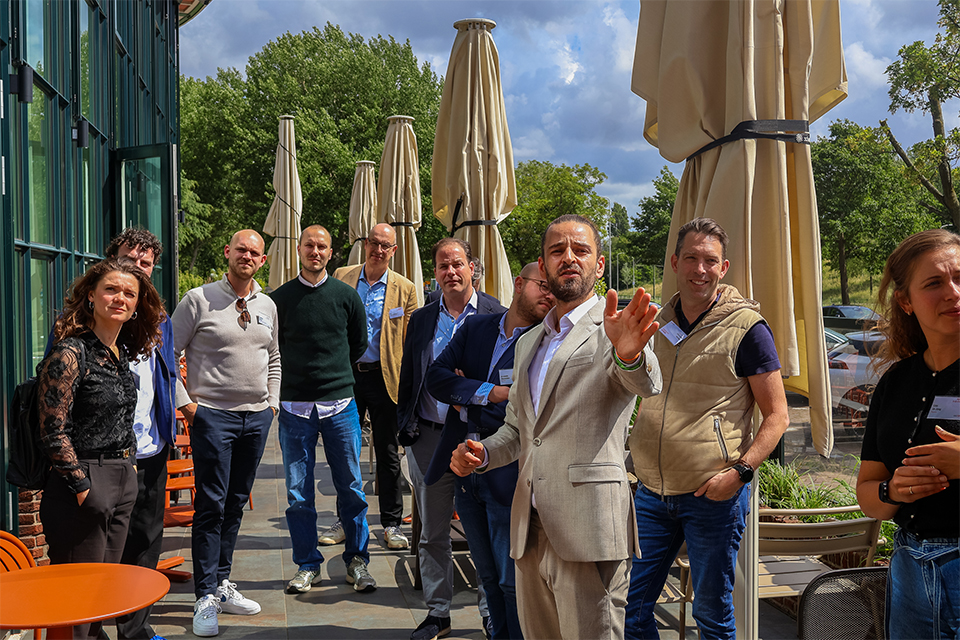
But here too, the same principle applies: design alone is not enough. LuminAir built its own ‘Brand Temple’, based on principles such as ‘Elevated Rooftop Bar’, ‘Dedicated to the Craft’, ‘New Wave Mixology’, ‘Amsterdam as our muse’ and ‘Good Service’. According to Licht, the latter was essential. The old SkyLounge had suffered from disappointing reviews in recent years. Service therefore had to become a visible part of the repositioning.
At the same time, LuminAir is a high-volume commercial operation. According to Licht, on busy days, large numbers of cocktails are served. The challenge, then, is to remain distinctive without the operation grinding to a halt. The ambition to operate at a high standard must go hand in hand with speed, efficiency and scalability.
That is why the team also took a critical look at the guest journey. Long physical queues were not in keeping with the new positioning. A digital queuing system and booking options made it easier to manage the guest experience. The programme of events also plays a key role: events, high teas, brunches, themed evenings and collaborations with artists and brands are designed to ensure that guests have reasons to keep coming back.
Licht also demonstrated that branding and commerce are inextricably linked. Influencer marketing, PR, data, events and F&B must reinforce one another. At LuminAir, they work with PR agencies, influencers and, increasingly, with influential figures outside the traditional social media channels. Events are also an important source of revenue. Weddings, marriage proposals, baby showers and corporate events not only contribute to turnover but also boost the brand’s visibility.
Licht also highlighted the importance of data. By effectively linking POS and PMS systems, businesses can segment guests more effectively and target them more precisely. He also sees AI as a useful tool, for example to monitor online reputation, respond more quickly to user-generated content and identify patterns in reviews. Not as a substitute for hospitality, but as a means of supporting a more focused commercial process.
Daan Sterken of Typhoon Hospitality brought the discussion back to the key question: what happens after a guest has made a booking? Many marketing plans focus heavily on visibility, conversion and campaigns. But according to Sterken, the most important part only begins after that. “Once that booking has been made, the most important part is yet to come: the experience.”
It is precisely this experience that determines whether guests return, recommend the hotel to others and reduces reliance on expensive customer acquisition channels. If the experience isn’t right, money will have to be spent time and again at the top of the funnel to attract new guests. A strong brand therefore also reduces commercial pressure in the long run.
Sterken summarised his point as the shift from brand value to brand behaviour. In his view, it is relatively easy to put words such as “authentic”, ‘local’ or ‘premium’ down on paper. The question is what employees can actually do with them. “You can’t pour out authenticity; you can pour out a local beer,” he pointed out sharply.
As an example, he cited his previous work for Hotel V, where Spinoza’s philosophy was translated into concrete actions. Not by giving staff a philosophy lesson, but by making values tangible within the day-to-day operations. Think of a recognisable tone in emails, locally sourced produce, affordable quality wines and commitments to diversity. As a result, the team did not need to reproduce the underlying philosophy verbatim, but was able to act in accordance with it on a daily basis.
According to Sterken, that is the essence of hospitality branding. Brand values must be put into practice at the bar, at reception, in the guest room, in the restaurant and in the way complaints are resolved. Only then can consistency be achieved. And only then does a brand become more than just a promise.
He also emphasised that design and marketing should not be carried out one after the other, but should be developed in parallel. A hotel concept becomes stronger when design, brand narrative, operations and commercial strategy are intertwined from the outset. Data helps to measure what works, but the human factor remains decisive. AI can assist with analysis, reporting and content, but it cannot replace the creativity, relationships and personal attention that make all the difference, particularly in the hospitality sector.
‘Hotello’s in the Hotel Industry’ demonstrated above all that branding in the hotel sector has come of age. It is no longer just about visual identity, tone of voice or social media campaigns. A strong hotel brand is an operational discipline. It requires clear decisions, consistent implementation and staff who understand the story they are conveying every day.
At De Plesman, that story lies in the building’s history, its connection to the neighbourhood and the freedom given to staff. At LuminAir, it lies in a strategic repositioning, a detailed guest journey and the combination of experience and commercial insight. At Typhoon Hospitality, it lies in translating abstract brand values into concrete behaviour.
This is a relevant message for the hospitality industry. In a market characterised by high costs, a tight labour market, rising guest expectations and fierce competition, a brand cannot just look good on the outside. It must be just as strong internally as it is externally. Or, as the afternoon at De Plesman made clear: a brand isn’t just about what you say. It’s mainly about what you do.
HotelloTOP is the network for students and alumni of Dutch hotel management schools. The community connects Hotello members with one another and with the hospitality sector through specialist meetings, networking events, awards and career-focused initiatives. The best-known event is the annual HotelloTOP Year Event during the Horecava at RAI Amsterdam, where hundreds of hospitality professionals gather for inspiration, networking and the presentation of the Hotello of the Year Award. In addition, HotelloTOP organises, amongst other things, smaller-scale networking meetings, Exclusive Connect events, the Executive Dinner, the CEO Power Breakfast and the Talent of the Year Award for student Hotellos. With HotelloJOB, the organisation also has its own job platform for hospitality professionals and employers.
 Nederlands Nederlands
  English (UK)