hotelvak.eu
EN

Platform on hotelmanagement, interiordesign and design in the Netherlands
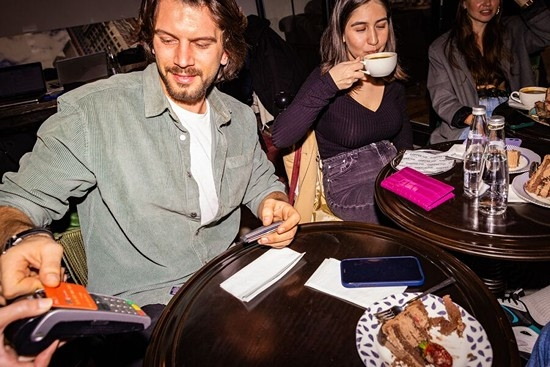
The hospitality sector cannot pass on rising costs to guests indefinitely. Higher prices are still driving turnover at the moment, but the number of visits is falling. As a result, price increases are becoming less and less effective as a growth strategy.
Prices in restaurants, sandwich shops and cafés are expected to rise by 4.5 per cent next year. At the same time, consumers are keeping a closer eye on their spending. According to the FoodService Institute Netherlands (FSIN) Revenue from restaurants and cafés is still growing this year, but this growth is entirely attributable to higher menu prices. By contrast, the number of visits is actually falling. This trend is also reflected in ING payment data for the first nine months of 2026: the transaction value at restaurants and cafés rose by 3.5 per cent, whilst the transaction volume fell by 1 per cent.
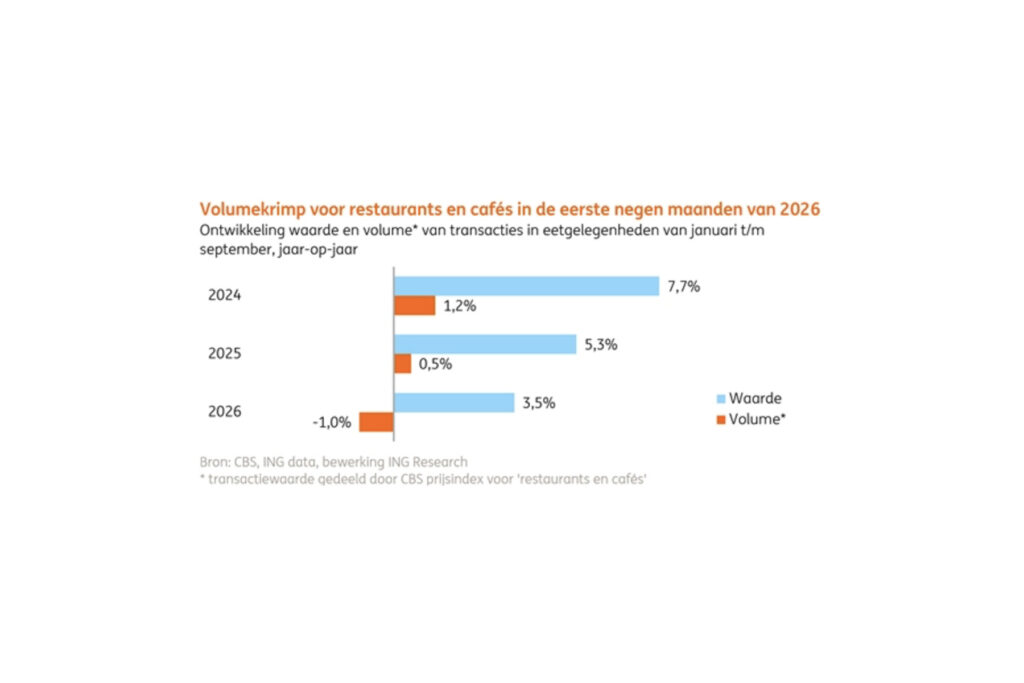
This presents hospitality business owners with a difficult choice. Price increases may be necessary to offset rising costs. However, if this results in guests visiting less frequently, this approach is not sustainable in the long term. Business owners must therefore focus more strongly on increasing productivity. Figures from Statistics Netherlands (CBS) show that restaurants and cafés are primarily looking to achieve this through smarter workplace design, more efficient processes and automation.
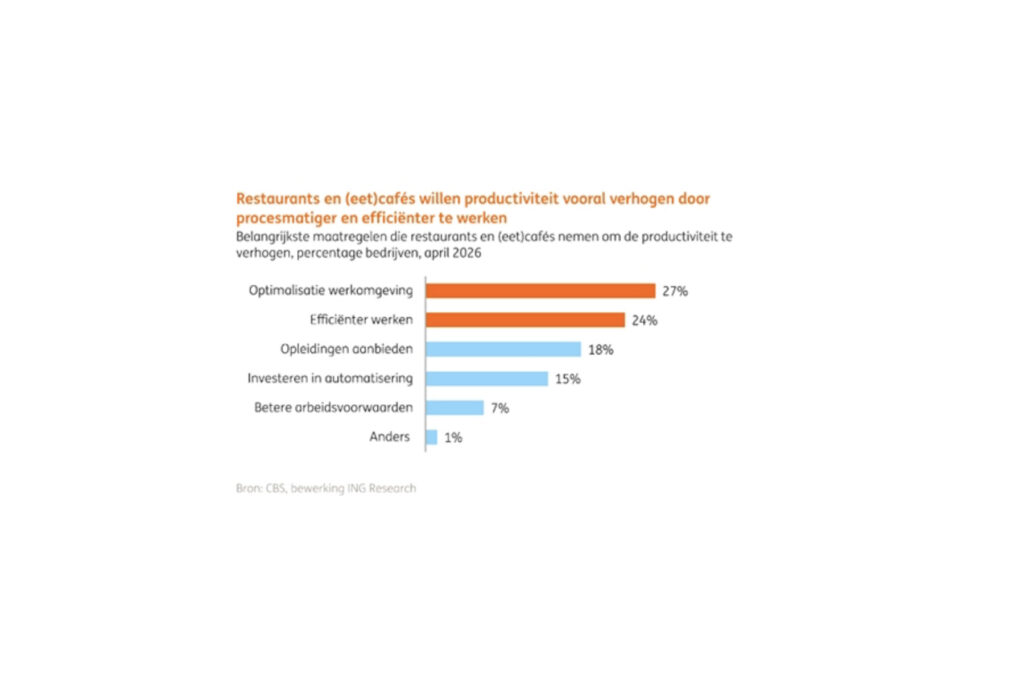
However, simply working more efficiently is not enough. If eating out becomes more expensive, it must remain clear to the guest why the higher bill is worth it. The challenge for hospitality business owners is therefore twofold: to work more intelligently and productively behind the scenes, and to offer sufficient distinctive value to guests to keep them coming back.
Anyone who tries to restore their profit margin solely by raising menu prices runs the risk of ultimately losing customers.
 Nederlands Nederlands
 English (UK)